
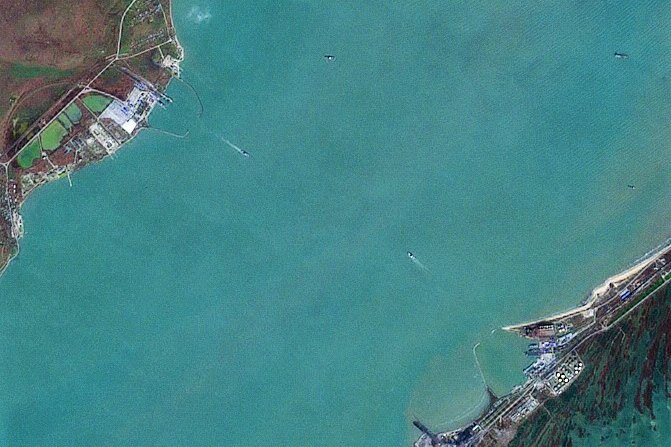
Drone video from the night of July 6 shows a Russian tanker with protective cages and ropes rigged around it. The cages did not stop the strike. By the time the week ended, Russia had stopped shipping in the Sea of Azov.
The Guardian reported that 90 vessels were targeted by Ukrainian drones in less than a week. Ars Technica, citing videos posted nightly between July 6 and July 14, put the total above 100 tankers and other ships. Robert Brovdi, who commands Ukraine’s drone forces, said on Sunday that his units hit 10 tankers and four ferries overnight, plus a major oil refinery in Syzran.
“The technological humiliation of the [Russian] empire continues. It will fall because of Crimea,” Brovdi wrote on social media. He said Moscow’s shadow fleet, which moves sanctioned oil products around the world, was “noticeably shrinking” and could no longer use the Kerch strait.
What Russia shut down
Reuters reported that Russia suspended shipping through the Don-Azov canal on Friday. The Russian Border Guard Service also stopped accepting applications from shipping companies seeking passage through the Kerch Strait, which links the Azov and Black seas. Officials gave no timeline for resuming transit.
The Sea of Azov is how Moscow ships oil, grain and steel to international markets. Up to 25% of Russia’s wheat exports pass through it, with the Rostov and Krasnodar regions along its coast. Wheat futures on the Euronext exchange jumped nearly 4% after the news, reaching their highest level in six weeks.
Andriy Zagorodnyuk, Ukraine’s former defence minister, said the Kremlin had lost control of a “critical” maritime corridor. The blockade, he said, also hit shipping that carried grain taken from occupied southern Ukraine through Berdyansk and Mariupol. And it cut the Caspian Sea off from the sea route: “The Caspian Sea doesn’t have any connection to the world’s oceans. It has turned into a lake.” Russia’s small Caspian flotilla was trapped, he added.
Strikes through the weekend
On Friday, Ukraine’s General Staff said its forces struck 18 Russian vessels overnight. They included 13 oil tankers linked to the sanctioned shadow fleet, three cargo ships, one ferry and an auxiliary vessel. Brovdi said 13 of the vessels were hit near occupied Crimea.
That operation also reached the Russian mainland, with drones hitting the Ilsky oil refinery, Rostov region oil terminals and Novatek’s Ust-Luga complex. Ukraine reported hitting five electrical substations in occupied Crimea as well.
Early on Saturday, July 11, Rostov governor Yury Slyusar said drones attacked four vessels in the Gulf of Taganrog, one of them a tanker carrying methanol. He claimed only “minor damage” and no risk of chemical leaks. Russian air defenses, he said, intercepted more than 15 drones aimed at Taganrog and two Rostov districts. On Sunday, local channels reported two large oil spills off the Taganrog coast.
At the Syzran refinery, residents heard drones at 5am on Sunday, then loud explosions. Photos and video showed thick black smoke over the industrial area. The complex supplies the Russian military and exports fuel through the Azov-Kerch canal.
Crimea under strain
Cutting the sea lanes has isolated Crimea further. Authorities there have declared a state of emergency. Blackouts and acute petrol shortages have been reported, tourism has collapsed, and drivers have gone to Russia for fuel, with long queues at stations in many regions.
Yevgeniya Gaber, a senior fellow at the Atlantic Council, said the attacks fit a strategy of “turning it into an island.” The goal, she said, is “to progressively degrade Russia’s ability to sustain offensive operations by disrupting logistics, fuel supplies and transport infrastructure.” The Institute for the Study of War called the past week’s strikes on seaborne gasoline transports a new phase in the effort to isolate Crimea.
President Volodymyr Zelenskyy has called the strikes on Russian energy infrastructure “long-range sanctions.” Vladimir Putin insists his original goals, including seizing the eastern Donbas, have not changed.
Sources
- Ukrainian drone strikes force Russia to suspend shipping in Sea of Azov
- Ukrainian drone strikes forced Russia to stop shipping in vital sea corridor
- Russian Shipping Suspended and Wheat Prices Jump After Ukrainian Drone Strikes




