
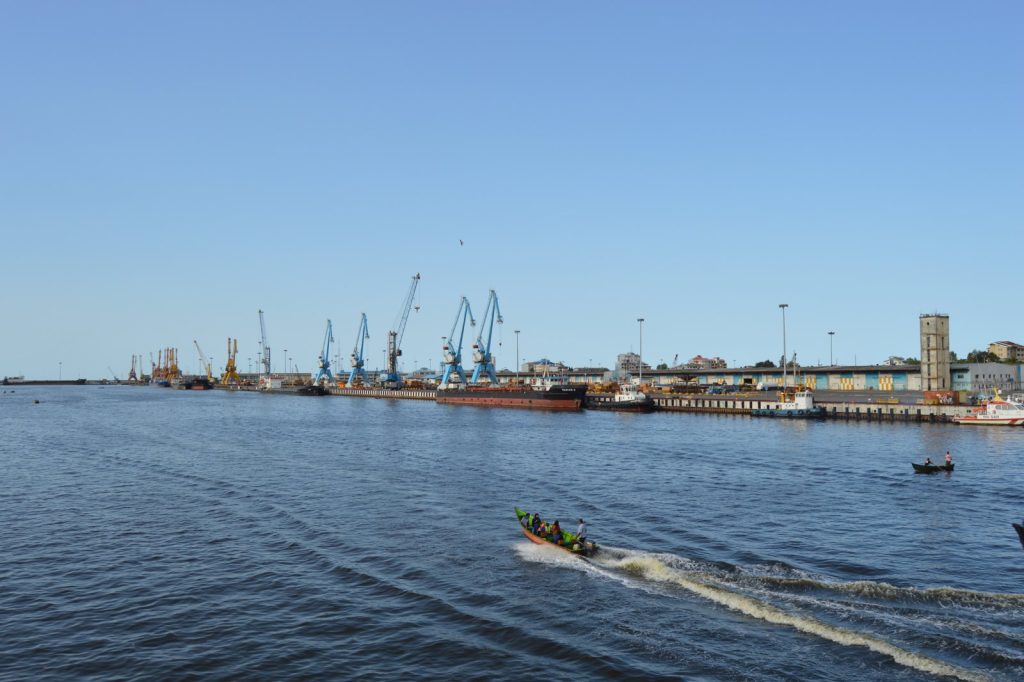
TEHRAN, July 25 — Iranian officials have accused Ukraine of attacking an Iranian vessel in the Caspian Sea, an incident that Tehran described as a violation of international law and an act of aggression. The accusation, levelled on an unspecified date in early 2025, reportedly resulted in the death of an Iranian sailor. Iran’s Foreign Ministry issued a formal statement condemning the alleged attack, though no independent verification of the event has been provided.
Ukraine has not officially responded to the allegation as of this writing. The lack of a public reply from Kyiv, combined with the absence of any international confirmation, leaves the incident in a state of diplomatic limbo.
The United Nations and other international bodies have yet to comment on the matter.
Strategic Context of the Caspian Sea
The accusation is notable for its geographic peculiarity: Ukraine and Iran do not share a land or sea border. The Caspian Sea, a landlocked body of water covering approximately 371,000 square kilometres, is bordered exclusively by Russia, Iran, Kazakhstan, Turkmenistan, and Azerbaijan. Ukraine has no coastline on the Caspian.
Its navy operates primarily in the Black Sea and Sea of Azov and numbers roughly 6,000 personnel. The legal status of the Caspian is governed by the 2018 Convention on the Legal Status of the Caspian Sea, signed by all five littoral states.
That agreement resolved decades of disputes over maritime boundaries and resource rights. Article 2 of the convention stipulates that only the five coastal states may maintain naval vessels on the Caspian.
Iran’s Naval Posture and Ukraine’s Limited Reach
Iran maintains a dual naval presence in the Caspian. The Islamic Republic of Iran Navy’s Northern Fleet is based at Bandar Anzali, while the Islamic Revolutionary Guard Corps Navy operates smaller craft and drones from facilities along the same shoreline. Ukraine’s navy is concentrated in the Black Sea and has no assets stationed on the Caspian.
The distance and geography required to project power into the landlocked basin would be logistically formidable, even if Ukraine possessed the naval capability. No independent source has corroborated Tehran’s claim that a Ukrainian vessel or aircraft was involved in the attack.
Broader Tensions Between Tehran and Kyiv
The accusation arrives against a backdrop of strained relations between the two countries. In January 2020, Iranian air defence forces mistakenly shot down Ukraine International Airlines Flight PS752 shortly after takeoff from Tehran, killing all 176 people on board. Tehran eventually acknowledged the strike as an error.
More recently, Iran has been accused by Western governments and Kyiv of supplying Shahed kamikaze drones to Russia for use in the war in Ukraine — a charge Tehran denies. The alleged weapons transfer has deepened mutual suspicion.
The incident remains a matter of diplomatic dispute. No evidence supporting Iran’s claim has been made public, and Ukraine has yet to break its silence. The coming months will reveal whether international bodies such as the United Nations or the Collective Security Treaty Organization choose to intervene, or whether the accusation becomes another unresolved grievance in an already fractious bilateral relationship.




