
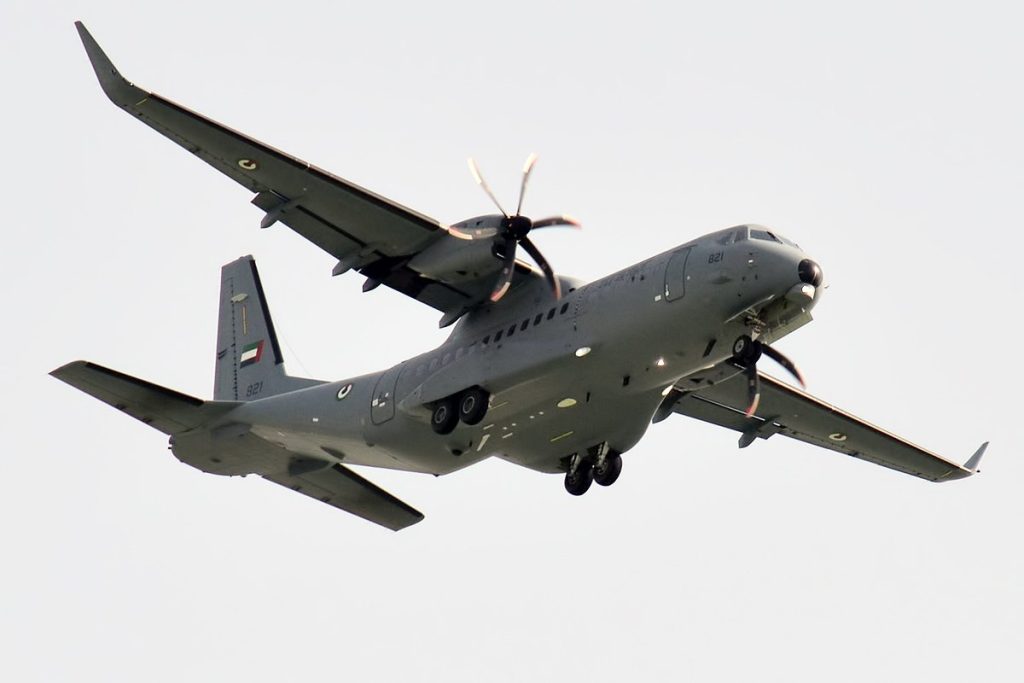
The United Arab Emirates said its forces dealt with an Iranian drone over Emirati waters on Monday, hours after Iran fired missiles at U.S. sites in Jordan. There were no reports of damage.
The UAE Defence Ministry’s statement was brief: the drone, detected as it approached from Iran, had been “dealt with.” The UAE Foreign Ministry called the incident a “dangerous escalation” and a violation of the country’s sovereignty, security and stability. Tehran made no immediate claim of responsibility. Iranian media reported that Al Minhad Air Base in Dubai had been hit by missiles, and the Defence Ministry denied it in a second statement.
Sunday’s strikes
The trigger was a US strike on Sunday. US Central Command said it acted after seeing Revolutionary Guard forces preparing to launch rockets carrying sea mines into the Strait of Hormuz. It called the action “limited, precise” and aimed at minelaying forces that posed an imminent threat. Semiofficial Iranian outlets reported explosions near Larak island, and the Guard said there were casualties. Iran called it military aggression and its Foreign Ministry said it would “respond decisively.”
The response came early Monday. Iranian state television showed what it said were ballistic missiles fired at American bases in Jordan. Jordan’s armed forces said they intercepted eight missiles that entered the country’s airspace.
President Masoud Pezeshkian, leaving for the Shanghai Cooperation Organization summit in Kyrgyzstan with Foreign Minister Abbas Araghchi, said Iran was not seeking war. “But,” he said, “we will respond decisively to aggressors.” He was due to meet Vladimir Putin on the sidelines on Tuesday.
Where the war stands
The exchange was the first significant military action in about a month in a war that began on February 28 and has now run past six months. The last US strike on Iran confirmed by the American military was on July 29, a “heavy wave of strikes” on dozens of Revolutionary Guard targets. On August 1, President Donald Trump said he would pause new strikes after appeals from Qatar, Saudi Arabia and the UAE. Washington had since leaned on economic pressure, and US Treasury Secretary Scott Bessent was due to host G20 finance ministers in North Carolina on Monday and Tuesday.
The UAE interception came about two weeks after the country suspended all trade with Iran. It said then that Iranian missiles had splashed down near shipping in the Persian Gulf. Iran denied responsibility.
Trump had said the week before that all mines had been removed or detonated from international waters in the strait, and warned that any Iranian vessel placing new ones would be “immediately and systematically destroyed.” On Monday he wrote on Truth Social that Iran was “officially a Failed Nation.”
Energy markets are watching. Oil moving through the strait fell to about 5 million barrels a day last week, from more than 20 million before the war, according to provisional Vortexa data cited by Reuters. Brent crude rose above $90 a barrel, about 25% above its level when the conflict began.
Sources
- Iran fires missiles at US sites in Jordan; UAE intercepts Iranian drone after strikes
- UAE intercepts Iranian drone after US-Iran weekend strikes escalate tensions




