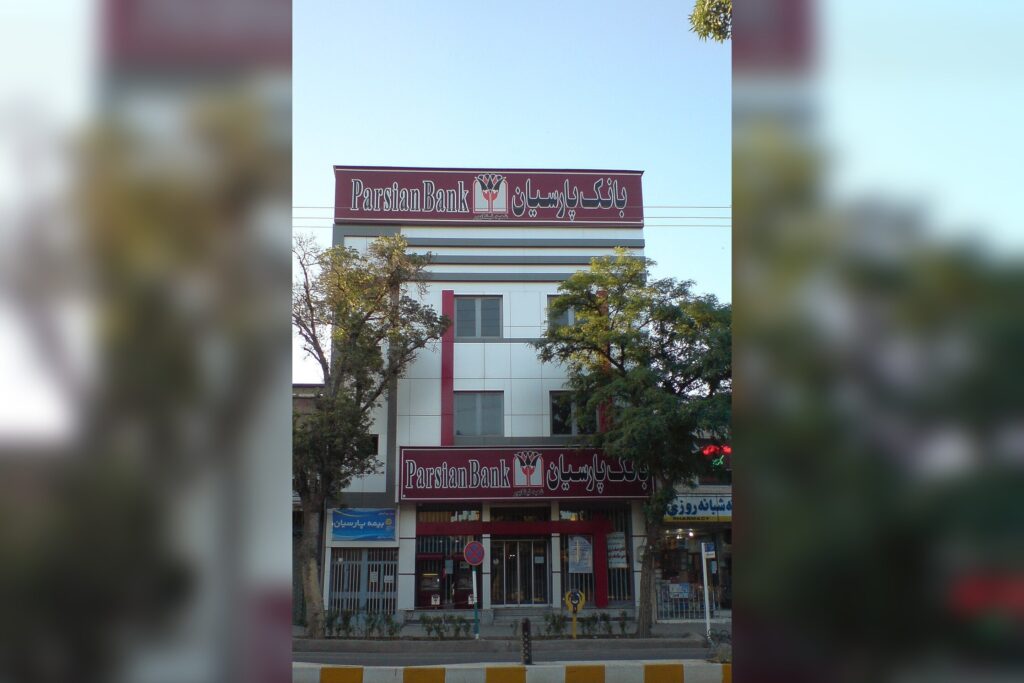
The U.S. Treasury’s Office of Foreign Assets Control (OFAC) designated Iran’s Parsian Bank as a Specially Designated Global Terrorist on October 16, 2018, one of twenty Iranian entities it named that day. The target of the action was Bonyad Taavon Basij, a holding company tied to Iran’s Basij paramilitary force. The sanctions covered at least 20 corporations and financial institutions in what OFAC described as Iran’s automotive, mining, metals and banking industries.
Treasury said Parsian was designated for assisting, sponsoring or providing financial, material or technological support to, or services for, Andisheh Mehvaran Investment Company, one of several intermediaries linked back to Bonyad Taavon Basij.
A break with past practice
Parsian, a private bank, had a reputation as one of the best-managed in Iran. Under the earlier round of sanctions it escaped secondary sanctions, because Treasury had no information then linking it to terrorist financing. The new status changes that. Non-U.S. companies that do business with the bank now risk sanctions themselves. The Qods Force of the Islamic Revolutionary Guard Corps carries the same designation.
The move confirmed fears among senior Iranian bankers that the Trump administration would put banks previously exempt back under secondary sanctions as part of its “maximum pressure” policy. Those fears began when OFAC’s first guidance after President Trump withdrew from the Iran nuclear deal on May 8 left unclear how banks like Parsian would be treated.
The bank’s response
Parsian’s CEO, Kourosh Parvizian, called the designation a “mistake” in an interview with Bourse & Bazaar. He said Andisheh Mehvaran had bought and sold less than 0.3 percent of the bank’s shares on the stock market, too little to give it any influence over management. By his account, the bank has 23.7 billion shares outstanding on the Tehran Stock Exchange and more than 70,000 shareholders, and Iran’s central bank requires approval only for purchases above 5 percent for individuals and 10 percent for legal entities.
Parvizian said the error would hurt “over 70,000 shareholders and 6.5 million customers of a bank that handles the transactions behind the majority of imports of foodstuffs, medicine and other humanitarian trade items for the Iranian people.” The bank, he said, had not been contacted by OFAC before the announcement and is exploring through “defined channels” whether it can appeal.
The bank told customers and shareholders that operations would not change much, since it had stopped all dollar-denominated transactions years earlier because of sanctions. “I cannot say the sanctions won’t have any effects,” Parvizian said, “but those effects won’t be what the US wants.”
Lawyers and Tehran react
Tyler Cullis, a sanctions lawyer with Ferrari & Associates in Washington, said: “Today’s designation action had everything to do with sending a signal to the world that all business with Iran is potentially sanctionable.” He said Treasury designated the bank for supporting an entity seven layers removed from the Basij, and that no reasonable amount of due diligence would have warned Parsian it might be breaking U.S. law.
Adam Smith of Gibson Dunn & Crutcher, a former Treasury official, told the Wall Street Journal the designation “will make it more difficult to get financing for humanitarian projects.” Iran’s Foreign Minister Javad Zarif attacked the administration’s “addiction to sanctions” in a tweet and pointed to the eight degrees of separation between the bank and Bonyad Taavon Basij.
The designation also came as Iran was working through the Financial Action Task Force action plan. The task force later extended Iran’s deadline to February.