
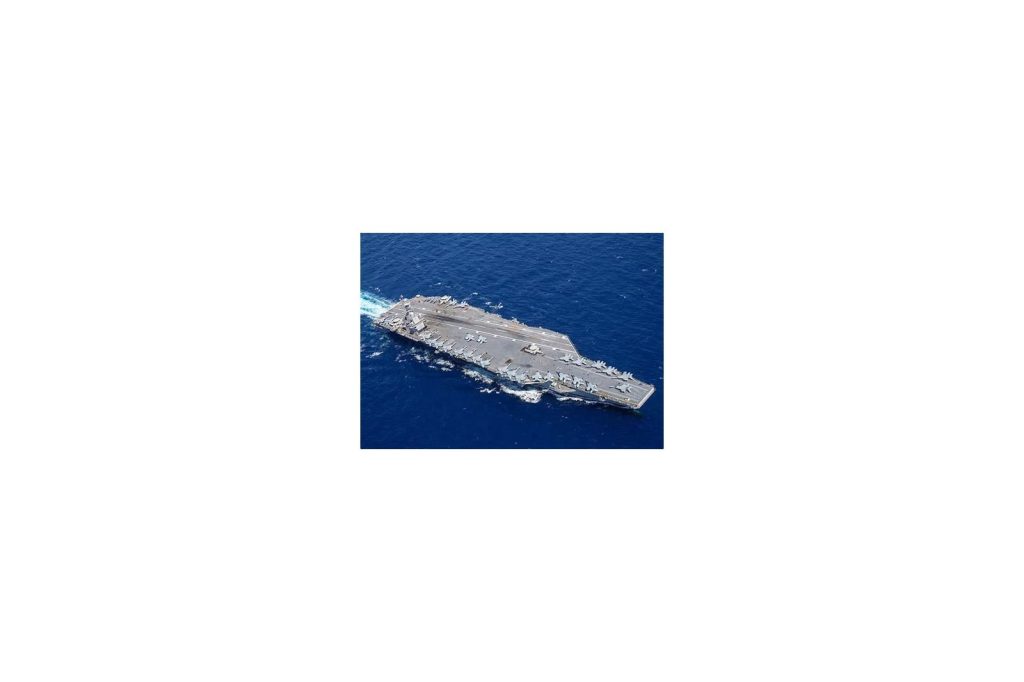
The United States has reimposed a naval blockade on Iran, reviving the maximum pressure sanctions strategy that defined the first Trump administration. Under the new policy, the U.S. Navy and allied naval forces will patrol critical shipping lanes to intercept and prevent Iranian oil tankers from reaching international buyers. The measure represents the latest in a series of American attempts to restrict Iran’s maritime trade, a confrontation that has flared repeatedly over nearly four decades.
The practical effect of the blockade is to tighten an already severe squeeze on Iran’s oil exports. In 2024, Iran was exporting an estimated 1.5 million barrels per day, a steep decline from the 2.5 million barrels per day it shipped in 2018, before President Trump’s first administration reimposed sanctions.
The Strait of Hormuz, a narrow waterway that carries a significant portion of the world’s seaborne oil, serves as the choke point for this new effort. A useful comparison is a highway patrol setting up a checkpoint on the only road out of town, except the road in question is the strait itself, the sole maritime passage from the Persian Gulf to the open ocean.
A History of Naval Confrontation
The United States has imposed naval blockades or similar measures against Iran on multiple occasions. During the Iran-Iraq War from 1980 to 1988, the U.S. launched Operation Earnest Will from 1987 to 1988 to protect Kuwaiti oil tankers from Iranian attacks, a period that became known as the Tanker War. In 1988, U.S. forces sank Iranian naval vessels during Operation Praying Mantis, a direct military engagement.
More recently, in 2011 and 2012, the U.S. and European Union imposed sanctions that effectively blockaded Iranian shipping by targeting its oil exports. After attacks on tankers in the Gulf of Oman in 2019, the U.S. formed the International Maritime Security Construct to patrol the region.
The 2025 blockade, announced by President Trump, reinstates the maximum pressure sanctions policy from his first term in office, which ran from 2017 to 2021. Each of these episodes reflects a pattern of escalating measures aimed at cutting off Iran’s oil revenue, which remains the backbone of the country’s economy and its ability to fund regional activities. The Strait of Hormuz has been a recurring flashpoint in this long-running confrontation, in large part because of its strategic value.
It lies along Iran’s northern coast, with Oman and the United Arab Emirates to the south. For much of history, the strait remained open to navigation even during regional conflicts, but that changed during the Iran-Iraq War when both sides targeted oil tankers and commercial shipping, highlighting the waterway’s vulnerability and its central role in global energy security.
Legal and Strategic Ramifications
The new policy is likely to face legal challenges under international law. The United Nations Convention on the Law of the Sea, in Article 38, guarantees transit passage through straits used for international navigation.
While the U.S. can enforce its own sanctions, a full blockade that prevents all ships from passing through the Strait of Hormuz could draw legal pushback from other nations that rely on the waterway for trade. The strait now carries a large share of the world’s seaborne oil trade and a significant portion of its liquefied natural gas supply. For several Gulf countries, including Kuwait, Qatar, Bahrain, the United Arab Emirates, and Iraq, the strait is the only maritime route for exports.
Any disruption to shipping there has the potential to cause severe supply shortages and to send energy prices sharply higher across Europe and Asia. Iran has periodically threatened to close the strait and has taken steps to prepare for mining its waters.
Those threats have repeatedly drawn a military response from the United States and allied navies, making the strait a recurring flashpoint. What to watch next is how Iran responds to the renewed pressure and whether other major oil consumers–particularly China, which has been a key buyer of Iranian crude–will comply with the blockade or seek to circumvent it. The coming weeks will test both the diplomatic and military dimensions of this policy, as the waterway’s strategic value ensures that any new restrictions on Iran’s maritime trade will carry consequences far beyond the region.




