
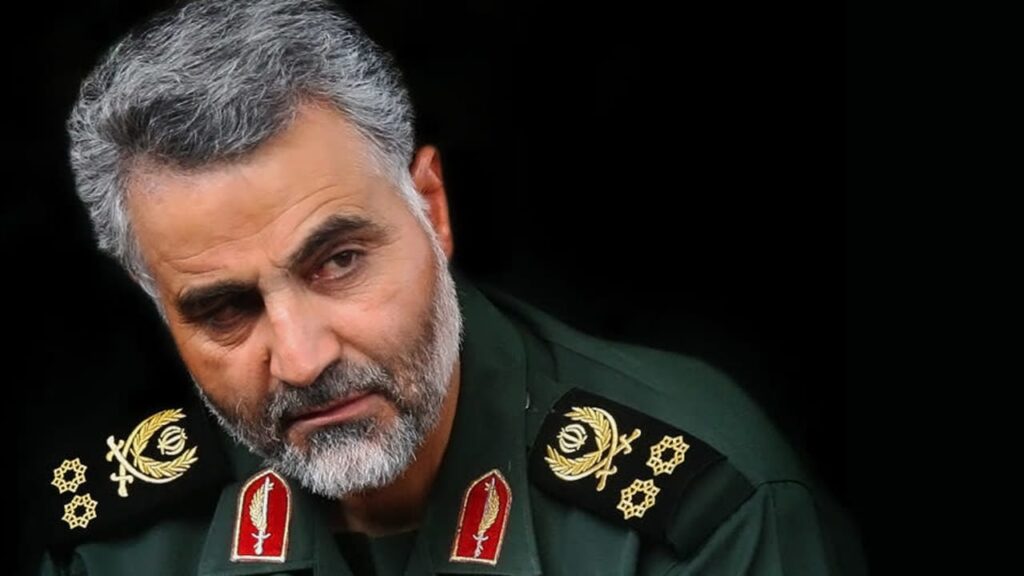
On the night of January 3, 2020, a U.S. drone fired a missile near Baghdad International Airport, killing Major General Qasem Soleimani, the commander of Iran’s Quds Force. The strike, ordered by President Donald Trump, was publicly justified as a preemptive measure to thwart an imminent threat, including a planned attack on the American embassy in Baghdad.
Soleimani’s death did not end the confrontation—it provoked a swift and direct Iranian response: missile salvos aimed at U.S. military bases in Iraq. The episode stands as a defining moment in the post-2003 volatility of the region, illustrating how a single commander’s elimination could push the United States and Iran into open military exchange.
A Commander’s Rise and Regional Reach
Soleimani was a major general in Iran’s Islamic Revolutionary Guard Corps (IRGC) and had commanded the Quds Force since 1998. The Quds Force, formed after the 1979 Iranian Revolution that deposed the monarchy and installed clerical rule, is the IRGC’s arm for extraterritorial military and covert operations. Soleimani joined the newly established Revolutionary Guard in 1979 itself and climbed through its ranks during the grinding Iran–Iraq War from 1980 to 1988, a conflict that shaped his strategic outlook and operational instincts.
Under his command, the Quds Force extended Iran’s influence across the Middle East. It supplied Hezbollah in Lebanon, backed Hamas in Gaza, and propped up the Assad regime in Syria during the civil war.
In Syria, Soleimani personally helped secure Russian military intervention on Assad’s behalf—a move that reshaped the battlefield and deepened Moscow’s commitment to Tehran’s ally. He also played a key role in the fight against ISIS in both Iraq and Syria, a campaign that brought Iranian forces into de facto coordination with American-backed forces for a time, even as deep suspicions remained. Soleimani was a close advisor to Supreme Leader Ali Khamenei, and some analysts described him as the second-most powerful figure in Iran after Khamenei himself. Western governments viewed him with profound wariness.
The United States had designated him a terrorist in 2005, and the United Nations and European Union later imposed personal sanctions on him for attacks planned or attempted abroad. Inside Iran, however, he was considered a national hero—a figure who had defended the country in war and expanded its stature.
The Strike, the Response, and the Legacy That Endures
The Trump administration argued the drone strike was necessary to stop an imminent threat, specifically citing a planned assault on the U.S. embassy in Baghdad. Iran did not wait for diplomatic channels to respond; within days, the Islamic Republic launched ballistic missiles at American bases in Iraq.
That volley—though it caused no U.S. combat fatalities—marked a direct military retaliation and demonstrated how the death of a single commander could alter the tenor of American-Iranian confrontation. Soleimani’s successor as Quds Force commander is Esmail Qaani, a longtime deputy who inherited the networks Soleimani spent decades building. Qaani has continued to project Iranian influence abroad, but the loss of Soleimani’s personal authority, battlefield charisma, and direct relationship with Khamenei creates a gap that cannot be easily filled.
Still, the institutional methods—covert support for proxies, intelligence operations, and alliance cultivation—remain in place. The strike and its aftermath changed the framework of U.S.-Iran relations.
It demonstrated that the United States would target senior Iranian military leadership when it perceived an immediate danger, and that Iran would respond with conventional missile strikes rather than with only indirect pressure. Readers tracking the region should understand that Soleimani’s networks and strategic vision, refined over decades of conflict from the Iran–Iraq War through the Syrian civil war and the fight against ISIS, continue to guide Iranian regional strategy through his successor.
The episode remains a stark case study in how targeted killings can both disrupt and escalate, leaving a legacy that still shapes the risks faced by American forces and allies in the Middle East.




