
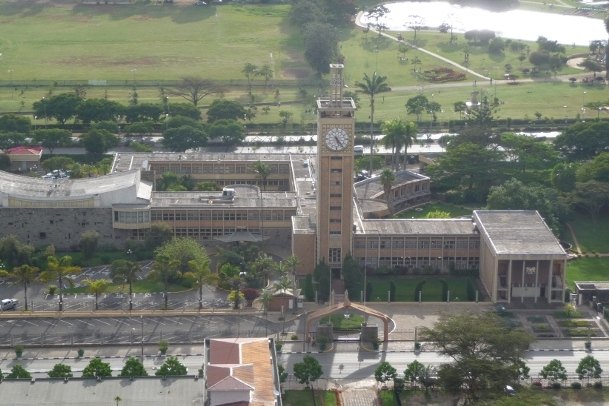
Nairobi went into lockdown on Thursday as Kenya’s government moved to stop marches marking two years since youths stormed Parliament in the 2024 Gen Z revolt against the Finance Bill and economic hardship.
Roadblocks went up across the city from as early as 2 a.m., cutting entry to the Central Business District, and officers fired tear gas at groups trying to gather. Parliament itself was turned into a fortified enclave behind razor wire and metal barricades, guarded by the paramilitary General Service Unit, with water-cannon trucks parked outside.
When evening came, police had arrested at least 355 people nationwide, 161 of them in Nairobi. Businesses in the city centre kept their shutters down all day.
The show of force had been telegraphed. Days before, President William Ruto declared the anniversary protests “will not happen”. Nairobi’s regional police commander, Issa Mohamud, branded the gatherings illegal on notice grounds, though opposition figures said they had duly filed notification. Police spokesperson Muchiri Nyaga warned that officers “know what they are supposed to do.”
Commemorations went ahead in scattered form anyway, and some opposition figures claimed success. “We are happy that the march was successful. Today has turned out to be a public holiday,” said Eugene Wamalwa of the DAP-K, who reported memorial events in Nairobi and Mombasa as well as western Kenya, the Rift Valley and Nyanza, floating the idea of making June 25 a holiday. Siaya Governor James Orengo spoke of participation “in the whole country” and a “spirit of patriotism.”
What the lockdown feared was a repeat of June 25, 2024, the day the movement went physical. Thousands had gathered against the Finance Bill 2024; some broke into Parliament and set sections of it ablaze. Official counts put the 2024 toll at more than 60 dead nationwide, 29 of them in Nairobi.
The state’s own accounting of that day is grim. The policing watchdog IPOA has named nine young people it says were killed by police in the Parliament area alone: six by gunshot, three by blunt force trauma. Those named include David Chege, Erickson Kyalo, Eric Kayoni Shieni, Kelvin Odhiambo Maina, Ibrahim Kamau Wanjiru and Earnest Kanyi, alongside Kenneth Njiru Mwangi, Wilson Sitati and Beasley Kogi. Each case remains under active investigation.
The BBC documentary Blood Parliament raised the temperature, alleging a Kenya Defence Forces officer shot dead a onetime University of Nairobi student, Eric Shieni, from just 25 metres away. Government spokesperson Isaac Mwaura dismissed the film as “biased and incomplete”, while insisting IPOA was investigating.
Two years on, the grievances that lit the fuse, soaring living costs, jobless youth and anger at police killings, are unresolved, and each anniversary now arrives with barricades.
Sources
- IPOA Names 9 Gen Z Protesters Shot Dead at Parliament During June 25 Demonstrations – Tuko.co.ke
- Kenya’s President William Ruto locks down Nairobi to prevent Gen-Z protests – World Socialist Web Site




