
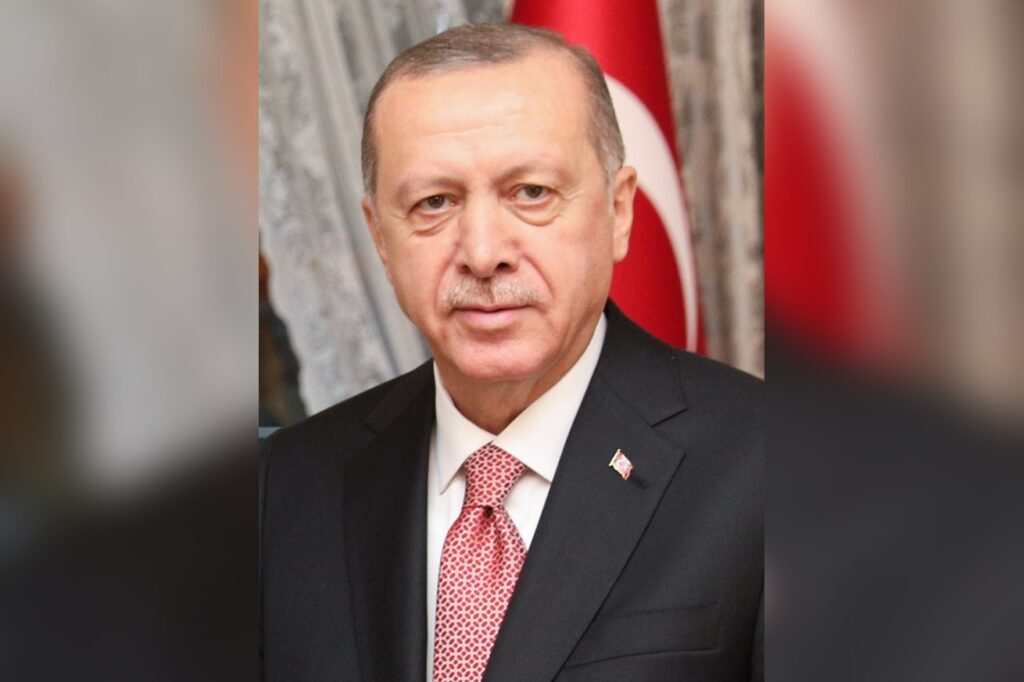
“We have to maintain our balance, we don’t want to appear very close to Russia.” That was how one person familiar with Recep Tayyip Erdogan’s August 2022 trip to Ukraine described Ankara’s thinking, Middle East Eye reported. It still sums up Turkey’s position in the war.
Weapons to Kyiv, a phone line to Moscow
Turkey sells arms to one side and keeps talking to the other. Since the February 2022 invasion, Ukraine had received 50 armed drones from the Turkish company Baykar by the time of Erdogan’s visit, plus mine-resistant armoured vehicles called Kirpi. The Bayraktar TB2 drone became a fixture of Ukraine’s defense. Baykar chief executive Haluk Bayraktar called the aircraft “one of the main elements connecting Ukraine and Turkey.” The company’s top engineer, Selcuk Bayraktar, is married to Erdogan’s daughter Sumeyye.
Baykar also announced plans for a factory in Ukraine to make drones, electronics and software. Moscow’s answer came from Kremlin spokesman Dmitry Peskov, who said any such plant “will immediately fall under demilitarisation,” which is to say it would be destroyed.
Erdogan, meanwhile, had met Vladimir Putin in Sochi on August 5, 2022, where the two discussed partial gas payments in local currencies.
What Ankara did and did not do
Turkey closed the Straits to Russian military vessels, stopped Russian military flights over Syrian airspace and called the invasion “illegal and unprovoked.” It did not join Western sanctions, saying it followed only penalties issued by the UN. Western governments worried that Turkey could become a route around those sanctions; Turkish officials said they would prevent that.
The mediator
Turkey hosted talks in Antalya and Istanbul, then worked on narrower deals. The best known is the Black Sea Grain Initiative of July 2022, which, according to Middle East Eye, let 22 million tonnes of Ukrainian grain reach world markets while allowing Russian agricultural exports as well.
A July 2026 analysis from the CIDOB think tank, written by Eleonora Tafuro Ambrosetti of ISPI and Riccardo Gasco of IstanPol, traces three phases. First came the host of high-level talks. Then the broker of specific agreements. By 2025, they wrote, Turkey acted mainly as a “technical platform” for communication, not a diplomatic agenda-setter. They describe the approach as “a tool of statecraft: Ankara uses access, ambiguity, political networks, and geography to keep channels open.”
Business and the drift toward Kyiv
CIDOB counts approximately 1,100 Turkish companies operating in Ukraine, with investments reaching $5 billion. Construction firms, Onur Group among them, work on roads, bridges, ports and energy systems, coordinated through a Turkish-Ukrainian Reconstruction Task Force.
Defense ties are deepening too, from drone production to naval projects. The authors argue that strict neutrality gets harder as those links grow, and that “Turkey’s strategic autonomy is increasingly exercised from within a NATO and European security context.”
Sources
- Turkey, Ukraine, and the Black Sea Balance: Mediation, Reconstruction, and European Defence
- Turkey's Erdogan heads to Ukraine with a message of neutrality and influence




