
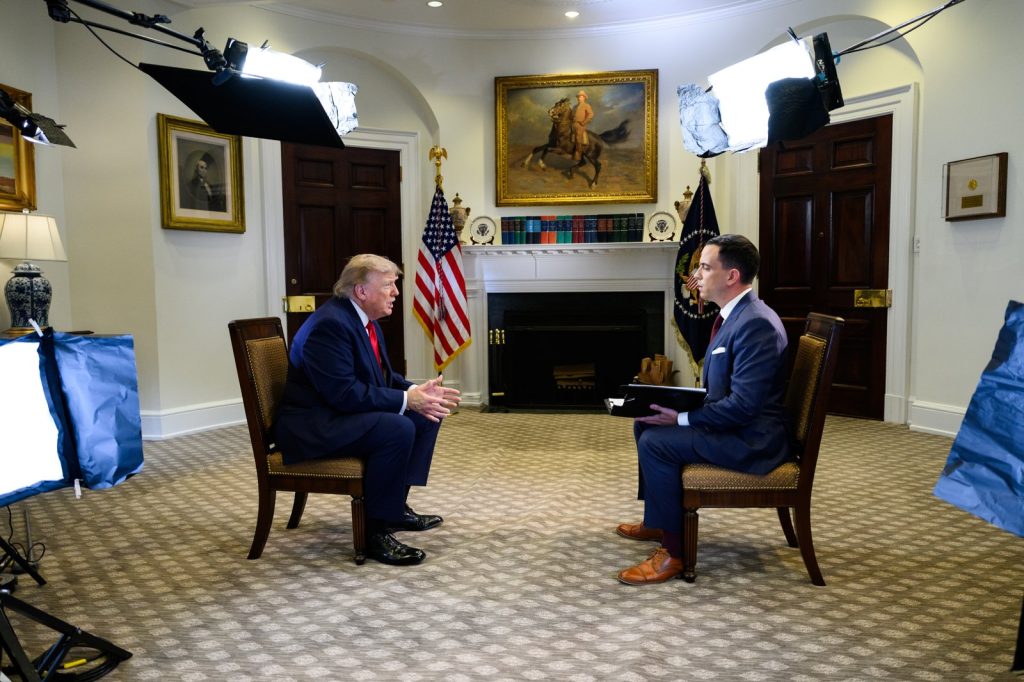
“I can’t tell you, because right now we’re in heated negotiations.” That was President Donald Trump’s answer, in a telephone interview with Fox News, when he was asked about a Pakistani request to push back his April 7 deadline for Iran to reopen the Strait of Hormuz.
Pakistan, the mediator, wanted a two-week extension. Prime Minister Shehbaz Sharif posted that talks were “progressing steadily, strongly and powerfully”, and said his country had asked Iran to open the strait for a matching two weeks “as a goodwill gesture”. Trump said of Sharif: “I can say this – that I know him very well. He’s a highly respected man, all over.” White House Press Secretary Karoline Leavitt said earlier that Trump “has been made aware of the proposal, and a response will come.”
Oil reacted at once. Brent slid as low as US$104.50 after settling near US$109.
A day of threats
Earlier on April 7, Trump had threatened to wipe out Iran’s “whole civilisation” as US attacks continued on the country’s main oil export facility. “A whole civilisation will die tonight, never to be brought back again. I don’t want that to happen, but it probably will,” he posted. “Maybe something revolutionarily wonderful can happen, WHO KNOWS? We will find out tonight.”
According to a person familiar with the matter, the threat led Iranian mediators to halt their participation in the diplomacy, and mediators then scrambled to keep ceasefire talks alive. A senior White House official played down the move and said legitimate negotiations were still taking place.
US forces struck sites on Kharg Island that day, but not energy infrastructure, US officials said. Fox News reported that bunkers, a radar station and ammunition storage were targeted, along with an unintended hit on the island’s landing docks. Two people were killed in a US-Israel attack on a railway bridge near Kashan, state-run Nour News reported. Iran fired seven ballistic missiles and several drones at Saudi Arabia overnight into April 7, the kingdom said.
Trump had said on April 6 that backing off his deadline again was “highly unlikely”. He began issuing deadlines on March 21 to force Iran to reopen Hormuz, which carries roughly a fifth of seaborne oil shipments, and has repeatedly extended them. At a news conference that day he said freedom of navigation through the strait must be part of any deal.
Pressure from all sides
Vice-President J.D. Vance, speaking in Budapest, said he was confident Iran would respond in time. He also hinted at a military operation bigger than anything yet used. “They’ve got to know we’ve got tools in our toolkit that we so far haven’t decided to use,” he said.
At the UN Security Council, Iran’s ambassador Amir-Saeid Iravani said his country stayed open to talks but “will not stand idle in the face of such egregious war crimes” if civilian infrastructure were targeted. The UN has warned that indiscriminate attacks on such sites could amount to a war crime. Trump said he is “not at all” concerned. Russia and China vetoed a Council resolution that would have encouraged efforts to restore shipping through the strait.
The war, which began February 28, has killed more than 5,200 people, most of them in Iran and Lebanon. IMF Director Kristalina Georgieva told Bloomberg News the fund would downgrade its forecasts for global growth. “We were on the way of upgrading our growth projections for 2026,” she said.




