
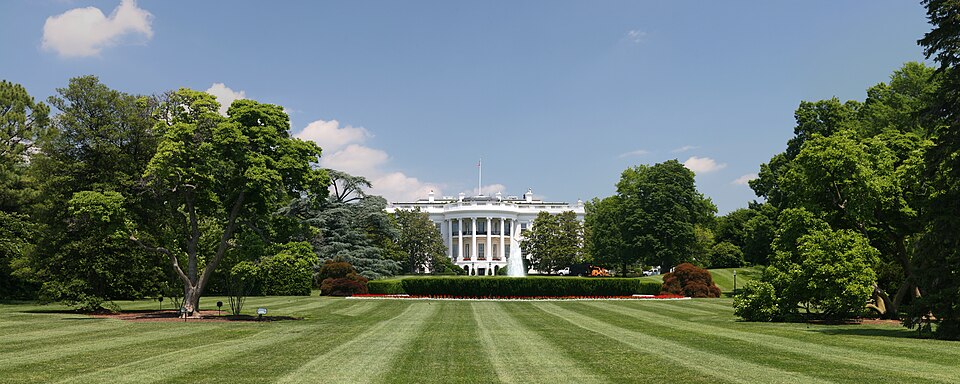
WASHINGTON, July 8 — The White House is staring down a new crisis with Iran, and the scene here carries the unmistakable weight of a president who has spent years tearing up the old rules of engagement. On the ground, aides describe a West Wing operating with a coiled readiness, the kind that follows a clear, declared end to diplomacy. Donald Trump, the 47th President, has already drawn the line.
On March 31, 2025, he declared the February 2025 ceasefire with Iran “over” — a direct response to Tehran’s missile test. That single sentence, delivered from the White House, effectively erased months of fragile calm.
Now, by nightfall on July 8, the question is not whether the standoff will escalate, but how far it will go.
The Ceasefire That Wasn’t
The February 2025 ceasefire had always been a tenuous thing. It was never a formal treaty, never signed in a neutral capital. It was, by all accounts, a pause — a mutual exhaustion after years of shadow war.
But when Iran tested a missile in late March, Trump did not hesitate. He pulled the plug on diplomacy as swiftly as he had withdrawn the United States from the JCPOA in 2018, reimposing sanctions that had once strangled Tehran’s economy.
Mike Waltz, the national security advisor, has confirmed that the administration is prepared for military options. That is not a threat made lightly. Waltz speaks in clipped, unambiguous terms.
When he says the U.S. is ready, the Pentagon listens.
The Maximum Pressure Legacy
This is not Trump’s first confrontation with Iran. His first term set the template. In 2018, he abandoned the Obama-era nuclear deal.
The sanctions that followed were brutal. By 2020, his ‘maximum pressure’ campaign had reduced Iran’s oil exports to 400,000 barrels per day — a fraction of what Tehran needed to fund its regional proxies and nuclear program.
Then came the drone strike on January 3, 2020. Trump ordered the killing of Qasem Soleimani, the head of the Islamic Revolutionary Guard Corps’ Quds Force, as he arrived at Baghdad International Airport. Soleimani was not just a general; he was the architect of Iran’s influence across the Middle East, the man who armed Hezbollah, propped up Bashar al-Assad, and directed militias against American troops.
The strike was a shock to the system — a targeted assassination that Iran’s leadership had never expected on their own soil.
Energy Independence as a Weapon
Trump’s approach to Iran has always been intertwined with energy. He has long advocated for American energy independence, and the numbers back him up. The U.S. became a net oil exporter in 2019, a historic shift that gave Washington leverage it had never held before.
By 2024, the country was producing 13.2 million barrels per day — a level that made OPEC nervous and Tehran furious. That production capacity means the White House can squeeze Iran’s oil revenue without worrying about spiking prices at home.
The 400,000 bpd figure from 2020 is a floor, not a ceiling. If Trump’s team decides to reinstate that level of pressure, Iran’s economy — already battered by inflation and protests — could buckle.
What Comes Next
By nightfall on July 8, the situation remains fluid. The U.S. has not yet launched a strike, but the military options Waltz referenced are not theoretical. The Pentagon has assets in the region: carrier strike groups, B-52 bombers rotated through Diego Garcia, and a network of bases from Qatar to Kuwait.
Iran, meanwhile, has its own capabilities — ballistic missiles, proxy militias in Iraq and Yemen, and the ability to mine the Strait of Hormuz. The February 2025 ceasefire is dead.
The missile test that killed it was a provocation, but one that Tehran likely calculated carefully. They know Trump’s temperament. They know he views diplomacy as a trap and military action as a tool.
What they may not know is whether this time, the response will be a repeat of Soleimani — a single, devastating strike — or something broader. On the ground in Washington, the mood is tense but not panicked.
This is a city that has watched Trump navigate crises before. The rhythm is familiar: a sharp statement, a buildup of forces, a moment of decision. What comes next depends on Tehran.
But the White House has made its position clear. The ceasefire is over. The maximum pressure campaign is back.
And the military options are on the table.




