
Four people tied to a flotilla heading for Gaza, plus a group of Hamas-aligned Muslim Brotherhood operatives, were hit with U.S. sanctions on Tuesday. The Treasury Department’s Office of Foreign Assets Control (OFAC) announced the action, naming the Popular Conference for Palestinians Abroad (PCPA) as the organizer of the flotilla.
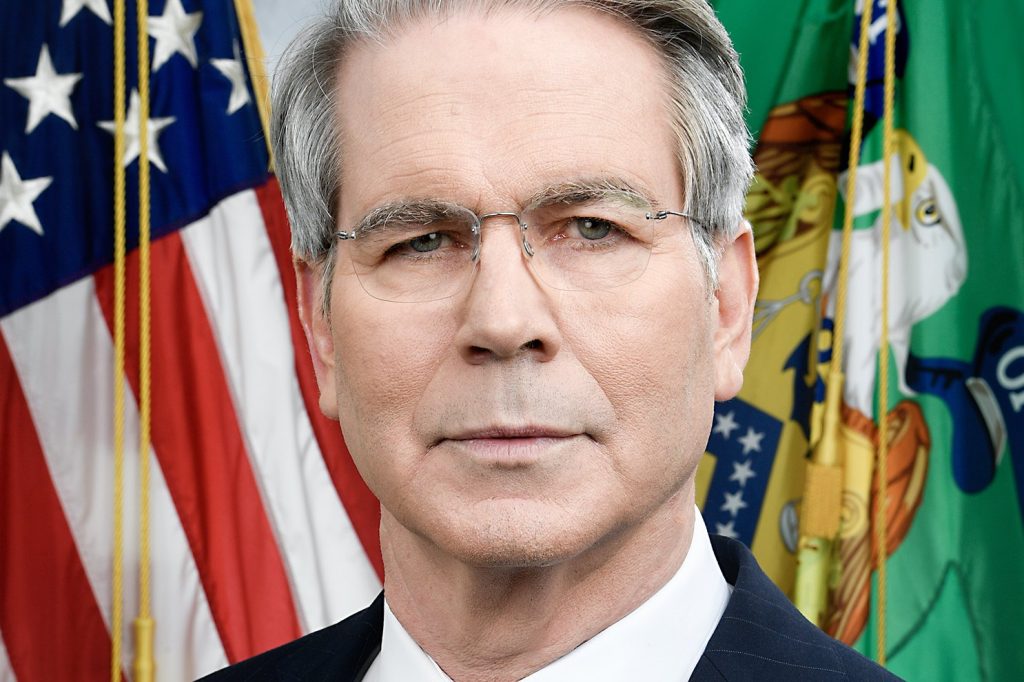
“The pro-terror flotilla attempting to reach Gaza is a ludicrous attempt to undermine President Trump’s successful progress toward lasting peace in the region,” said Treasury Secretary Scott Bessent. “Treasury will continue to sever Hamas’ global financial support networks, no matter where in the world they are.”
The flotilla and its backers
Washington already lists the PCPA as a terrorism-designated body. OFAC pointed to its own releases from October 2024 and January 2026 in arguing that the PCPA and Samidoun, a front for the Popular Front for the Liberation of Palestine (PFLP), are secretly controlled by sanctioned Palestinian groups. Samidoun raises money in countries where the PFLP faces legal limits. The PCPA, which presents itself as a voice for Palestinians abroad, was started with money from Hamas’s International Relations Bureau, OFAC said, and Hamas has placed its own officials throughout the organization, including its General Secretariat.
Four people were designated as leaders or officials of those two groups:
Saif Hashim Kamel Abukishek, based in Spain, sits on the PCPA’s General Secretariat and served on the flotilla’s Steering Committee. Hisham Abdallah Sulayman Abu Mahfuz, in Jordan, is acting Secretary General and President of the PCPA; he was its Deputy Secretary General from 2014 to 2017. Mohammed Khatib is Samidoun’s European coordinator, based in Belgium. Jaldia Abubakra Aueda coordinates Samidoun in Madrid and helped found a partner organization in 2021.
Treasury also warned banks. Flotillas run by or backing designated parties, it said, carry real compliance risk for financial institutions. It encouraged nonprofits and their banks to keep taking a risk-based approach so legitimate humanitarian aid still reaches conflict zones. In its view, the action and the January 21, 2026 designations show that sanctioned groups hold considerable influence over maritime flotillas to Gaza.
Muslim Brotherhood networks
The second set of targets sits inside the Muslim Brotherhood’s Hamas-aligned networks. In 2014, senior Hamas leaders merged several religious bodies into one umbrella organization so that religious teaching in Gaza would follow Hamas ideology, OFAC said. Marwan Abu Ras was put in charge. The late Yahya Sinwar tracked his activity and directed the work of the Palestinian Scholars Association, which Abu Ras leads. Both the association and Abu Ras were designated for acting on Hamas’s behalf.
In Egypt, OFAC went after people linked to HASM, a violent Muslim Brotherhood offshoot that is committed to attacking civilians. Karim Sayed Ahmed Moghny, a leading Hamas operative, directed militant activity as of 2025 and gave training in covert operations. Between 2021 and 2025 he built several networks meant to strike Israeli interests, recruiting and training members and handling transfers of funds. He was designated for acting for Hamas and for supporting HASM.
Muhammad Jamal Hassan al-Najjar, another Hamas operative, once worked with HASM member Sherif Ahmed Ewis Ahmed to obtain explosives and weapons and to plan attacks. Some of those efforts involved Yahya al-Sayyid Ibrahim Musa, a senior HASM official already designated by the U.S. More recently, al-Najjar was part of an effort to pay salaries to Hamas members. Al-Najjar was designated for supporting Hamas, and Ahmed for acting on behalf of HASM.
The State Department designated Hamas under Executive Order 13224 on October 31, 2001, and the group is also listed as a Foreign Terrorist Organization.




