
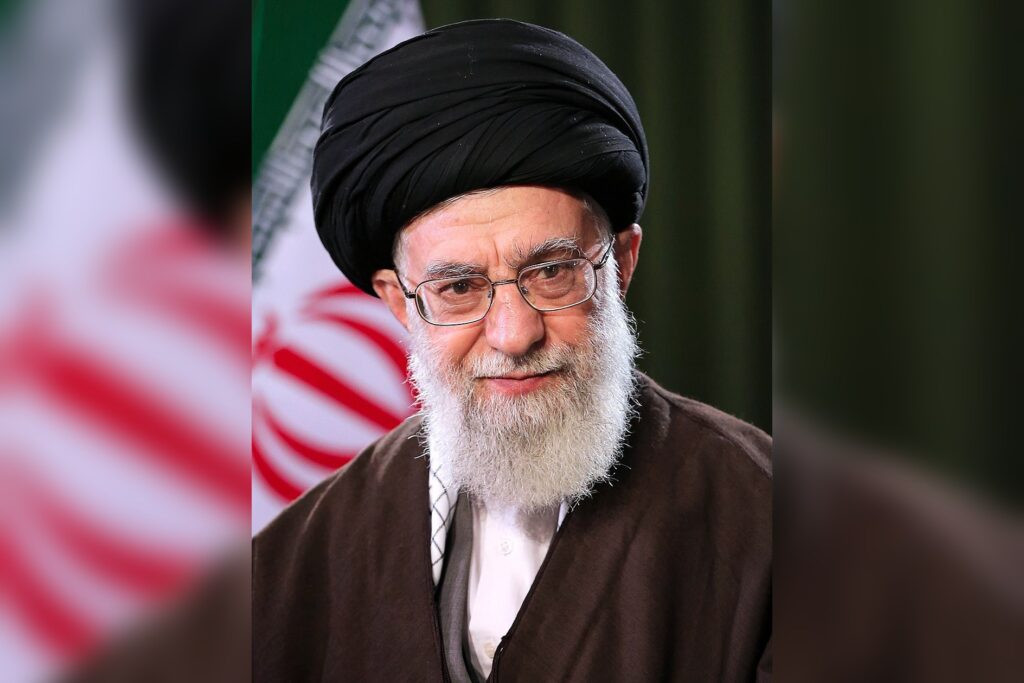
The first word that Ayatollah Ali Khamenei was dead did not come from Tehran. It came from Washington and Jerusalem, on Saturday, 28 February 2026, while Iran’s Foreign Ministry was still insisting he was “safe and sound.”
US President Donald Trump said the supreme leader had been killed in joint US-Israeli strikes. Israeli Prime Minister Benjamin Netanyahu was more careful that evening, telling reporters “there are many signs” that Khamenei was “no longer with us” and giving no detail. Iranian state media confirmed the death the next day. A television presenter broke down in tears on air as he announced Khamenei had reached “martyrdom.” The Fars news agency said the strike hit his compound in Tehran while he was “carrying out his duties.” He was 86.
What the strike hit
Satellite images from Airbus showed black smoke over the compound in the capital, with several buildings badly damaged. Reuters described the compound in central Tehran as pulverized. Two Israeli sources told CNN the operation had gone after more than one senior figure, among them President Masoud Pezeshkian and the armed forces chief of staff, Abdolrahim Mousavi.
Trump framed the attack as a “massive and ongoing operation” against what he called a “wicked, radical dictatorship.” He said one aim was regime change and urged Iranians to rise up against their government. Whether that would follow was unclear. Experts told CNN the likelier result was harder rule by the Islamic Revolutionary Guard Corps.
A country already weakened
The killing landed on a state in poor shape. Sanctions had isolated Iran for years, and US and Israeli strikes in June 2025 had dealt Khamenei’s rule what CNN called a severe blow. Six months later, protests that began over economic grievances turned political and, within weeks, reached all 31 of the country’s provinces. The government answered with a crackdown that killed thousands of demonstrators. In January, with Trump threatening to step in, Khamenei vowed that Iran would not “yield to the enemy.”
Ali Larijani, the secretary of the Supreme National Security Council, answered the strike with a threat to “stab” America in the heart. He also said a temporary leadership body, built around the president and the head of the judiciary, would soon be in place. Under the constitution an interim council of three, including a jurist from the Guardian Council, carries out the leader’s duties until the Assembly of Experts names a successor, according to the Middle East Institute.
The man and his rule
Khamenei held office from 1989, so his rule lasted 36 years. Reuters noted that he looked an unlikely pick when the charismatic Ayatollah Ruhollah Khomeini, founder of the Islamic Republic, died. Early critics dismissed him as weak and indecisive. Karim Sadjadpour of the Carnegie Endowment for International Peace called him “an accident of history,” a man who went from a weak president to an initially weak supreme leader and then to one of the five most powerful Iranians of the last 100 years.
His word became law. He commanded the armed forces and appointed the heads of the judiciary, the security agencies and state broadcasting, and he put allies in charge of the Revolutionary Guards. He quashed a run of elected presidents who wanted more open policies at home and abroad. Critics say that ensured Iran’s isolation.
On the nuclear file he repeatedly denied that the program was meant to produce a bomb. In 2015 he gave cautious backing to the deal that President Hassan Rouhani negotiated with world powers, which limited the program in return for sanctions relief. After the US withdrew from the agreement in 2018 and reimposed sanctions, he sided with hardliners who attacked Rouhani’s approach.
He kept up the attacks on Washington into Trump’s second term. In 2025, as Trump pressed for a new nuclear deal, Khamenei asked: “Who are you to decide whether Iran should have enrichment?”
Sources
- Ayatollah Ali Khamenei dead at 86, ending his iron grip on Iran
- What we know about the death of Iranian supreme leader Khamenei




