
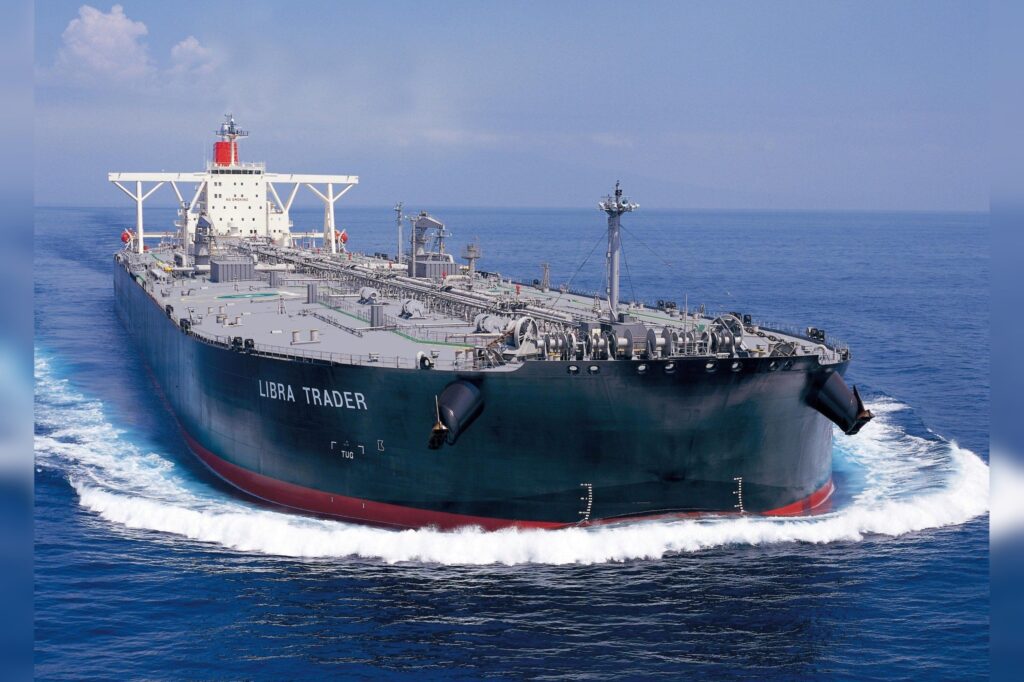
Tanker transits through the Strait of Hormuz have fallen to zero on some days, and hundreds of vessels sit outside it, unable to reach port. An analysis published by Lawfare on March 23 asks a blunt question about that standoff: what does international law actually say Iran can do?
Iran has declared that the strait will “be under control of the Islamic Republic.” Its attacks on shipping include Shahed drones, missiles, mines, and an attempt to hit a tanker with a remote-controlled boat packed with explosives. Nearly one-fifth of globally consumed petroleum liquids travel through the strait, and nearly 90 percent of the oil that moves through it flows to Asian markets.
What the treaty says
The key text is the United Nations Convention on the Law of the Sea, known as UNCLOS. Articles 37 through 44 give all ships and aircraft a right of transit passage through straits used for international navigation. That right “shall not be impeded,” the treaty says, and “there shall be no suspension of transit passage.”
Hormuz is generally treated as such a strait. It is so narrow that large ships must pass through the territorial waters of the countries on either shore, and traffic follows a separation scheme set by the International Maritime Organization. The U.S. Navy Commander’s Handbook on the Law of Naval Operations and Germany’s Law of Armed Conflict Manual both restate the commitment to leave transit passage unimpeded.
Iran’s position
Iran signed UNCLOS in 1982 and never ratified it. At signing it described parts of the treaty, transit passage included, as “quid pro quo” bargains among parties rather than a record of existing customary law. Iran therefore holds that it is not bound. A 1993 law lets it suspend the passage of foreign ships in its territorial waters and requires prior authorization for warships, submarines and vessels carrying “dangerous or harmful materials with respect to the protection of the environment.” Lawfare notes that this last category can take in commercial oil tankers.
Oman, on the southern side of the strait, is a party to UNCLOS yet has declared that warships must seek “prior permission” to cross its territorial waters.
The treaty is not the whole story, the analysis says. In the 1949 Corfu Channel case, the International Court of Justice rejected Albania’s attempt to require authorization before British warships passed through the channel. Ships enjoy unrestricted passage in peacetime through a strait used for international navigation, the court held, so long as the transit does not threaten the coastal state’s security. The U.S. Freedom of Navigation program lists both Iranian and Omani restrictions as “excessive maritime claims” and sails through the strait under the transit passage regime. Each such passage builds the state practice that helps turn the regime into customary law.
Self-defense and blockade
Iran could point to Article 51 of the UN Charter, which allows self-defense “if an armed attack occurs.” Lawfare says Iran has not consistently framed its actions in legal terms, relying instead on rhetoric to claim control as leverage. Any self-defense claim would still have to be necessary and proportional, and civilians and civilian objects cannot be targeted, a rule the analysis says Iran breaks when it attacks commercial vessels. Closing the strait also hurts third parties, not just the attacking state, which creates what it calls a doctrinal gap.
The law of naval warfare, reflected in the 1907 Hague Convention XIII, the San Remo Manual and the 2023 Newport Manual, allows blockades. They require a formal declaration, notice to other states, genuine effectiveness and impartial application to all vessels. A blockade also cannot block neutral states from their own ports and coasts. Iran is restricting access indiscriminately, Lawfare writes, so it is likely violating that rule.
Both sides in the war have also gone after energy infrastructure. The U.S. and Israel have struck Iranian oil depots, refineries and fuel storage. Iran has hit fuel tanks and oil facilities in Fujairah and elsewhere in the United Arab Emirates, and the Salalah port in Oman. The analysis calls these clear instances of economic warfare, which humanitarian law has never fully prohibited.




