
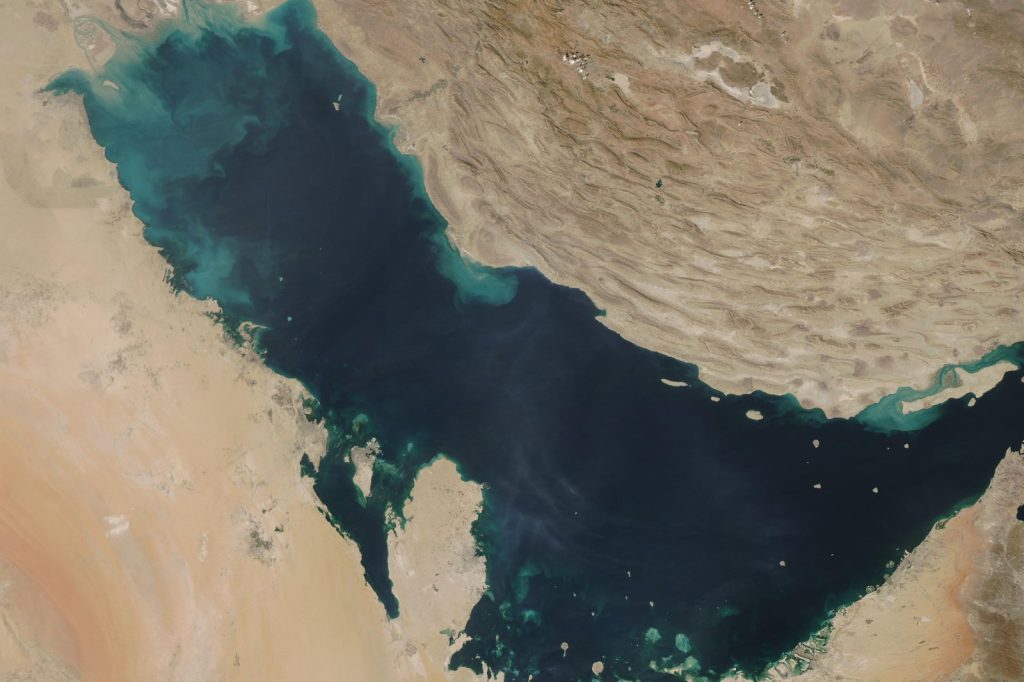
Two countries ring the Strait of Hormuz, and they do not read the law of the sea the same way. Oman has ratified the UN Convention on the Law of the Sea (UNCLOS). Iran signed it, with a declaration attached, and never ratified. Every argument about who may sail through the strait, and on what terms, starts from that split.
How the old rules gave way
For decades the controlling text was the 1958 Geneva Convention on the Territorial Sea and the Contiguous Zone. Its Article 16, paragraph 4, said innocent passage through straits used for international navigation could not be suspended by the coastal state. The International Court of Justice had already recognised that right in the 1949 Corfu Channel case.
Then territorial seas grew. Once the twelve-mile limit spread, a large number of straits fell wholly inside coastal waters, and Giuseppe Cataldi notes that about two thirds of the world’s international straits came under coastal sovereignty. Maritime powers did not like that outcome.
UNCLOS, which took precedence over the 1958 text when it entered into force in 1994, settled the dispute with a bargain. Coastal states got the twelve-mile territorial sea. Ships and aircraft using straits got “transit passage,” set out in Part III of the convention and applied by Article 37 to straits connecting one part of the high seas or an Exclusive Economic Zone with another.
Why transit passage matters
The regime is more generous than innocent passage. It covers overflight, it cannot be suspended, and it does not expressly force submarines to surface. A coastal state has far fewer ways to restrict traffic. Many coastal states resisted the idea, both during the negotiations and after the convention came into force.
Where Iran, Oman and Washington stand
Iran’s own 1993 maritime law allows innocent passage under certain conditions. According to Farzin Nadimi of the Washington Institute, it makes no reference to transit passage and does not treat Hormuz as an international strait. Cataldi adds that Iran’s declaration on signing called the transit-passage provisions a “quid pro quo,” not customary law, and therefore not binding on states outside the treaty. Tehran also demands prior authorization for warships using innocent passage.
Oman, though a party since August 17, 1989, takes a related line: the convention does not stop a coastal state from taking measures to protect its interests in peace and security, including asking for permission before warships transit. Nadimi reports that Oman, like Iran, wants prior notification, and that Washington does not accept the requirement.
The United States is not a party to UNCLOS. According to Nadimi, it is party to the 1958 convention, treats UNCLOS as customary international law, and follows most of its provisions. Its position on straits is that unhindered transit is a long-established practice open to every state, not a favor granted by the coast. Washington holds that Iran cannot close the strait and that merchant and military vessels enjoy the same passage rights.
Nadimi’s warning, written in 2019, was that these competing readings leave room for misuse and military flare-ups.
Sources
- Clarifying Freedom of Navigation in the Gulf (The Washington Institute for Near East Policy, Farzin Nadimi)
- The Strait of Hormuz (Questions of International Law, Giuseppe Cataldi)




