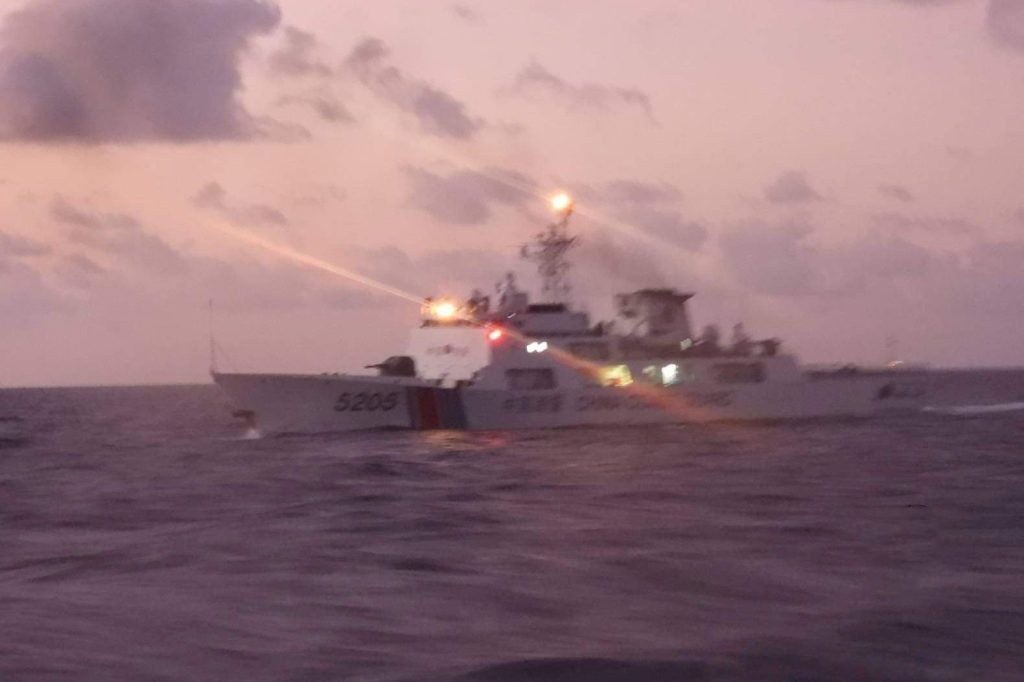
On 10 August 2023 the Philippines rejected a Chinese demand that a warship stranded near Scarborough Shoal be removed. Manila described the vessel as a foreign warship that entered Philippine waters without permission, while Beijing labeled it “abandoned debris” that poses a hazard to navigation and a potential source of pollution.
The disagreement reflects a broader contest over authority in the South China Sea, and both sides appear unwilling to yield. The grounding itself is undisputed: the Chinese warship lies within the maritime zone that the Philippines claims as its territory. What follows is a clash of legal narratives and national pride.
China frames the issue as an environmental and safety concern, arguing that a sunken warship threatens commercial traffic and could leak pollutants. State‑run media in Beijing have portrayed the situation as a result of “Filipino negligence,” implying that Manila bears responsibility for the hazard.
The Philippines counters that the vessel is not mere debris but evidence of an unlawful incursion. The Armed Forces of the Philippines said it will continue to monitor the site and uphold the country’s rights under the United Nations Convention on the Law of the Sea (UNCLOS). Manila’s legal position rests on the provisions of UNCLOS, which it cites as the basis for defending its territorial claims. While the legal arguments are clear on paper, the reality in the South China Sea is shaped by power dynamics as much as by statutes.
The grounded warship is a tangible, visible reminder of the dispute. Removing it could be interpreted as a concession, whereas leaving it in place signals defiance.
China has repeatedly called for immediate removal; the Philippines has responded with a categorical “no.” This episode differs from previous flashpoints that involved fishing vessels, coast‑guard ships, or artificial islands. A warship is larger, more militarized, and symbolically potent, making it harder for either side to ignore or downplay. Both governments are keen to avoid any appearance of weakness, and the standoff therefore risks escalating into periodic confrontations.
Looking ahead, the impasse is likely to persist. The Philippines has indicated it will not bow to pressure, while China continues to press its demand.
The result may be a protracted stalemate marked by mutual accusations of provocation. Commercial shipping routes that pass near Scarborough Shoal could face heightened uncertainty, and environmental concerns will be voiced and dismissed according to each side’s narrative. At its core, the dispute is about sovereignty.
Both Beijing and Manila assert overlapping rights to the same waters. International law, chiefly UNCLOS, offers a framework but lacks an enforcement mechanism that both parties accept.
The grounded warship has become a litmus test for each nation’s resolve to defend its interpretation of that framework. In the coming weeks and months, the situation is expected to evolve through diplomatic notes, statements, and possibly further legal maneuvers, rather than through the removal of the vessel itself. The standoff underscores the ongoing contest for control over the strategic maritime zones of the region, a contest that has endured for decades and shows no sign of abating.