
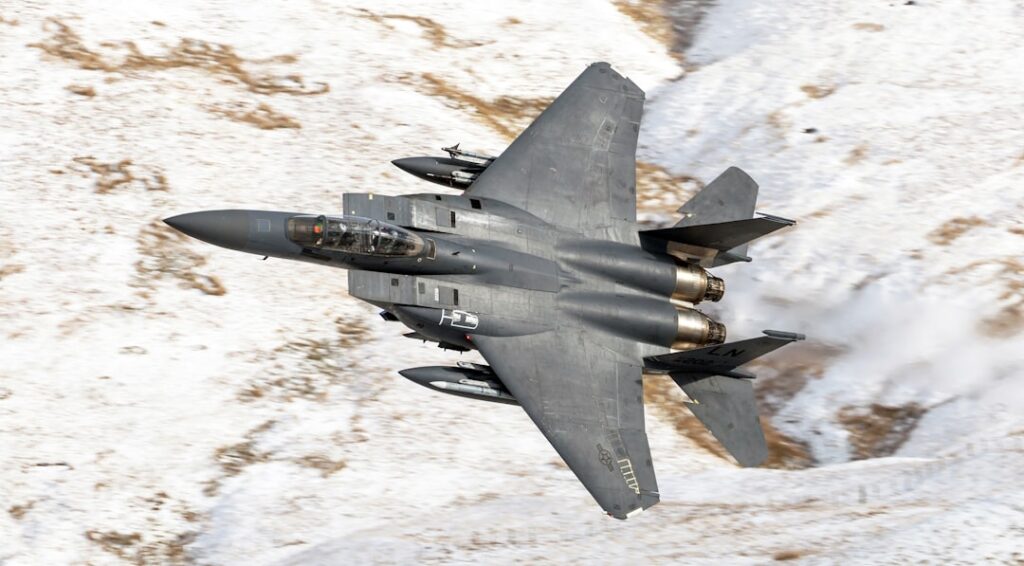
Denmark has pledged 19 F-16 fighter jets to Ukraine, with the first six expected to be operational before the onset of winter. The remaining 13 aircraft will be delivered in refurbished increments throughout 2024, as announced by Danish Defence Minister Jakob Ellemann-Jensen during a press conference in Kyiv on 10 August alongside Ukrainian President Volodymyr Zelensky.
Ellemann-Jensen stated the jets would arrive “before the heating season,” a narrow timeframe given that Ukraine’s heating season typically begins in October. The package extends beyond the aircraft themselves, including 200 AMRAAM medium-range missiles and spare engines, with a total value of 2.7 billion kroner—approximately $400 million. To ensure operational readiness, Danish technicians will remain in Ukraine for six months to maintain the jets.
“We are not handing over museum pieces,” Ellemann-Jensen told reporters, emphasizing that each plane has undergone mid-life updates, including new radar systems and Link-16 data links. The Link-16 capability is significant, as it enables real-time targeting data sharing with NATO aircraft, allowing Ukrainian pilots to operate more effectively against Russian air defense networks.
Zelensky confirmed the jets will arrive “this year,” ending months of public ambiguity about delivery schedules. He stated the F-16s will “help close the sky over critical cities and infrastructure,” reflecting a targeted strategy. Ukraine’s current air force relies on Soviet-era MiG-29s and Su-27s, supplemented by ground-based systems like Patriots and NASAMS. The F-16s offer a mobile, networked platform capable of stand-off strikes with modern missiles.
Training for Ukrainian crews is already in progress. Language and flight instruction began at Skrydstrup air base in Denmark in July, and a second group of eight pilots started simulator training this week.
This suggests a phased pipeline, as transitioning from Soviet to Western aircraft requires months. However, the first jets will arrive before all pilots are fully trained. The Netherlands has yet to finalize its contribution.
Defence Minister Kajsa Ollongren told Dutch radio on 9 August that the number of jets depends on how quickly the Netherlands can replace them with F-35s. She noted the Dutch are “stripping some for parts and preparing others for delivery.” The Netherlands operates 42 active F-16s, but the exact number for Ukraine remains undisclosed.
Norway has pledged up to 12 aircraft from its retired F-16 fleet, which became available in January. However, Norway must complete its own processes before transfer. Zelensky made the announcement alongside Ellemann-Jensen, with timing influenced by Denmark’s parliamentary approval of the transfer hours earlier.
The Netherlands signaled it would follow suit with an unspecified number. The F-16s alone will not secure air parity with Russia, which would require hundreds of modern fighters.
The Danish, Dutch, and Norwegian contributions will not achieve that goal, but they will provide Ukraine with a credible, NATO-compatible fighter force capable of operating within Russian air defense bubbles—a capability Ukraine has lacked since February 2022. Maintenance remains a critical constraint, as Western jets demand extensive ground work per flight hour. Danish technicians will manage this for the first six months, after which Ukrainian ground crews must take over—a steep learning curve.
The first six jets will arrive before winter, operational in time for the war’s hardest months.




