
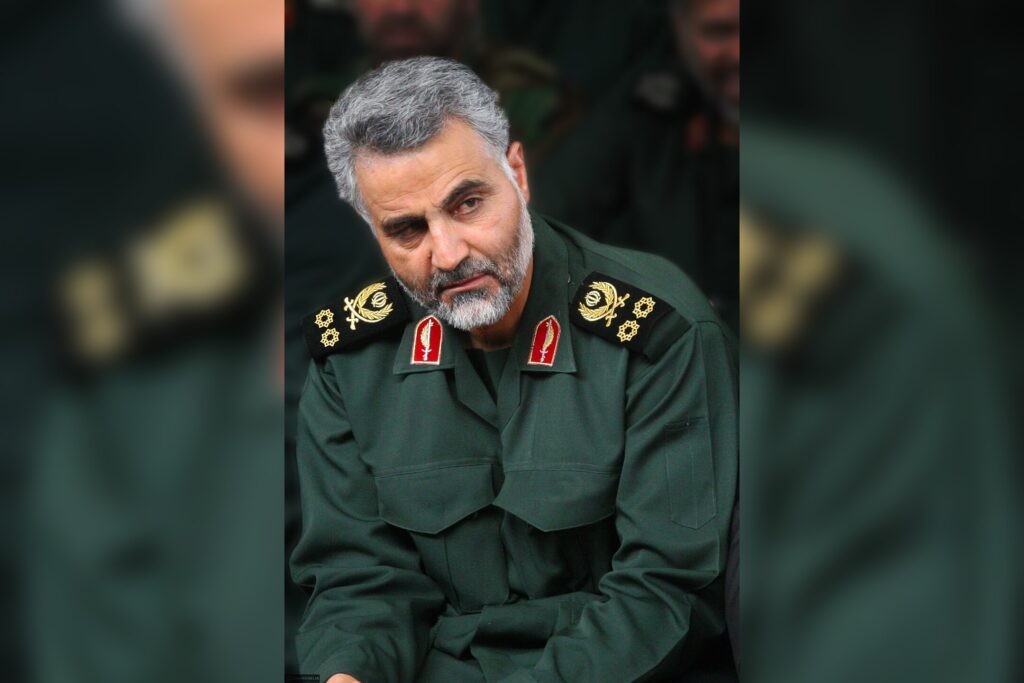
On January 3, 2020, a pre-dawn U.S. airstrike at Baghdad’s international airport hit vehicles carrying what sources called “high-profile guests” who had just arrived. One of them was Major General Qassem Soleimani, head of the Quds Force, the Revolutionary Guard unit that runs Iran’s operations abroad.
Also killed was Abu Mahdi al-Muhandis, the deputy commander of Iraq’s Popular Mobilization Forces. Arab News counted five others dead; CGTN reported at least six.
Why Washington said it acted
The White House and Pentagon said the operation was carried out “at the direction of US President Donald Trump.” The Defense Department said Soleimani “was actively developing plans to attack American diplomats and service members in Iraq and throughout the region,” and accused him of approving the assault on the U.S. Embassy in Baghdad earlier that week.
The days before had been tense. Iran-backed militias attacked the embassy on New Year’s Eve. That came after U.S. strikes killed 25 Kataeb Hezbollah fighters, answering a December 27 rocket attack that killed an American contractor.
Reaction in Washington split. Republicans praised the strike. Senator Richard Blumenthal, a Democrat, argued that existing military authorizations do not cover starting a new conflict, and Arab News noted the timing, with Trump facing impeachment proceedings.
Iran and Iraq respond
Supreme Leader Ayatollah Ali Khamenei called Soleimani a “martyr” and warned that “vigorous revenge is waiting for the criminals.” An adviser to President Hassan Rouhani said whoever “put his foot beyond the red line should be ready to face its consequences.”
Iraq’s prime minister, Adil Abdul-Mahdi, condemned the strike as “an act of aggression on Iraq and a breach of its sovereignty.” The U.S. embassy suspended operations and told Americans to leave Iraq immediately. China’s Foreign Ministry urged restraint.
Inside Iran, Soleimani was seen as a national hero. Al Jazeera’s Tehran reporting said his name was “synonymous to Iranian national pride, no matter how he has been labelled outside of the country.” Arab News described him as the overseer of Iran’s expeditionary operations across Iraq, Lebanon and Syria.
The funeral and a new commander
By January 6, state television was reporting a “several million-strong” crowd in Tehran. Women in black and men carrying Shia flags packed Revolution Street in freezing weather. Metro officials said they could not evacuate passengers because the crowds at street level were too dense.
Khamenei led prayers, with Rouhani and Parliament Speaker Ali Larijani beside him. Brigadier-General Esmail Qaani had taken over the Quds Force. At the funeral he said: “We promise to continue martyr Soleimani’s path with the same force … and the only compensation for us would be to remove America from the region.”
Soleimani’s daughter had her own message for the American president: “Crazy [Donald] Trump, don’t think that everything is over with my father’s martyrdom.” Further processions were planned for Ahvaz, Mashhad and Qom, with burial in Kerman.
Sources
- Iran's Qassem Soleimani killed in US air raid at Baghdad airport (Al Jazeera)
- 8 killed in rocket attack at Baghdad airport (CGTN)
- Iran's Gen. Soleimani killed in airstrike at Baghdad airport (Arab News)
- Mourners flood Tehran as calls for revenge over Soleimani grow (Al Jazeera)




