
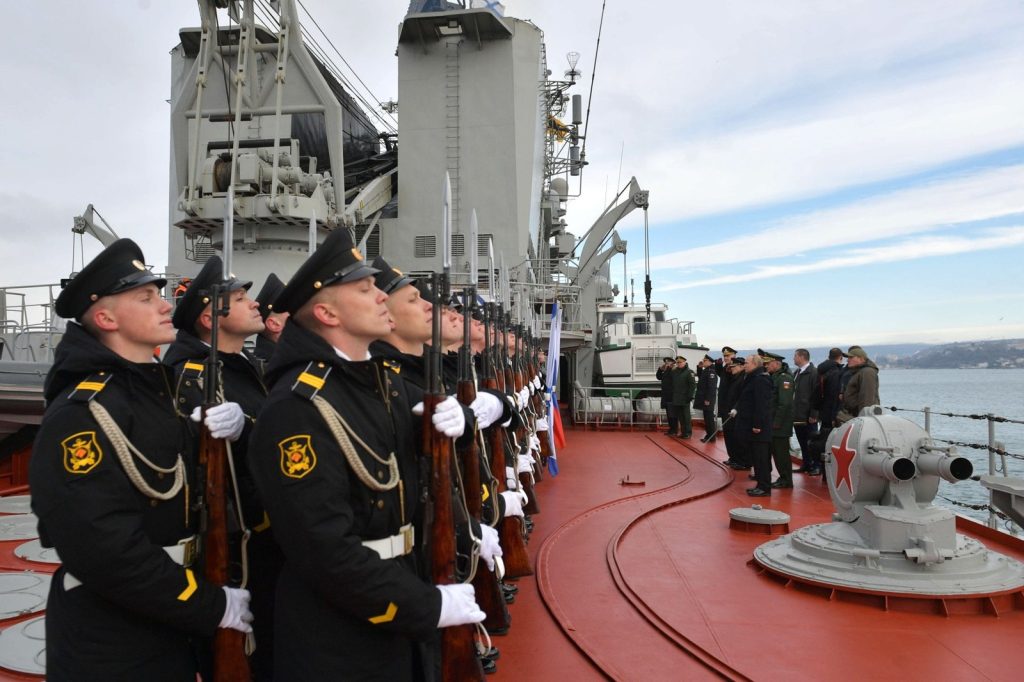
LONDON, July 21 — The North Sea, that grey and restless expanse which has for centuries served as both shield and highway for the British Isles, became the backdrop this week for a confrontation as much legal as military. A Russian warship conducted a live-fire drill 46 miles off the United Kingdom’s coast, a manoeuvre that falls within a carefully calibrated legal framework where sovereignty and freedom of the seas intersect.
Under the United Nations Convention on the Law of the Sea (UNCLOS), which entered into force on November 16, 1994, and has been ratified by 168 parties — including both Russia and the United Kingdom — coastal states enjoy full sovereignty over a territorial sea that extends 12 nautical miles from their baselines. Beyond that, states hold sovereign rights over the resources of their Exclusive Economic Zone, which reaches out 200 nautical miles.
Yet within that zone, other nations retain the high seas freedoms of navigation, overflight, and the conduct of military exercises, provided they exercise ‘due regard’ to the rights of the coastal state. The drill took place 46 miles offshore, well beyond the territorial sea limit. Against this backdrop, the legal question was not whether Russia had the right to be there, but whether the exercise respected the delicate obligations built into the convention.
The Incident at Sea
The UK’s Ministry of Defence noted that the Russian warship was operating in international waters. Royal Navy assets were present to ensure safe passage and monitor compliance with international norms. Under UNCLOS, the United Kingdom cannot restrict such activities as long as they do not threaten navigational safety or involve the threat or use of force against the coastal state.
In this case, no such escalation was reported. Yet in the corridors of Whitehall, the incident stirred unease.
The exercise highlights the fine line between lawful military presence and what coastal states perceive as provocation. This is not the first time such a tension has surfaced.
The Wider Picture
In past incidents, both Russia and NATO have used these same legal frameworks to justify similar exercises. The United Kingdom has previously protested certain Russian activities as provocative, but has acknowledged they remain legally permissible under UNCLOS. What is at stake is not merely the letter of the law, but the wider picture of European maritime security — a domain where the rules are clear, yet their interpretation often leaves room for friction.
The drill 46 miles off the coast is unlikely to be the last such test of the convention’s boundaries. As long as UNCLOS permits military exercises in the Exclusive Economic Zone with due regard, and as long as states interpret ‘due regard’ in differing ways, the North Sea will remain a stage for these legal and strategic chess moves.
The question for London and its allies is how to navigate a framework that grants Russia the right to sail and train just beyond the horizon — while ensuring that right does not become a tool of intimidation.




