
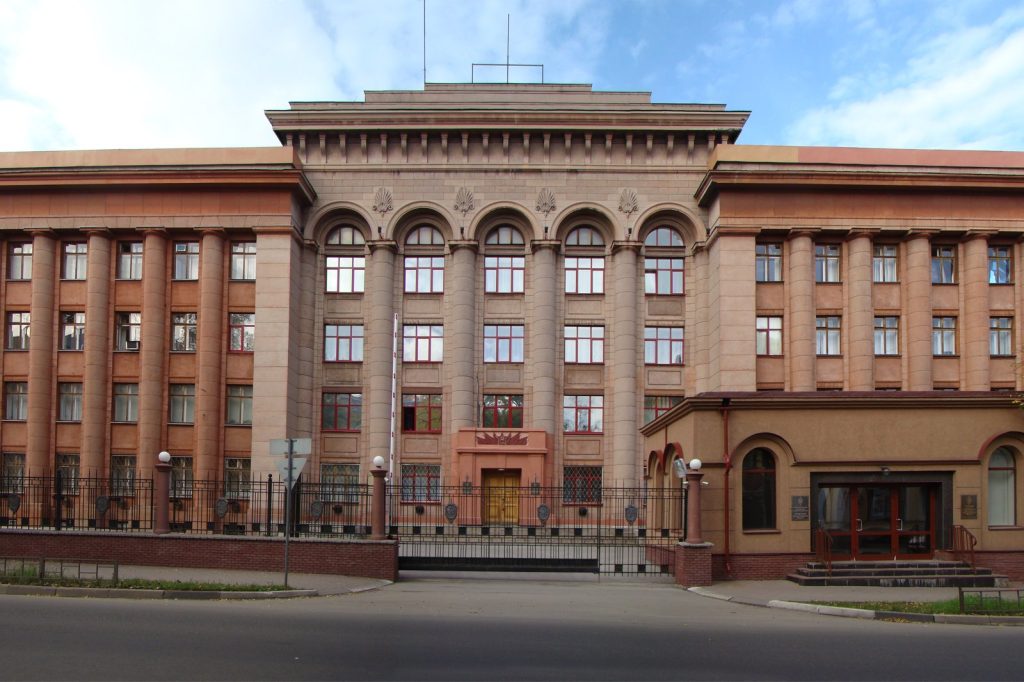
On February 16, 2006, Vladimir Putin signed a decree creating the National Counterterrorism Committee. The mechanics here matter more than the name: the man chairing a body meant to coordinate every arm of the state on terrorism was the head of one of those arms, the Federal Security Service. Nikolai Patrushev held both jobs at the start. Today the FSB director, Alexander Bortnikov, is the committee’s chairman.
RFE/RL, reporting the day after the decree, said the new body replaced a Federal Antiterrorism Commission that had been run by Prime Minister Mikhail Fradkov. Foreign Minister Sergei Lavrov and other senior security officials sat on it. Regional counterterrorism commissions were to be led by territorial administrators, with operative staffs headed by FSB branch chiefs.
Who sits at the table
The committee’s own portal describes it as “a collegiate body tasked with coordination and organization of counterterrorism activities of government bodies at the federal level, at the level of the subjects of the Russian Federation and local governments.” Leadership posts go to the FSB, the Ministry of Internal Affairs, the Presidential Administration, the State Duma, the Ministry for Civil Defence and Emergencies, the Ministry of Foreign Affairs and the Ministry of Defense.
Below that sits a three-layer chain. A Federal Operational Headquarters answers to the FSB director and plans and controls counterterrorism operations. Regional committees, headed by senior officials in each federal subject, coordinate local government. Operational headquarters, led by the heads of regional security agencies, put forces and resources to work when an operation requires them. The committee also drafts policy proposals, takes part in international cooperation and, in its words, “ensures public awareness of emerging terrorist threats and neutralizing thereof.”
Support and the catch
Backers in 2006 saw a tidy fix. Duma speaker Boris Gryzlov said “the threat of terrorism remains very serious and streamlining national legislation is very timely.” The decree came while the Duma weighed new antiterrorism legislation, two years after the Beslan hostage crisis. Patrushev said the arrangement would add 300 officers to the FSB’s central apparatus.
The catch, critics said, was who gained from the tidiness. Communist deputy Victor Ilyukhin warned the committee “will have the opportunity to intervene in the work of any power — whether federal, regional, or municipal.” Others observed that the layout mirrors the Soviet KGB, putting security power alongside administrative leadership. On closer reading, the structure answers its own coordination problem by placing the FSB at the head of every level.




