
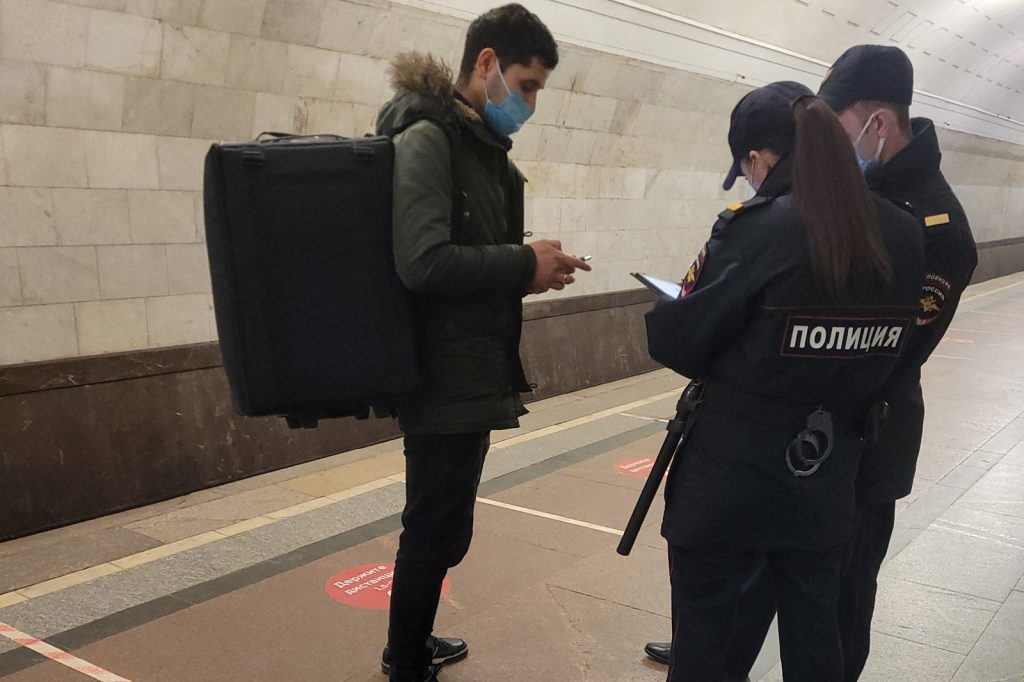
MOSCOW, Aug. 2 — The shift in Russian counter-terrorism is easy to spot: it’s on the streets, in the metro, on the surveillance feeds. When an attack happens, the machinery doesn’t just investigate. It expands.
The legal core is Federal Law No. 35-FZ “On Counteracting Terrorism,” adopted March 6, 2006. It defines what counts as terrorism in Russia, establishes the legal basis for counter-terrorism operations, and lays out the powers of state bodies. The law also mandates the creation of the National Anti-Terrorism Committee — the NAC — to coordinate all federal and regional counter-terrorism activities.
That was the framework. The trigger is the counter-terrorism operation, or CTO, regime.
The immediate response: a CTO regime
In the aftermath of an attack, a CTO regime may be declared in the affected area. It’s a serious escalation: security forces gain enhanced powers to restrict movement, conduct searches without warrants, and use force. After the 2010 Moscow Metro bombings, security was significantly heightened across the capital’s transport network, with increased police presence and canine units deployed.
The Investigative Committee of Russia then opens a criminal investigation under the terrorism articles — Article 205 of the Criminal Code of the Russian Federation — and murder provisions. The penalties for terrorism-related offenses are severe: lengthy prison sentences, up to life imprisonment.
That’s the response layer. The trend underneath, though, is what happens after the alert fades.
Surveillance as the long game
Beyond immediate measures, the government frequently implements long-term security enhancements. That’s where the technological picture comes into focus: expanding video surveillance systems — the “Safe City” programs in Moscow — reinforcing public transport security, and increasing the intelligence-gathering capabilities of agencies like the FSB.
These measures involve significant public spending on security infrastructure and personnel. The cameras don’t come down when the emergency ends. They stay, and they multiply. For anyone watching the tech sector, the pattern is clear: counter-terrorism has become a permanent driver of urban surveillance investment. The legal text from 2006 stays fixed; the tooling around it keeps growing.
Public vigilance, diplomatic front
The framework also extends outward. The Russian government has historically engaged in public information campaigns designed to raise awareness about potential threats and encourage citizen vigilance. Alongside that, it has pursued diplomatic efforts to combat international terrorism.
Watch this space. The structure — the 2006 law, the NAC, the CTO regime, the heavy sentences — is remarkably stable. What’s changing is the scale of the technological response wrapped around it. The next incident, whenever it comes, will trigger the same law. But it will meet a much bigger, more connected surveillance apparatus than the one that answered the Moscow Metro bombings fifteen years ago. That’s the real shift to follow.




