
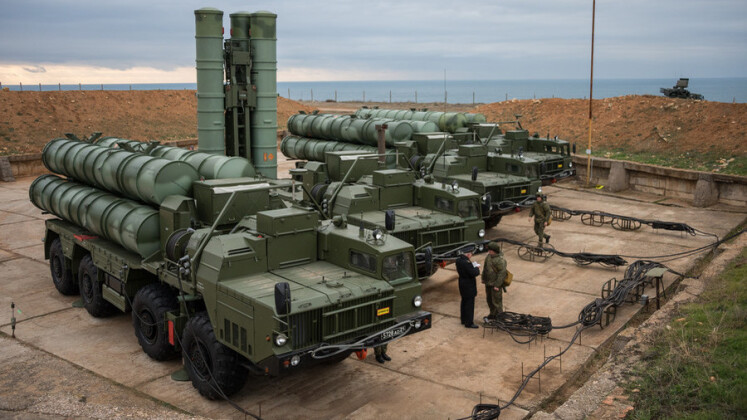
For all the noise on social media, the salient point about Russian air defense is narrower than the footage suggests. On June 18, 2026, Ukraine mounted the biggest attack on Russia since the invasion began; drones hit locations across Moscow, a major refinery supplying 40% of the region’s fuel went up in flames, with production halted for days, and Russia’s largest airport saw evacuations. Eyewitness clips of seemingly failed intercepts did the rest, opening a debate about holes in the net.
The analysts are split, notably, on whether gaps is even the right word. Ruslan Leviev of the Conflict Intelligence Team: “That impression forms among non-specialists, who see a missile fly past a drone without hitting it”. His team recorded no weakening of Russian defenses: over 90% of the UAVs above Moscow were downed. The leakers, however, did substantial damage, and his diagnosis is quantity. Massed attacks need more interceptors than any industry can supply, a problem on both sides of the line.
The technical file, per Anatoliy Khrapchynskyi, a Ukrainian aviation expert who once served as an air force officer: systems such as the Pantsir-S1 were calibrated for radar-reflective metal on a classic cruise-missile profile, and drones built from plastic or plywood leave them effectively “blind”. Geography compounds it: an unbroken “air wall” over Russia’s territory is, in Leviev’s judgment, impossible; Moscow’s dense high-rises give drones radar shadows; and redeployments to occupied Ukraine have turned a once-layered architecture into what Khrapchynskyi calls a patchwork. Ukrainian sources cited by CBS say S-300 stocks may be running short, with sanctions hindering components and some S-300s repurposed for surface-to-surface fire; he sums up Russia as trapped in its own “math of war”.
The pattern predates Moscow. In January 2025, Euromaidan Press catalogued the same mechanics: swarm tactics with low-flying drones overwhelming defenses built for high-altitude threats, a Tver-region ammunition depot destroyed with its stockpiles of Iskander missiles, glide bombs and artillery shells, and fuel storage burning at the Engels air base. The Russian military Telegram channel Voyennyy Osvedomitel reported that “Over the past night, the enemy successfully targeted two more oil depots in Russian territory,” adding “The growing efficiency and scale of drone strikes against targets in our rear have become a regular occurrence.” Another channel conceded the initial surge in Ukrainian drone production “was ignored,” with consequences now “evident every night”.
The Kremlin’s response has been damage control. Spokesperson Dmitry Peskov called the air defense performance appropriate, redirected attention toward Russian strikes on Ukraine, conceded the footage was “impressive”, and promised those strikes will continue. Leviev’s closer is drier: the June 18 attacks changed little militarily, functioning instead as “political strikes” aimed at public opinion ahead of September’s State Duma elections. It would seem the drones’ most reliable target is the claim of an airtight sky.
Sources
- Are Ukraine drones really exposing gaps in Russia's defense?
- Russian air defenses struggle as Ukrainian drones strike deep behind lines – Euromaidan Press




