
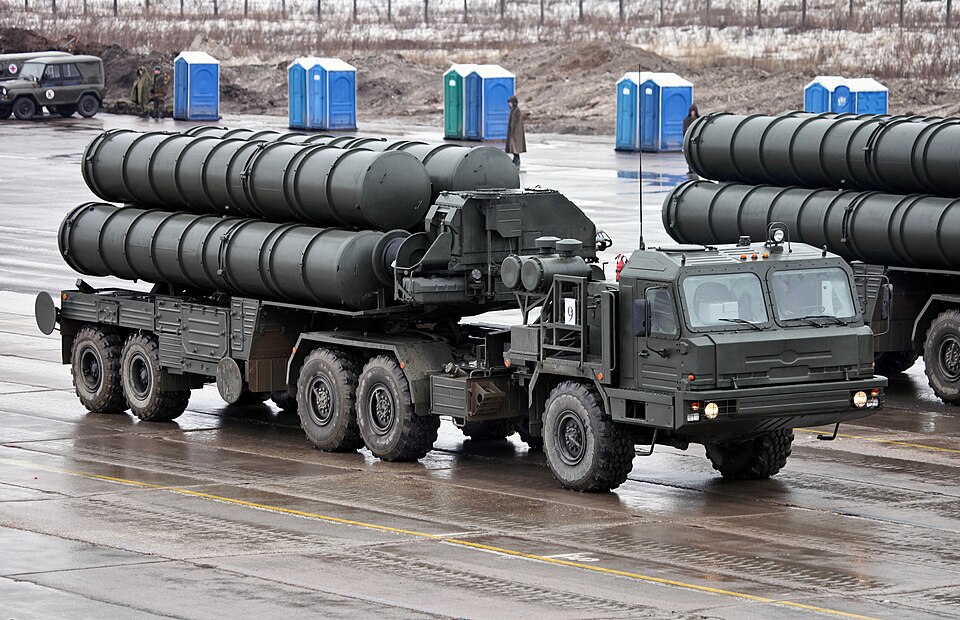
At Severodvinsk, home to Russia’s nuclear submarine yards, 28 launchers for S-300 and S-400 missiles have been taken away from their positions since 2024. That is the finding of The Barents Observer, which worked from publicly available Google Earth satellite imagery. Defense Express, a Ukrainian outlet, reported the analysis this month.
The Yagry North site still held six launchers until mid-2024. Today the position looks abandoned. Yagry Center once had 14, and none have been there since 2025. At Mironovy Gory, eight launchers stood as of mid-2024, and current imagery shows none.
The cost is exposure for two of the country’s most important naval facilities. Sevmash is Russia’s only shipyard able to build nuclear-powered submarines. Zvezdochka is its largest yard for overhauling and repairing them.
Where the launchers may have gone
Defense Express said the systems most likely belonged to the 1528th Anti-Aircraft Missile Regiment, part of the 1st Air Defense Division in Russia’s 45th Air and Air Defense Army. The unit once answered to the Northern Fleet but is believed to have moved to the Leningrad Military District.
The outlet pointed to one clue for Crimea. Public reports say the commander of a battalion in the 1528th was killed in occupied Crimea on April 30, 2024, the day Ukraine reported strikes on Russian military targets on the peninsula. It is not proof, Defense Express said, but it supports the view that part of the regiment’s assets from Severodvinsk went there. It also judged it reasonable to assume some systems were reassigned to protect Moscow, the capital being Russia’s highest-priority area for strategic air defense.
The outlet described the pullback as evidence of an acute shortage of long-range air defense assets over the past two years. It noted that even after Russia placed a new S-500 Prometey division and many Pantsir systems around Moscow, Ukrainian drones kept getting through.
Rogachevo and the wider pattern
The National Security Journal reported on a second case. Satellite footage from Radio Free Europe/Radio Liberty, it said, shows a missile base near Rogachevo air base on the Novaya Zemlya archipelago lost most of its air defense installations. Rogachevo served as a strategic aviation staging base in the Cold War, houses MiG-31 interceptors and was recently expanded for larger aircraft.
Katarzyna Zysk, a professor at the Norwegian Institute for Defense Studies, said the transfers point to “a growing mismatch between the targets Russia must protect and its available launchers, interceptors, and trained personnel.” She added that many stripped sites are not left defenseless, and that the moves suggest Moscow does not expect a large-scale attack in the far north soon and thinks it can accept lower protection there.
The journal, citing satellite footage and open-source information, said around 60% of Russia’s S-300 and S-400 installations have been repositioned since the full invasion began in 2022. Some ended up near the Saratov oil refinery, which drone attacks have hit repeatedly since 2025. Others were spotted in city parks.
The S-400 is designed mainly to counter ballistic and cruise missiles and large aircraft. Drones are usually left to systems such as the Tor and the Pantsir-S1.
After Ukrainian strikes on refineries, the journal said, Putin called stronger air defense the country’s top priority. Several large Ukrainian drone raids on the Moscow region, each with hundreds of drones, have been mostly intercepted, it reported.
Sources
- russia Stripped Air Defenses From Its Nuclear Submarine Shipyards to Reinforce Moscow and Occupied Crimea | Defense Express
- Russia Is Stripping Air Defenses From Its Remote Arctic Bases — to Guard the Refineries Ukraine Keeps Hitting




