
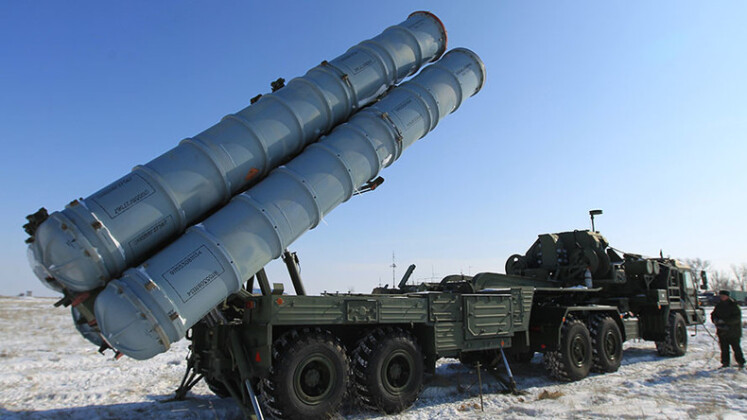
Forty-three. That is how many new air defense sites Bild counted in satellite images of the Moscow region as of May 6, each one built to hold a Pantsir-S1 launcher. The sites form a ring along the Central Ring Road (TsKAD) and the smaller concrete ring highway inside it, an arrangement that echoes the Cold War “small ring” scheme for protecting the capital.
The catch is where the hardware came from. Bild reported that some of the Pantsir systems were pulled out of other Russian regions, which means Moscow is being covered at someone else’s expense.
Where the launchers went
The positions Bild reportedly located sit near Zelenograd and Podolsk, at highway junctions around Gzhel, at a former radio engineering plant by Naro-Fominsk, and beside a test range run by TsNIITochMash, a unit of the state corporation Rostec. More launch pads have appeared close to Domodedovo and Zhukovsky airports.
The Pantsir-S1 is a short- and medium-range system meant for drones, cruise missiles and low-flying aircraft. Since Ukrainian long-range drones began reaching deep into Russia, Russia has also mounted such systems on rooftops and raised platforms across Moscow and its outskirts.
Kyiv reads the same map
President Volodymyr Zelensky seized on the shift. “We see how, in recent weeks, additional air defense rings have been deployed around Moscow at the expense of massive redeployment from other Russian regions,” he said, after giving Ukrainian Defense Intelligence what he called separate assignments on Russian air defenses.
His conclusion was blunt. Thinner cover elsewhere, he argued, “creates additional opportunities for our long-range sanctions,” and Ukraine would set its priorities accordingly. He also said the concentration around the capital showed the Kremlin cares more about parade security than the rest of the country.
The parade point has some backing. The Russian channel ASTRA reported that May 9 parades were called off in 15 Russian regions. Red Square will have no military vehicles for the first time since 2007, and St. Petersburg is holding its parade without armor. Other regions are dealing with internet shutdowns and scrapped fireworks, and the “Immortal Regiment” march is moving online for most of the country. In Volgograd, rules for May 7-9 bar strollers and pets, along with large bags and backpacks.
A harder target is arriving
The defenders may face a tougher problem than the one they are building for. An Atlantic Council analysis dated October 8 describes jet-powered Russian attack drones appearing in large numbers over Kyiv. It says they fly more than two times faster than their propeller-driven predecessors. According to the piece, Zelenskyy said in late September that Ukraine stops around 90 percent of the older propeller models but only just over half of the jet versions.
Ukraine is currently sending fighter jets up to hit them with air-to-air missiles or cannon fire. The author calls that effective but far too expensive to sustain. Satellite images, he adds, suggest Russia is moving drone production underground, as Iran did.
Carnegie Endowment researchers make the same cost point about Europe. They cite estimates that Russia builds up to 400 long-range drones a day, each costing $30,000 to $50,000, while interceptor missiles fired from fighter jets cost hundreds of thousands of dollars.
Poland’s Rzeczpospolita suggests Putin may be trying to provoke a Ukrainian strike on Moscow on May 9, which could then justify more mobilization and repression. Analysts quoted in that reporting do not rule out further escalation.
Sources
- Russia’s jet drones pose a security threat far beyond Ukraine
- In Russia’s Long Drone Shadow
- Russia fortifies Moscow with 40 new air defense systems amid rising Ukrainian drone threats




