
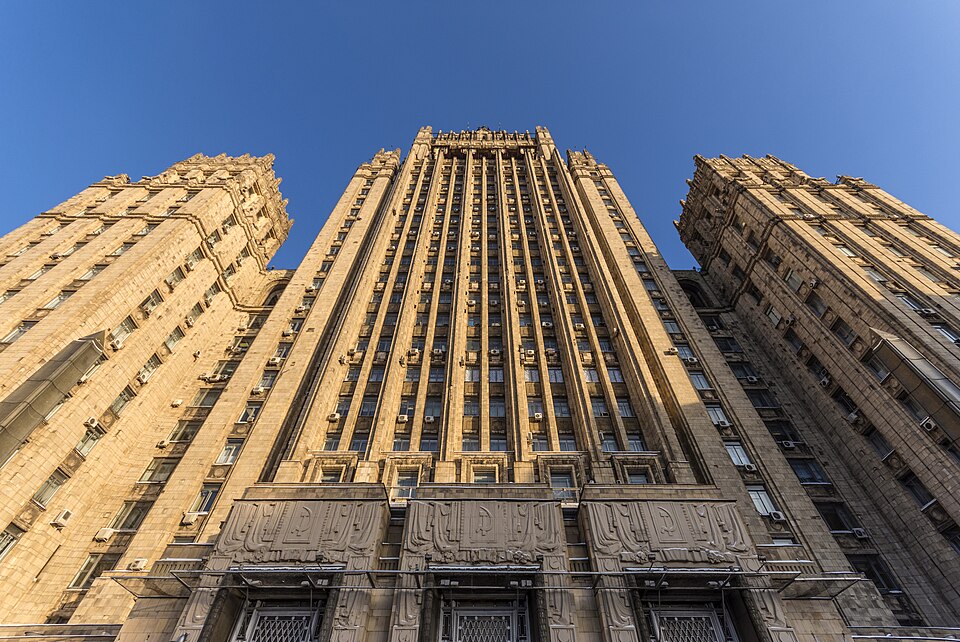
MOSCOW, September 10 — Maria Zakharova stepped to the podium with two messages, and only one of them travelled quietly. The Russian Foreign Ministry’s official spokeswoman said Moscow is working to ease visa rules with countries across Asia, Africa, the Middle East and Latin America, a consular overture aimed at parts of the world that have become the centre of gravity of Russian diplomacy since the war in Ukraine reshaped its ties with Europe.
The statement was delivered on September 9, 2026, and reported by the Turkish state news agency Anadolu Ajansı in a dispatch filed from Moscow by correspondent Elena Teslova. What the announcement did not contain was almost as telling as what it did.
No target countries were named. No timeline was offered. There was no indication of which categories of travellers might benefit, whether the work involves bilateral agreements, unilateral measures or regional blocs, and no draft accords were cited.
Anadolu Ajansı catalogued the report under its World section under the headline “Russia working to ease visa rules with countries in Asia, Africa, Middle East, Latin America.” Against this backdrop, the visa file is one of the few instruments Moscow can still deploy cheaply. Visa liberalisation costs little in budgetary terms and signals openness to partners that have kept their distance from Western sanctions.
Zakharova has served as the ministry’s official spokeswoman since 2015, and her briefings are a primary channel through which Moscow announces consular and visa policy shifts — which is precisely why the absence of specifics matters. An announcement of intent, delivered from the podium, is not the same as a signed agreement. The regions she named map onto a diplomatic map Russian officials have been redrawing for years.
Asia, Africa, the Middle East and Latin America are the theatres where Moscow has pursued trade, energy and security relationships that do not run through Brussels or Washington. Easing visa rules would be the people-to-people layer of that same project — business travel, students, tourists, delegations — though the source material gives no indication of how far the work has progressed or whether any partner government has responded. Readers should note what is not established.
The report does not quantify current visa volumes, refusal rates or travel flows between Russia and the named regions. It gives no date for when eased rules might take effect.
It does not say whether the effort is bilateral, unilateral or conducted through regional organisations. None of that should be assumed from the statement as delivered. Zakharova paired the visa announcement with a sharper message.
According to the same dispatch, she said Moscow is “ready” to use the full range of military-technical means to counter threats from NATO in the Arctic. The article’s own description field repeats that Arctic line, indicating the visa announcement and the NATO-Arctic warning were delivered in the same context — an unusual pairing that places a consular gesture alongside a military posture statement.
The Arctic has become one of the most closely watched theatres in the broader standoff between Russia and the Western alliance. Moscow has long treated the high north as a zone of strategic interest, and NATO’s northern enlargement has made the region a point of friction rather than cooperation. Zakharova’s phrasing — “the full range of military-technical means” — is the kind of language Russian officials use when they want a warning on the record without committing to a specific action.
No further detail accompanied it.




