
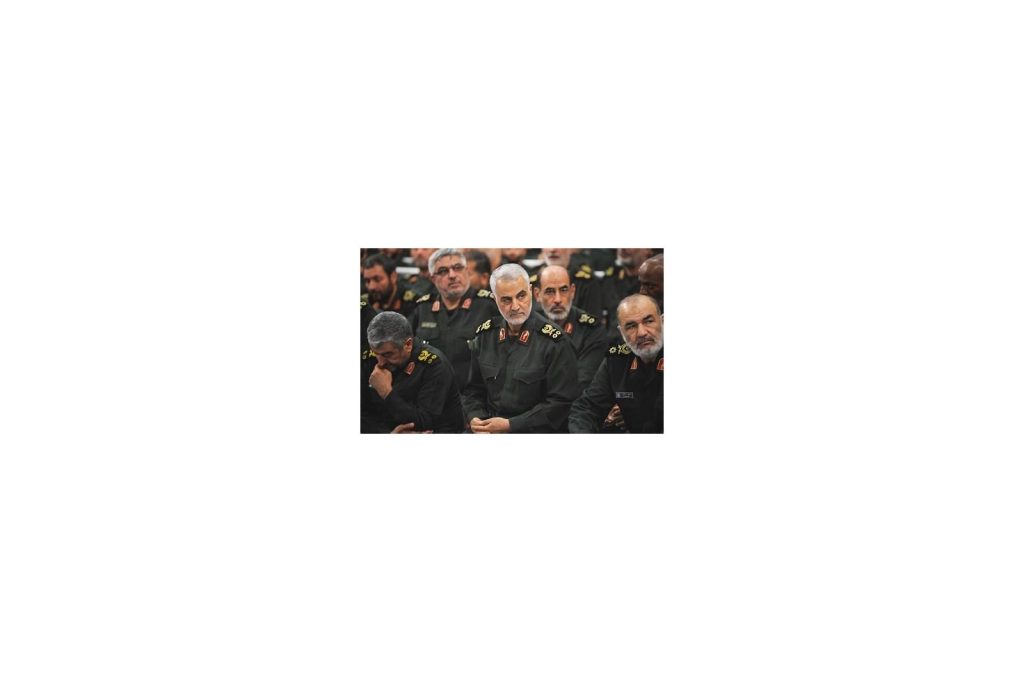
“The game has changed,” Defense Secretary Mark Esper said after a U.S. airstrike at Baghdad’s international airport killed Maj. Gen. Qassem Soleimani, commander of Iran’s Quds Force, on January 3, 2020.
President Donald Trump ordered the strike. It also killed Abu Mahdi al-Muhandis, deputy commander of Iran-backed militias in Iraq. The Pentagon said Soleimani “was actively developing plans to attack American diplomats and service members in Iraq and throughout the region,” and that the strike was meant to deter further Iranian attack plans.
Days of escalation
The strike capped a week of violence. On December 27, a rocket attack killed an American contractor. The U.S. answered with airstrikes on the Kataeb Hezbollah militia that killed 25 fighters. On New Year’s Eve, Iran-backed militias attacked the U.S. Embassy in Baghdad. Then came Soleimani.
Soleimani ran the Quds Force’s operations outside Iran, and he had become a household name by advising forces fighting the Islamic State in Iraq and Syria, where he also backed President Bashar Assad. Fox Business noted that the killing followed months of strain, including Iran’s downing of a U.S. surveillance drone and its seizure of oil tankers, and that the tension traced back to Trump’s May 2018 withdrawal from the Iran nuclear deal. Analysts called it a major turning point and warned of severe Iranian retaliation.
Iran’s answer
Retaliation came on January 8, when Iran fired missiles at Ain al-Asad air base in western Iraq. Trump and other officials first said no American had been hurt. Then the Pentagon began counting brain injuries. Spokesman Lt. Col. Thomas Campbell reported on January 29 that 50 service members had been diagnosed with traumatic brain injury, up from 34 disclosed earlier. Thirty-one were treated in Iraq and returned to duty, 18 were sent to Germany for further evaluation and one went to Kuwait. “A snapshot in time and numbers can change,” Campbell said.
Symptoms of concussive injury include headaches, dizziness, sensitivity to light and nausea. Trump had said he “heard that they had headaches and a couple of other things,” and the remark drew a rebuke from William Schmitz, national commander of the Veterans of Foreign Wars, who demanded an apology for what he called “misguided remarks.”
The same month, Iran’s Revolutionary Guard mistakenly shot down a civilian passenger plane, killing 176 people, the Council on Foreign Relations records. After the missile exchange at Ain al-Asad, Middle East Eye reported, neither the United States nor Iran pushed the fighting further, which ended the immediate cycle of violence that began in late December.
Sources
- Iran's Gen. Soleimani killed in airstrike at Baghdad airport
- US says 50 troops now diagnosed with traumatic brain injury after Iran strike
- The Islamic Revolutionary Guard Corps (IRGC)




