
Reverse‑Coloured Flag in Krakow Seen as Russian Probe
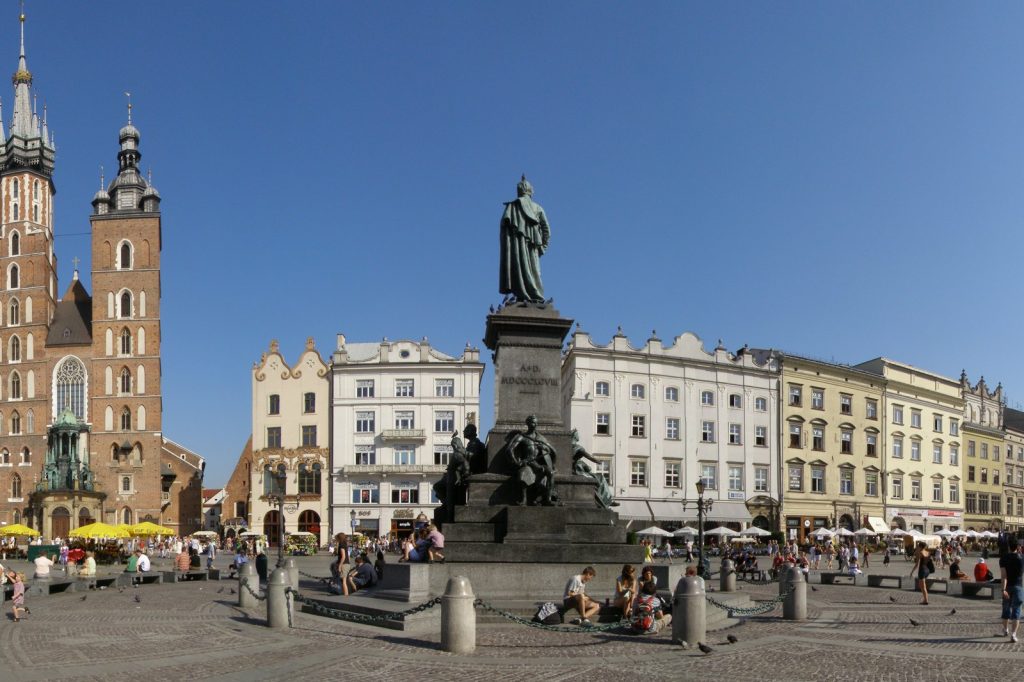
In November 2021, just days before Poland’s Independence Day, unknown individuals painted the Ukrainian national colours on several monuments in Krakow. The yellow‑and‑blue banner was turned upside down, with yellow on top and blue below, and an insult written in a mixture of Russian and Ukrainian was added.
Polish prosecutors are still looking into the act, but officials from both Poland and Ukraine say it was not random vandalism. They describe it as a test run, a dry shot in a disinformation campaign that they trace directly to Moscow. The purpose, according to the authorities, was to stir ethnic tension between two nations that share a painful, intertwined history.
Western Ukraine was once part of the Polish state, and the local Ukrainian population lived under a Polish landowning elite that treated them as second‑class subjects. During World War II the Ukrainian Insurgent Army killed tens of thousands of Poles in Volhynia and Eastern Galicia.
After the war Poland fell under Soviet influence for decades, leaving a legacy of distrust that still lingers, especially among older Poles who remember the conflict. Stanislaw Zaryn, spokesman for Poland’s security services, said: “The Russian efforts to sow divisions between the Poles and Ukrainians, particularly by means of exploiting historical issues, are as old as time. Russia has redoubled them since the war began. And they are more dangerous now because the war is going on and it can affect more people than before.” Polish officials argue that Moscow’s playbook is straightforward.
It is spreading false claims that Poland harbours territorial ambitions in western Ukraine. The aim is to turn Polish suspicion against the more than 2.5 million Ukrainian refugees who have sought shelter in Poland since February 2022, making them appear as a threat rather than victims, and to convince Ukrainians that Poles are future enemies instead of allies.
The timing of the Krakow graffiti fits a broader pattern. Russia’s invasion of Ukraine has not proceeded as planned; Ukrainian resistance has been strong and NATO unity has held. Consequently, Moscow is turning to older, deeper weapons—resentment, memory, and historical grievances that do not need to be invented, only revived.
Poland’s own experience with decades of communist rule has taught its authorities how disinformation works, but that knowledge does not make them immune; it makes them watchful, yet vigilance alone cannot stop a false narrative from taking hold. The monument vandalism was therefore a probe, a test of whether old wounds could be reopened.
The answer, according to investigators, was yes. Since then the same tactics have been deployed on a larger scale, amplified by Russian state media and networks of automated accounts, targeting the very alliance that supplies Ukraine with weapons and shelter. If Russia succeeds in breaking the Poland‑Ukraine bond, it would cut a key supply route, sow chaos on NATO’s eastern flank, transform the refugee crisis into a political weapon, and give Moscow a victory it cannot achieve on the battlefield.
Poland’s security services are responding by monitoring social media, tracking false narratives, and publicly labeling claims they identify as Russian fabrications. However, a denial rarely outpaces the original lie, and the damage often occurs before corrections can be issued.
The war in Ukraine is fought not only with artillery and tanks but also with old photographs, distorted histories, and the spectres of massacres that occurred eighty years ago. Russia knows which of these weapons hits harder and is employing both at once.




