
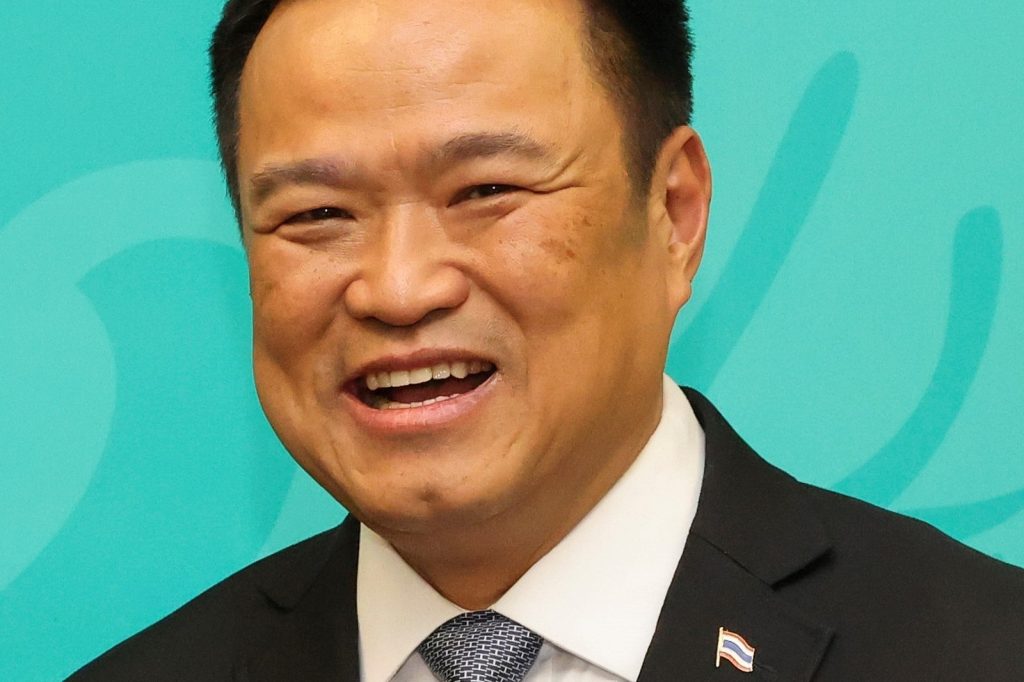
Seventy-six ambassadors, foreign consuls and heads of international organizations filed into Government House in Bangkok on Friday, September 4, 2026, to meet Prime Minister Anutin Charnvirakul. A Government House source said it was more than a courtesy call. The meeting belonged to the government’s “proactive diplomacy” policy and its effort to remap Thailand’s economic diplomacy.
The agenda was split into nine regional groups, so each relationship could be pushed toward concrete returns. Anutin has made foreign affairs a tool for opening doors to markets, technology and investment.
The source put the aim this way: to bring Thailand back to the world’s attention as “an open and trusted country and a regional hub” in ASEAN, at a time of geopolitical volatility, energy and food crises, and a reshuffle of global supply chains.
Starting with ASEAN
ASEAN comes first, the source said. Anutin has made official visits to Laos, Singapore, Vietnam, Malaysia and Indonesia, and he is preparing trips to the Philippines, Brunei and Timor-Leste. The government reads the Middle East crisis as a warning that the bloc has to move faster on economic, energy, food and supply-chain integration. Thailand also needs to work closely with Singapore so that the ASEAN chairmanships in 2027 and 2028 run on without a break.
Trade deals and new markets
Free trade agreements are the government’s main lever for getting Thailand back on investors’ radar. Talks with the European Union, Canada and South Korea are being sped up. The concluded deal with the European Free Trade Association is being advanced. Thailand is also looking for new routes into markets through Peru, Sri Lanka, BIMSTEC and ASEAN-Canada.
The source said this is not just about selling more abroad. The government wants Thailand to be a production and business base, with investors seeing it as a gateway to ASEAN, Asia and developed markets.
Bangkok also wants to spread its risk across Africa, the Middle East, Latin America, South Asia and Central Asia. Food, processed farm products, the halal sector, clean energy, medical services, wellness and logistics are the strengths it plans to offer. In the Middle East, Thailand wants to be a long-term food security partner while widening cooperation on energy, tourism, medical services and Thai labor. In Africa, it will work through the Thailand-Africa Initiative.
With China, Japan, South Korea and other East Asian countries, the focus will be technology, innovation, artificial intelligence, new industries and combating online crime. Investment from those partners should be high quality, the source said, and add value without bringing problems linked to illegal capital.
What comes next
The government’s calendar includes the UN General Assembly, the Pre-COP meeting, a visit to Fiji and the ASEAN Summit. Thailand will also host the annual meetings of the International Monetary Fund and the World Bank Group in Bangkok. The source called them important chances to show the international community what Thailand has to offer.




