
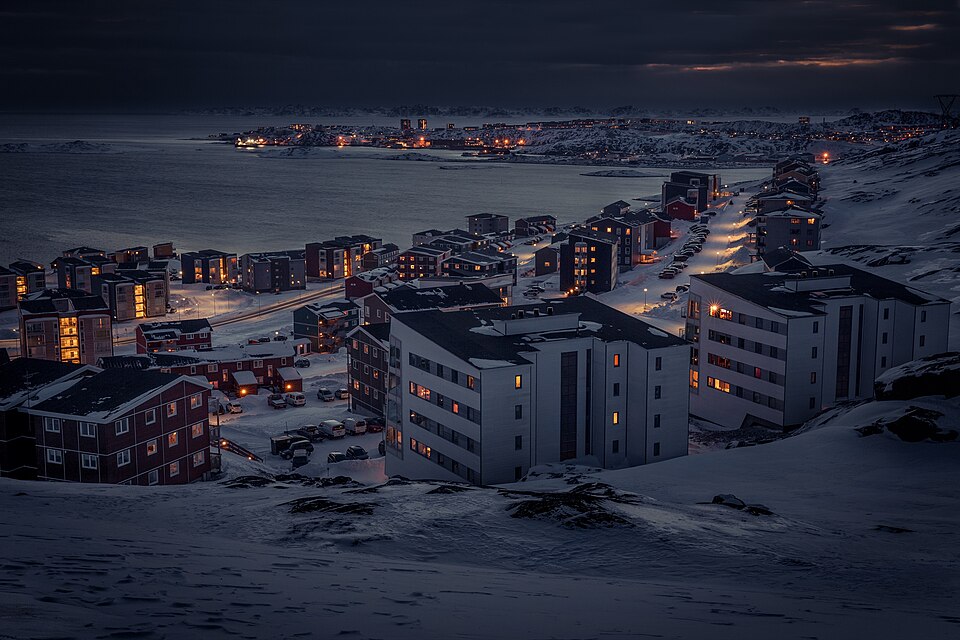
“Greenland can count on the EU.” Ursula von der Leyen said that after signing a joint declaration with Greenland’s prime minister, Jens-Frederik Nielsen, and Denmark’s prime minister, Mette Frederiksen. The signing took place in Nuuk on Monday, September 7, 2026, and came with a price tag: a 200-million-euro ($232 million) investment package for the island.
Greenland is a semiautonomous territory of NATO ally Denmark. The Commission president called the new partnership a source of “new opportunities and a strong and engaged EU in both Greenland and the Arctic, because Greenland is a strategic ally and a trusted friend.”
What the money is for
The Commission calls the package a Global Gateway Partnership Package, to be invested this year and next. The headline areas are education, fisheries, satellite and cable connectivity, hydropower and critical raw materials. Housing, small business support and sustainable tourism are also on the list.
Some projects are already agreed. One is an enhanced satellite connectivity scheme with the Greenlandic operator Tusass, which will expand satellite capacity through European providers over five years and is meant to help remote settlements, schools and businesses. The EU is also paying for feasibility work on whether data centres could make sense for Greenland.
On energy, the EU will back a programme run by the utility Nukissiorfiit to bring hybrid renewable systems to towns and settlements. Both sides are looking at expanding the Buksefjord hydropower plant, Greenland’s main hydropower facility, because electricity demand in Nuuk is rising. On minerals, the GreenRoc Amitsoq graphite project is held up as an example. It is an EU Strategic Project under the Critical Raw Materials Act.
The remaining money will go toward preparing further programmes, mainly tourism and housing. The Commission describes tourism as one of the most immediate options for diversifying the economy, and says Greenland’s ageing housing stock needs attention for public health and growth.
The Trump factor
The EU has paid closer attention to Greenland since U.S. President Donald Trump began insisting that the United States should take control of the island for security reasons. His persistent claims prompted pushback from Greenlandic and Danish leaders and strained relations among NATO allies, the Associated Press reported.
In January, Denmark and seven European allies sent a small group of military personnel to the island. The stated purpose was exercises on Arctic security. The aim, AP noted, was to show support for Greenland’s sovereignty. Trump answered by threatening new tariffs on Denmark, Finland, France, Germany, the Netherlands, Norway, Sweden and the United Kingdom.
The eight countries replied in a joint statement: “Tariff threats undermine trans-Atlantic relations and risk a dangerous downward spiral. We are committed to upholding our sovereignty.” Trump later backed down after NATO agreed to a security deal in the Arctic.
Drills on the same day
Von der Leyen’s visit coincided with the start of military exercises in Greenland. Eleven NATO countries are taking part, with around 400 military personnel, including special forces troops trained for Arctic conditions from Canada, Denmark and Finland. No U.S. troops are in the Arctic Shield drills, which run September 7 to 18.
Sources
- EU chief unveils $232 million Greenland package as tensions heighten with Trump claims
- EU and Greenland strengthen partnership with €200m EU investment




