
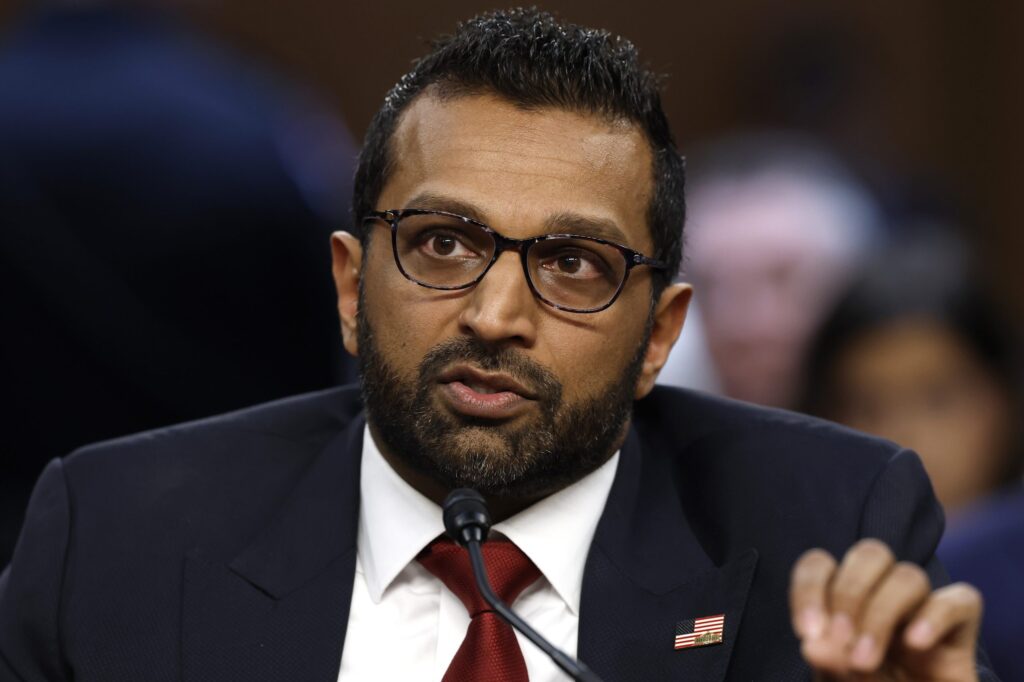
MOSCOW, July 21 — In the polished, high-security corridors of the Lubyanka, where portraits of Lenin have long given way to flat-screen monitors and the quiet hum of surveillance, a diplomatic choreography is taking shape. Should FBI Director Kash Patel visit Russia, his most consequential meetings would likely be with officials of the Federal Security Service (FSB), the main domestic security agency and the direct successor to the KGB.
The potential visit—still unconfirmed but widely discussed in diplomatic circles—would mark the highest-level U.S. law enforcement engagement with Moscow since the rupture of bilateral relations following the 2022 invasion of Ukraine. Against this backdrop, the figure at the centre of any such talks would be FSB Director Alexander Bortnikov, who has held the post since 2008.
A close ally of President Vladimir Putin, Bortnikov oversees Russian law enforcement operations, including the handling of espionage cases—most notably that of Evan Gershkovich, the Wall Street Journal reporter whose detention has become a flashpoint in U.S.-Russia relations. The FSB, responsible for counterintelligence, counterterrorism, and border security, would naturally be the primary interlocutor for an FBI director seeking to discuss mutual security concerns or potential detainee exchanges.
The diplomatic ecosystem
Yet the FSB is not the only institution likely to be involved. Russian Minister of Foreign Affairs Sergei Lavrov, who has been in office since 2004, would likely be engaged if the discussions touch on detainee negotiations or broad diplomatic issues. Lavrov’s long tenure makes him the institutional memory of Russian foreign policy, and his involvement would signal the Kremlin’s view of any Patel visit as having political weight beyond mere law enforcement cooperation.
Also possible is the involvement of the Russian Ministry of Internal Affairs (MVD), which handles ordinary policing and internal security matters. The MVD would likely be a secondary partner, while the FSB remains the lead agency for any dialogue touching on counterintelligence or counterterrorism.
On the U.S. side, coordination would fall to Secretary of State Marco Rubio, assuming the Trump administration. Rubio would work alongside FBI Director Patel to ensure the diplomatic and security dimensions of the visit align. National Security Advisor Mike Waltz, a former Green Beret, would also play a role, particularly if the visit touches on broader strategic or intelligence-sharing considerations.
The U.S. Ambassador to Russia, probably still Lynne Tracy (appointed in 2022), would provide on-the-ground support and logistical coordination. On the other end of the line, the Russian Ambassador to the U.S., Anatoly Antonov (since 2017), is the main interlocutor in Washington for such discussions, having served as the primary channel for U.S.-Russia security dialogues since ties soured.
A depleted channel
What is at stake is more than protocol. These individuals have been central to U.S.-Russia security dialogues, yet few meetings at the deputy or ministerial level have occurred since 2022. The wider picture is one of severely degraded communication channels, with even mid-level working groups largely suspended.
A Patel visit would therefore represent a tentative step toward rebuilding a top-level security dialogue, even as the underlying tensions over Ukraine and espionage remain unresolved. In the corridors of the FSB, such a visit would be seen as an opportunity to press Moscow’s agenda on detainee releases, while Washington would likely seek progress on the Gershkovich case as a condition for broader cooperation.
For now, the question is whether the choreography can be arranged without either side losing face—and whether the meeting will be more than a diplomatic formality. The coming weeks will tell whether Patel’s itinerary includes Moscow, and which doors in the Lubyanka will open.
Sources
{“@context”: “https://schema.org”, “@type”: “NewsArticle”, “headline”: “Patel, Lavrov, FSB in US-Russia Security Diplomacy Talks”, “description”: “MOSCOW, July 21 — In the polished, high-security corridors of the Lubyanka, where portraits of Lenin have long given way to flat-screen monitors and the…”, “datePublished”: “2026-07-21T09:30:00+00:00”, “author”: {“@type”: “Person”, “name”: “Beatrice Bianchi”}, “publisher”: {“@type”: “Organization”, “name”: “InfoPulse Today”, “url”: “https://newsfeed.2bme.xyz/”}, “citation”: [{“@type”: “CreativeWork”, “url”: “https://en.wikipedia.org/wiki/Federal_Security_Service”}]}




