
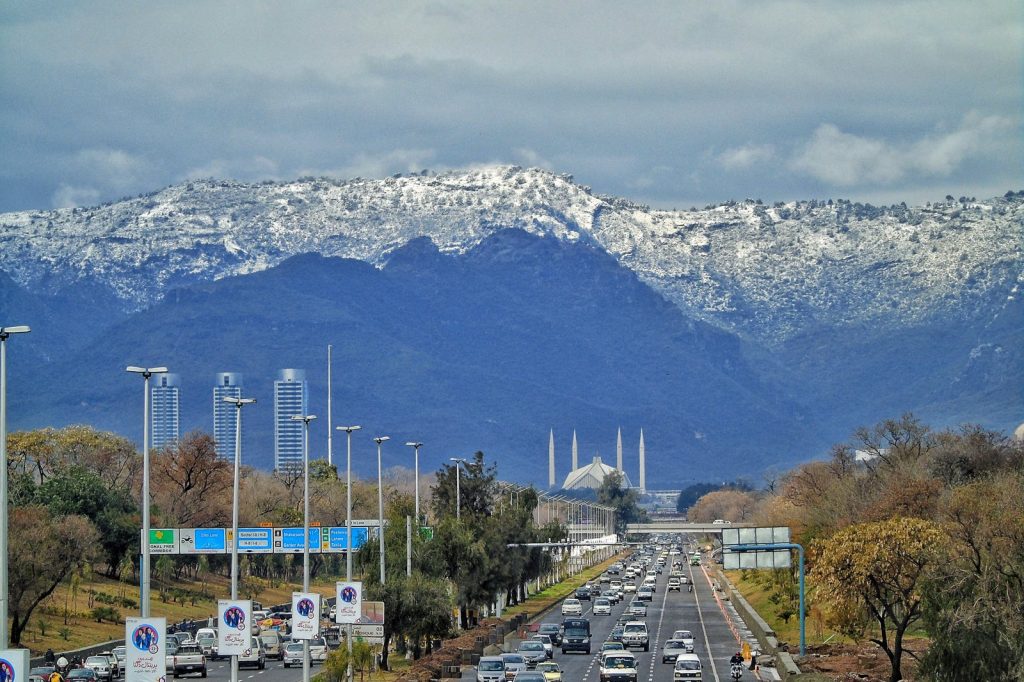
Islamabad, May 8, 2026 — cybernewschronicle.com — Islamabad is set to become a diplomatic crossroads. The Wall Street Journal reports that Iran and the United States may resume talks there next week. The venue is not accidental.
Pakistan sits between two worlds—neighbor to Iran, partner to Washington—and has long offered itself as a back channel when front doors slam shut. This is not a breakthrough.
It is a resumption. The talks were stalled. Relations between Tehran and Washington remain strained.
The Journal, an American daily with 412,000 print subscribers and 4.13 million digital readers, broke the story. Its news reporting is centrist, its editorial page center-right.
The paper has been covering global affairs since 1889. That longevity matters here: nuclear diplomacy between these two countries has a long, bitter history of false starts. U.S. the US Secretary of State has been involved in the negotiation efforts.
He is the point man. The European Union has also been working alongside Washington. What comes out of Islamabad could affect more than the two nations at the table.
Consider the ripple effects. Oil markets watch every signal.
Iran holds one of the world’s largest crude reserves. Any hint of a deal—or a collapse—moves prices. The Strait of Hormuz, a narrow chokepoint for global tanker traffic, sits in Iranian waters.
Talks in Islamabad mean Iran is not closing that strait. Not yet.
That alone steadies nerves from Tokyo to Rotterdam. Then there is the nuclear question itself. The International Atomic Energy Agency has inspectors on the ground in Iran.
Their access has been reduced in recent years. A diplomatic track, even a fragile one, keeps those inspections alive. Without talks, the agency’s work narrows.
With talks, there is at least a framework for monitoring. The Journal’s report does not detail what Iran wants in exchange.
But past negotiations have centered on sanctions relief. The United States has leverage there. Iran needs hard currency.
Its economy is under pressure. The timing matters.
Pakistan is not a neutral broker in the traditional sense. It has its own nuclear program. It has its own relationship with the Gulf states.
Islamabad hosting these talks signals that someone—likely the Pakistanis, possibly the Chinese—has been working the back channels. The Journal does not name a mediator. But the choice of Islamabad is not random.
It is a statement of geography and politics. What to watch next.
First, whether the talks actually happen. The Journal says “may resume.” That is conditional. Diplomatic schedules shift.
Second, who shows up. Blinken is named.
Iran’s lead negotiator is not named in the report. That matters. A low-level team signals caution.
A senior delegation signals seriousness. Third, the public posture. Both sides will issue statements.
The tone—conciliatory or confrontational—will tell analysts more than the closed-door sessions. The stakes are high.
A deal would reset relations. A failure could accelerate Iran’s nuclear work. The international community, as the Journal puts it, continues to monitor.
That is diplomatic language for watching with concern. Islamabad next week will not resolve everything.
But it is a step. Steps can lead somewhere. Or they can lead nowhere.
That is the nature of talks between Iran and the United States. They have been here before. The question is whether this time is different.




