
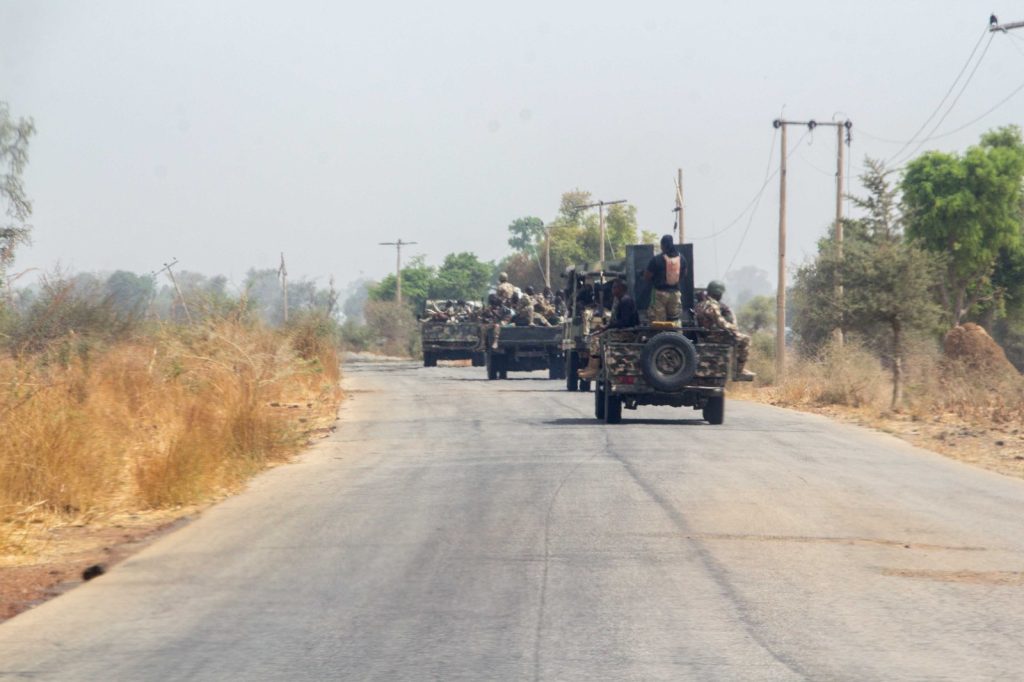
Nigeria’s armed forces have announced the killing of Abu Khalid, the deputy leader of Boko Haram operating in the Sambisa Forest, along with ten of his fighters. The military describes the action as more than a routine encounter, characterizing it as a decisive blow to the insurgent command hierarchy. The Sambisa Forest has long served as a fortified base for Boko Haram.
Situated in Borno State, this expansive and remote terrain has allowed the group to launch attacks that have resulted in thousands of deaths and the displacement of millions of civilians. Abu Khalid was not a rank‑and‑file combatant; he held the position of second‑in‑command for the forest sector.
Removing him creates an immediate leadership vacuum, prompting questions about who will assume control of weapons, finances, and the allegiance of the fighters. That uncertainty itself becomes a tactical disadvantage for the militants. Nigeria’s demographic weight amplifies the strategic importance of the operation.
With a population of approximately 242 million, the country is Africa’s most populous nation. Its stability is therefore not merely a domestic issue but a matter of regional and international concern.
The United States has been a principal partner in Nigeria’s counter‑terrorism effort, supplying training and equipment. American security strategy across the Sahel and West Africa hinges on a capable Nigerian military, and each eliminated commander represents a return on that investment. Disrupted militant plans also contribute to a broader counter‑terrorism campaign that extends from the Lake Chad basin to the Gulf of Guinea.
Geographic factors complicate the security environment. Nigeria shares extensive, permeable borders with Niger, Chad, and Cameroon, facilitating the movement of arms and combatants.
The Sambisa Forest lies close to these frontiers, historically functioning as a sanctuary, planning hub, and logistics depot for Boko Haram. While the death of Abu Khalid does not seal the borders or halt the next arms shipment, it does increase the difficulty of operational planning and renders supply routes more perilous for those who rely on them. The military characterizes the strike as a significant blow in its ongoing effort to dismantle Boko Haram’s network incrementally.
Nonetheless, officials caution that progress does not equate to final victory. The insurgent group has demonstrated an ability to absorb losses and adapt, and leadership decapitations can sow chaos while also potentially giving rise to younger, more ruthless successors.
Consequently, the conflict remains far from resolved. Looking ahead, the immediate priority is the group’s response over the coming days. Analysts will watch to see whether the militants fragment, launch a high‑profile attack in an urban centre such as Maiduguri, or whether a new commander emerges swiftly enough to preserve the chain of command. The Nigerian military currently holds momentum and must sustain it.
Concurrently, the United States continues to advocate for stronger regional cooperation, urging Niger, Chad, and Cameroon to tighten their own security measures, given that the threat and the responsibility to counter it are shared. The confirmed facts are clear: Abu Khalid is dead, ten of his fighters were killed alongside him, and the Sambisa Forest remains intact, as does the insurgent presence.
For now, the armed forces have seized the initiative, but the enduring question is how long they can maintain that advantage.




