
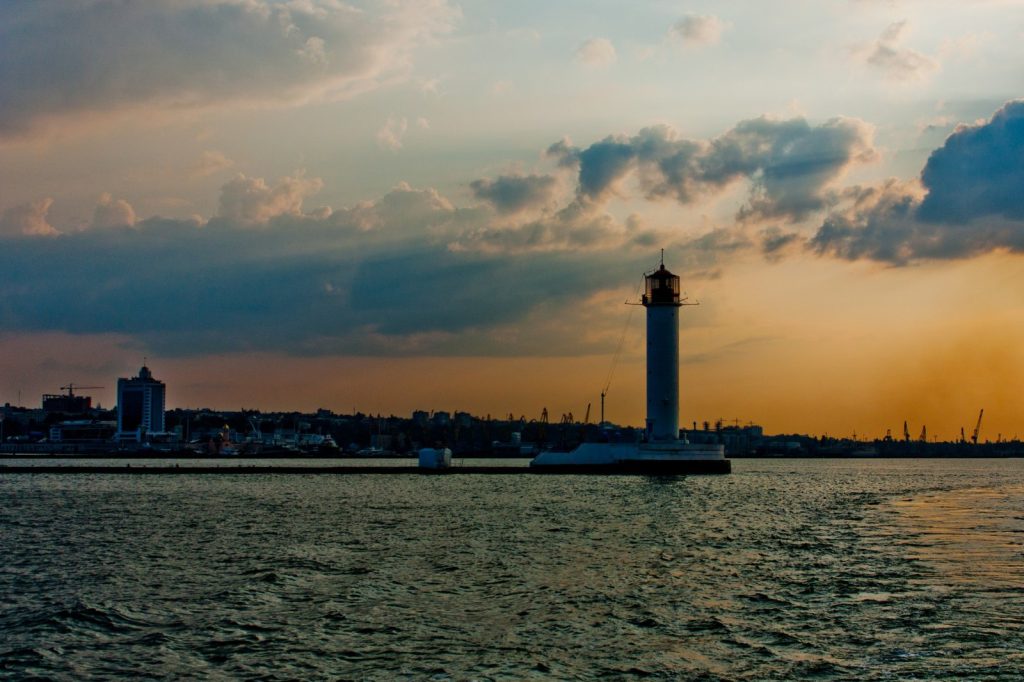
More than 7,800 commercial vessels have used Ukraine’s Black Sea maritime corridor, carrying over 200 million tons of cargo, the Association of Ports of Ukraine reported on June 5, 2026. Russian aircraft and drones have been hitting terminal infrastructure the whole time.
Ukrainian Navy spokesperson Captain 3rd Rank Dmytro Pletenchuk did not claim the route is safe. “Of course, it is practically impossible to protect merchant ships from Russian strikes one hundred percent,” he said on national television, adding that “if this work were not maintained, our enemies would have achieved much greater results.” ArmyInform reported on June 23 that the corridor stays fully operational even though Russia deliberately targets merchant ships heading for Ukrainian ports.
When a ship is hit, the navy’s job changes. “We naturally immediately move to another stage,” Pletenchuk said, describing rescue, evacuation and firefighting. In one recent case, Ukrainian personnel spent three straight days putting out a severe fire aboard a Turkish gas carrier that had been struck.
How the corridor is guarded
Naval units keep radio contact with crews around the clock, follow each vessel’s status in real time and escort ships through high-risk water. Russia has also struck two civilian search-and-rescue boats on a humanitarian mission inside the corridor. Both were damaged and several crew members were hurt, and the attack drew condemnation as a breach of Geneva Convention protections for maritime rescue.
Pressure on ports and insurers
A later analysis from Defence Matters says Moscow is not formally restoring a naval blockade, yet strikes on ports, vessels and storage can still impose costs. The Financial Times reported that recent drone and missile attacks have hit commercial ships and port infrastructure, worrying traders and shipowners. Fastmarkets reported that damage to Ukrainian port facilities had disrupted grain trading and led some shipowners to skip calls at Ukrainian terminals.
The effect does not require a sunk ship. Hits on storage, berths or power supply create delays, lift freight rates and push insurers to reconsider war-risk cover.
Ports around Odesa carry the weight. Routes through Romania and along the Danube can ease dependence on Black Sea terminals, but they run slower, cost more and are limited by border, river and port capacity.
Defence Matters argues that air defence is now part of trade policy, since every added system guarding a port lowers the risk premium on Ukrainian exports. Shortages of interceptors or radar coverage can push that premium up. For Europe, it adds, the question is food security and sanctions enforcement as much as military support: if Ukraine’s export capacity falls sharply, Kyiv’s budget needs grow and global grain markets tighten.
Sources
- Over 7,800 Ships Pass Through Ukraine’s Black Sea Grain Corridor Despite Intense Russian Strikes
- Russian Strikes Put Ukraine’s Black Sea Grain Corridor Under Renewed Military Pressure – Defence Matters




