
NATO had never used its rapid-reaction force for deterrence and defense of its own territory until February 2022. Russia’s full-scale invasion of Ukraine changed that. Allies earmarked “thousands of additional troops” for the NATO Response Force, plus armoured vehicles, artillery, ships and aircraft, and the alliance counts that as the first time the force was put to that use. The enhanced NRF, created in 2014, was built around approximately 40,000 personnel.
The mechanics here matter more than the headline number. A response force is a stopgap. What came next was a rebuild.
Battlegroups on the eastern flank
In March 2022, NATO created four additional battlegroups on its eastern edge. The alliance now lists nine, spread over Bulgaria, Estonia, Finland, Hungary, Latvia, Lithuania, Poland, Romania and Slovakia. Contributing nations rotate their people in and out. The units began at battalion size, and in June 2022 allies agreed they could grow beyond that where military need required it.
What Madrid changed
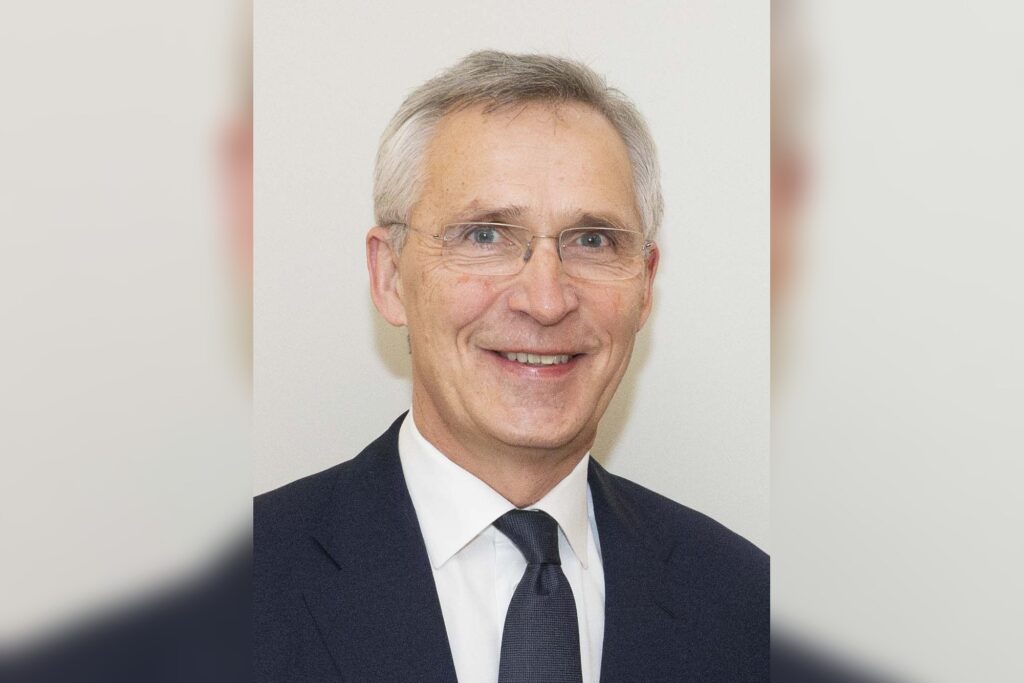
The summit in Madrid on June 29-30, 2022 produced the real doctrinal break. Leaders approved a new Strategic Concept that describes “Russia as the most significant and direct threat to Allied security.” Ahead of the meeting, Secretary General Jens Stoltenberg put it bluntly: “Russia poses a direct threat to our security, to our values, to the rules-based international order.” The previous concept, from 2010, had spoken of Moscow in far more cooperative terms.
Then the arithmetic. Stoltenberg told reporters NATO would “increase the number of our high readiness forces to well over 300,000”, against the roughly 40,000 in the NRF. The new NATO Force Model was meant to deliver a response at “a much greater scale and at higher readiness” than the old force, and it replaced the NRF entirely when it became operational on July 1, 2024.
Madrid also invited Finland and Sweden to join, reaffirmed the pledge to spend at least 2 percent of GDP on defense by 2024, and named China for the first time in a Strategic Concept. NATO called the package “the biggest overhaul of Allied collective defence and deterrence since the Cold War.”
Aid without troops
Here the catch is that none of this puts NATO inside Ukraine. The alliance’s own assistance package covers non-lethal items only. Allies have pledged over EUR 1.4 billion (approximately USD 1.6 billion) for fuel, body armour, medical supplies, demining equipment and secure communications, among other things.
Weapons move on a separate track. Individual members ship them directly, from anti-tank and air defence systems to tanks and fighter jets. A coordination hub, NSATU, sits in Wiesbaden, Germany, with three logistics hubs in the east of the alliance and around 300 personnel from Allied and partner countries.
NATO is explicit about why it stops there. Enforcing a no-fly zone or sending combat troops, it says, “would bring NATO forces into direct conflict with Russia.”
Sources
- Madrid Summit ends with far-reaching decisions to transform NATO
- 2022 NATO Summit (NATO)
- NATO to Massively Increase High-Readiness Forces to 300,000
- NATO Response Force (2002-2024) (NATO)
- Strengthening NATO's eastern flank (NATO)
- NATO's support for Ukraine (NATO)




