
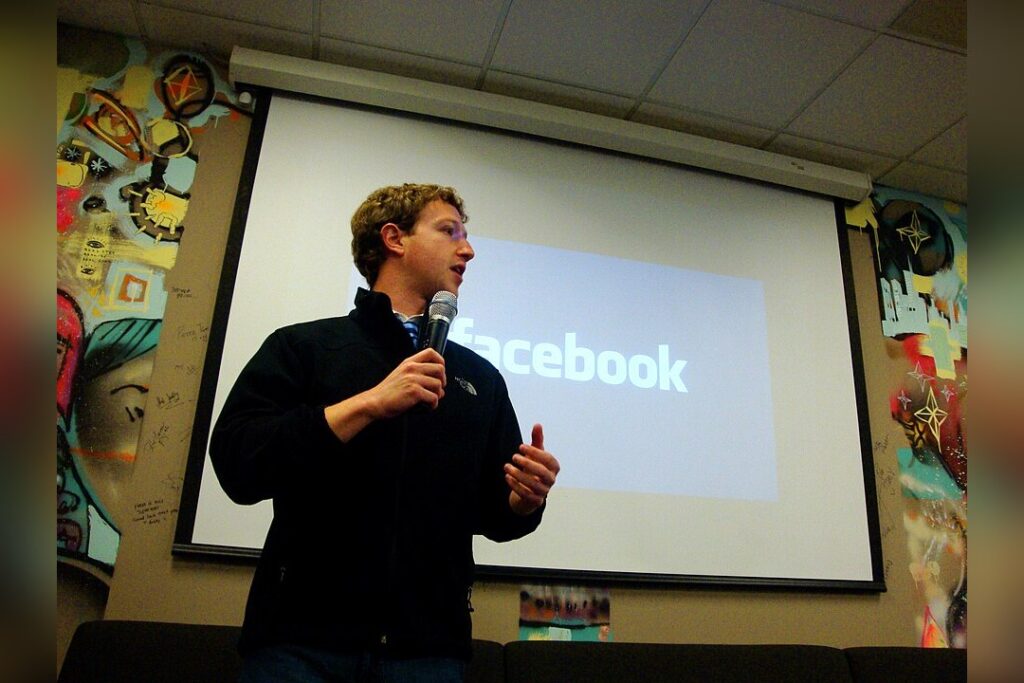
Strategically, the Facebook story starts small: a dorm room at Harvard, four friends, and a site called TheFacebook. Mark Zuckerberg and three friends, Eduardo Saverin, Chris Hughes and Dustin Moskovitz, put it online in February 2004. Zuckerberg quit Harvard that June and relocated the business to Palo Alto, California. The site ended the year with 1 million users.
Today, Biography.com notes, the user base has passed three billion people, and Zuckerberg runs Meta, the owner of Facebook, Instagram, WhatsApp and Threads.
Growth, and who it was bought from
The early money came from Accel Partners, which invested $12.7 million in 2005, when it was still limited to Ivy League students. Letting in other colleges, high schools and some international schools pushed membership past 5.5 million by December 2005. Zuckerberg turned down advertising offers from Yahoo! and MTV Networks and chose to add features and let outside developers build on the site.
The calculus changed with scale. Facebook went public in May 2012, raising $16 billion at a valuation of $104 billion, among the largest internet IPOs ever. The shares slipped in early trading. Zuckerberg kept going. Facebook bought Instagram for $1 billion, when that service had only 13 employees, and in February 2014 it paid $19 billion for WhatsApp, its largest acquisition. Instagram counts more than 2 billion active users today, and WhatsApp close to 3 billion.
The next year Facebook joined the Fortune 500 for the first time. Zuckerberg was 28, the youngest chief executive on the list.
Lawsuits and a data scandal
Growth carried legal risk from the start. Divya Narendra and the Winklevoss twins, who had hired him to help build HarvardConnection, later renamed ConnectU, sued in September 2004, claiming he had taken their idea and source code. Zuckerberg said the two sites were very different kinds of network. A first settlement of $65 million followed, though the dispute ran into 2011.
The bigger test came in 2018. Facebook believed up to 87 million people had had their data wrongly passed to Cambridge Analytica, a political consultancy, far above the 50 million figure the whistleblower Christopher Wylie had given earlier. About 1.1 million of those people were in the UK. The quiz app behind the harvesting, This Is Your Digital Life, had been installed by about 305,000 people.
Zuckerberg conceded the point at a press conference. “Clearly we should have done more, and we will going forward,” he said, and he called his earlier view of Facebook as a toolmaker “wrong in retrospect.” The company, he added, had to “take full responsibility for the outcomes of how people use those tools as well.” Hours later the House Commerce Committee in the US said he would appear before it on 11 April.
Sources
- Mark Zuckerberg: Biography (intro)
- Mark Zuckerberg: Biography (Facebook years)
- Mark Zuckerberg: Biography (IPO and deals)
- Facebook scandal 'hit 87 million users'




