
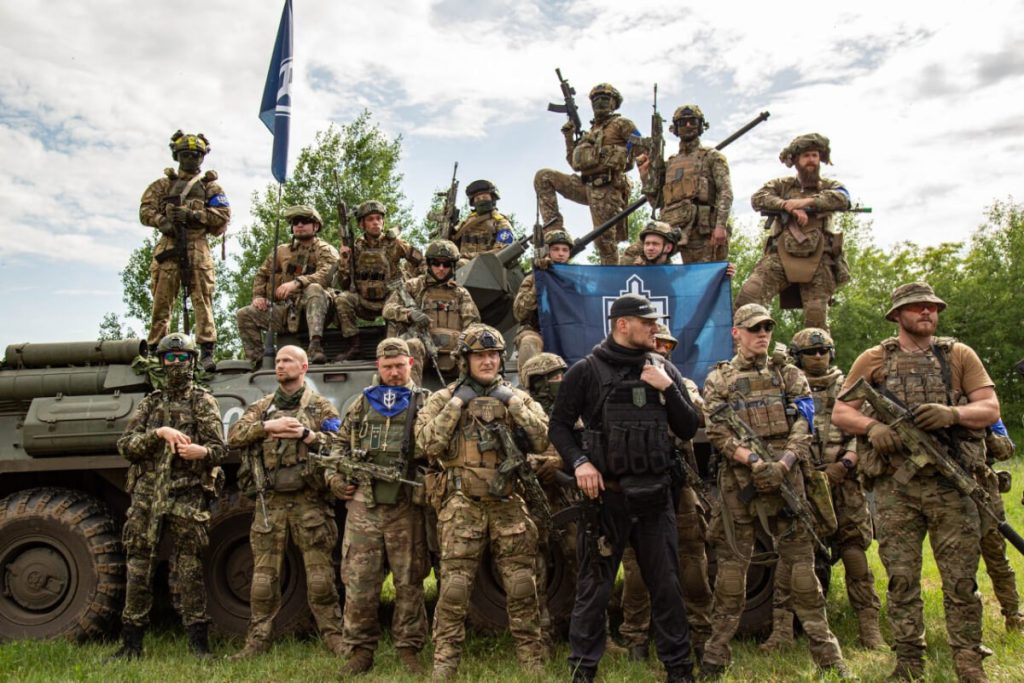
On March 12, 2024, a significant cross-border incursion occurred as Ukrainian-backed armed groups entered Russia from Ukraine, marking a notable escalation in the ongoing Russo-Ukrainian War. The incursion involved multiple groups and resulted in clashes with the Russian military in the Belgorod and Kursk Oblasts. The groups involved in the incursion included the Freedom of Russia Legion, the Russian Volunteer Corps, and the Sibir Battalion.
These groups claimed to have gained control of at least four settlements within Russian territory. However, the situation on the ground remained fluid, with many other border settlements under contested control.
The claims of control by these groups were not universally accepted, highlighting the complexity and uncertainty of the situation. The Russian defense ministry responded to the incursion by denying the claims of the Ukrainian-backed groups, stating that they had successfully beaten back the attackers and forced them to retreat. Despite this assertion, fighting continued in the region, indicating that the situation was far from resolved.
The discrepancy between the claims of the groups involved and the Russian defense ministry’s statements underscored the challenges in verifying information in conflict zones. The timing of the incursion is noteworthy, as it coincided with the 2024 Russian presidential election.
This context adds a layer of political complexity to the military actions, potentially influencing both domestic and international perceptions of the conflict. The incursion was not an isolated event but rather part of a series of cross-border incursions into Russia that followed its invasion of Ukraine, indicating a broader pattern of escalation and retaliation. The involvement of multiple Ukrainian-backed armed groups, such as the Freedom of Russia Legion, the Russian Volunteer Corps, and the Sibir Battalion, suggests a level of coordination and organization among these entities.
Their ability to launch a cross-border incursion and claim control of Russian territory, even if temporarily or partially, demonstrates a significant capability. However, the Russian military’s response and the ongoing nature of the conflict mean that the ultimate outcome and control of the affected areas remain uncertain.
International Implications and Future Developments
The March 12, 2024, incursion into western Russia has significant implications for the international community, particularly in terms of how the conflict between Russia and Ukraine is perceived and addressed. The fact that this incursion occurred during the Russian presidential election adds a layer of political intrigue, potentially affecting the election’s outcome and the subsequent policies of the Russian government towards Ukraine.
As the situation continues to unfold, it is crucial to monitor developments closely, including any further cross-border incursions, the Russian military’s response, and the international community’s reaction to these events. Looking forward, the key aspects to watch will include how the Russian government and military respond to the incursion and any subsequent actions by Ukrainian-backed groups.
The international community’s stance, including that of major powers and international organizations, will also be critical in shaping the conflict’s trajectory. Furthermore, the impact of the incursion on the 2024 Russian presidential election and its aftermath will be closely observed, as it may influence Russia’s domestic and foreign policies. As the conflict continues to evolve, accurate and timely information will be essential for understanding the implications of these events and their potential to shape the future of the region.




