
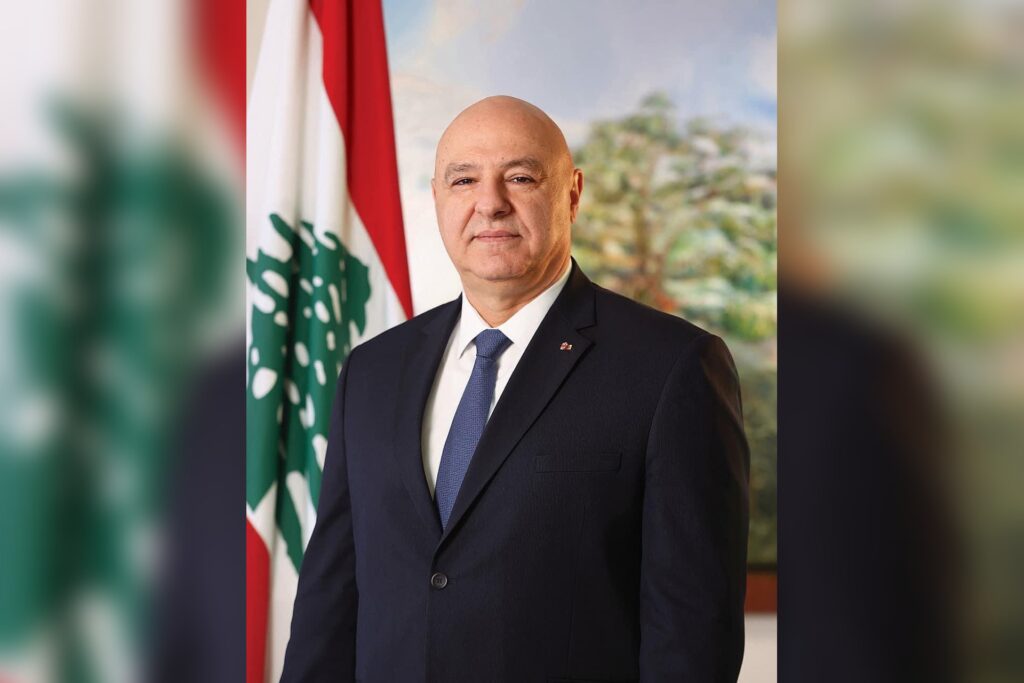
Lebanese President Joseph Aoun has issued a direct appeal to the Trump administration, urging Washington to remain a steadfast partner for Lebanon in the wake of a landmark, U.S.-mediated agreement between Lebanon and Israel. In a message sent to President Donald Trump to mark America’s 250th Independence Day, Aoun called on the United States to “keep always standing beside Lebanon’s right and just causes, its institutions, army and people.” The Lebanese leader expressed hope that his country could “turn the page on wars … and open a new page of hope, peace and stability.” The appeal arrives as Lebanon begins assessing the path forward after years of armed hostilities along its southern border with Israel, hostilities that the newly reached accord is intended to quell.
A Plea for Continued Partnership
Aoun’s message was notably warm toward the Trump administration, reflecting the administration’s role as the key mediator in the agreement. The U.S. Embassy in Lebanon also weighed in, posting on X that it is “with grea” support for Lebanon, though the full text of that statement was not immediately available.
For observers of regional diplomacy, the encouraging sign is that both sides appear willing to engage through American channels. The early findings suggest the U.S. role as mediator has created a framework that could hold, though the situation remains fragile. Aoun specifically mentioned the Lebanese army in his appeal, signaling the institution will be central to maintaining stability.
The president has explicitly tied Lebanon’s future to its institutions, not to armed factions. That language matters, especially in a country where Hezbollah, a heavily armed political and militant group backed by Iran, has grown powerful enough to overshadow the Lebanese state and its military, particularly along the southern border with Israel.
Hezbollah’s influence has long complicated efforts to assert state control. Aoun’s framing of the new “page” as one of hope, peace, and stability suggests he sees U.S. support as essential for Lebanon’s institutions to reclaim authority from non-state actors.
Lebanon’s Precarious Crossroads
Lebanon is a small country on the eastern shore of the Mediterranean Sea, bordered by Syria to the north and east and Israel to the south. Its location has long made it a crossroads of civilizations, from the ancient Phoenicians through Roman, Byzantine, Arab, and Ottoman rule.
After World War I, the territory became a French mandate, and by 1943 it had gained independence with a distinctive political system that apportions power among its many religious communities. That arrangement helped keep Lebanon relatively stable for decades, but it collapsed into a brutal civil war that lasted from 1975 to 1990, leaving the country deeply fractured. In the years that followed, Lebanon endured prolonged occupations: first by Syria, from 1976 until 2005, and then by Israel, from 1985 until 2000.
The country has also been the scene of repeated cross-border conflicts with Israel, including multiple Israeli invasions. More recently, Lebanon has suffered a severe economic crisis, widespread corruption, and the catastrophic explosion in Beirut in 2020 that destroyed much of the capital’s port and killed many people.
The confessional government, which divides official posts among Christians, Muslims, and Druze, is meant to balance sectarian interests but has also fueled gridlock and instability. The president, a Maronite Christian, commands limited power; the prime minister is a Sunni Muslim, and the parliament speaker is a Shia Muslim.
The Stakes for Regional Stability
The U.S.-mediated agreement marks a potential turning point after years of armed hostilities. If it holds, it could strengthen the Lebanese army and state institutions at the expense of armed factions.
For readers, the stakes are clear: a stable Lebanon would reduce the risk of broader regional war, while a collapse could draw in outside powers and destabilize the eastern Mediterranean. What to watch now is whether the U.S. follows through on Aoun’s request for sustained support, and whether the Lebanese political class can deliver on the “new page” the president promised. The coming weeks will test whether the agreement holds, and whether Lebanon’s army and government can assert control where militias once dominated.
President Aoun’s appeal to Washington signals that Lebanon’s leadership sees American support as essential to making that peaceful transition happen.




