
The paper that stopped the Korean War was signed at 10:00 a.m. on July 27, 1953, by two men: Nam Il for the North Korean and Chinese side and U.S. Lieutenant General William Harrison Jr. for the United Nations Command. It took effect twelve hours later. A peace treaty has never followed.
The armistice was written as a military document, not a political one. It set up a “complete cessation of all hostilities in Korea by all armed forces,” to last until a final peaceful settlement. No government signed it. South Korea refused to, because President Syngman Rhee would not accept that the war had failed to unify the country by force.
Two years of talks
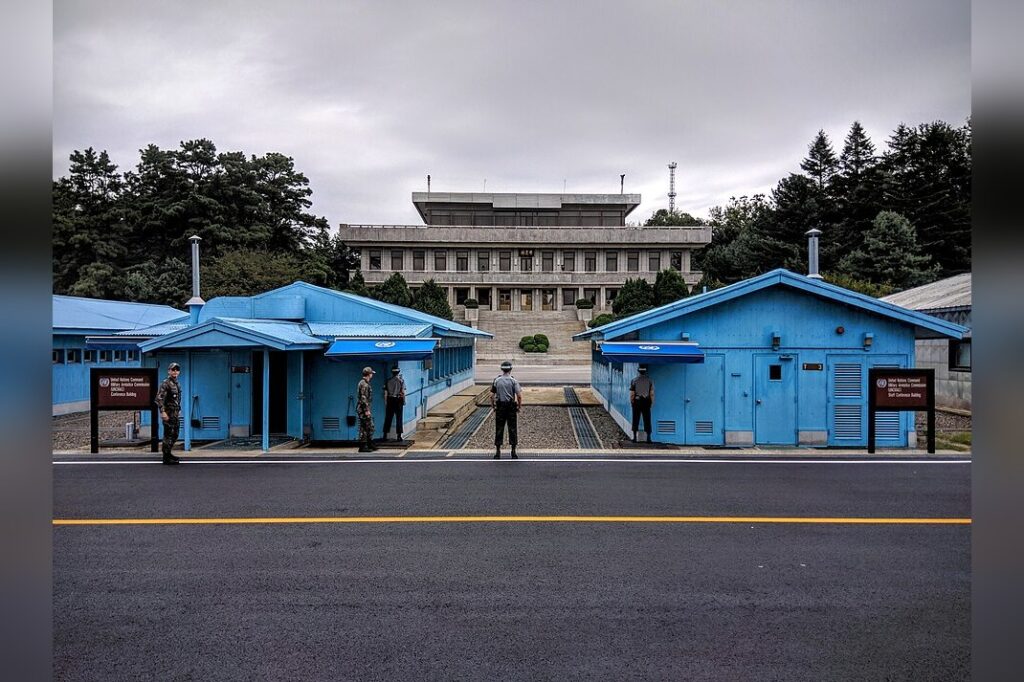
Negotiations opened on July 10, 1951, in Kaesong, a North Korean city near the border. Chief negotiators were Nam Il and U.S. Vice Admiral Charles Turner Joy. A five-part agenda was settled within weeks, but progress after that was slow, with long gaps between meetings. The longest began on August 23, 1951, when North Korea and its allies said the conference site had been bombed. Talks did not resume until October 25, and moved to Panmunjom, a nearby village, with both sides sharing responsibility for its protection.
Prisoners of war caused the worst deadlock. The Communist side held 10,000 and the UN Command held 150,000, and many Chinese and North Korean soldiers refused to go home. The final text created a Neutral Nations Repatriation Commission, chaired by Indian General K. S. Thimayya. In the end, more than 22,000 North Korean or Chinese soldiers refused repatriation. On the other side, 327 South Koreans, 21 Americans and 1 Briton stayed north.
Events outside the room mattered too. Dwight Eisenhower went to Korea on December 2, 1952, after winning the U.S. election. Stalin’s death in March 1953 helped break the stalemate, and the new Soviet leadership called for a quick end to the fighting within two weeks. On July 19, 1953, the delegates settled every item on the agenda.
What it created
The agreement drew the Military Demarcation Line and the Demilitarized Zone, a fortified buffer about 2.5 miles wide that follows the line where the armies stood on signing day. It runs close to the 38th parallel. A Neutral Nations Supervisory Commission, with inspection teams from Czechoslovakia, Poland, Sweden and Switzerland, was to keep new troops and weapons out of Korea.
Why no peace followed
Article IV called for a political conference within three months. It met in Geneva in April 1954, six months late. Chinese diplomat Zhou Enlai raised a peace treaty for Korea there, but U.S. Secretary of State John Foster Dulles did not take it up, and nothing came of it.
The armistice also eroded over time. In September 1956, the U.S. Joint Chiefs chairman, Admiral Radford, indicated the U.S. intended to bring atomic weapons into Korea, a plan agreed by the National Security Council and Eisenhower. China signed a peace treaty with South Korea in 1992 and left the Military Armistice Commission in 1994, which left North Korea and the UN Command as the only participants. In 2011, South Korea said North Korea had violated the agreement 221 times.




