
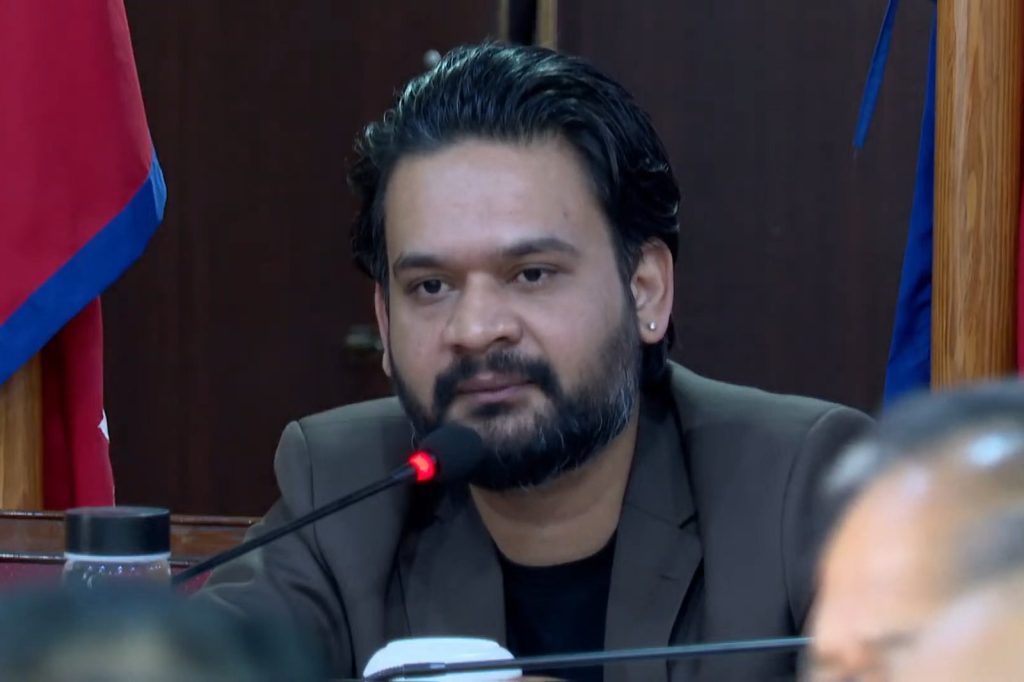
KATHMANDU, June 21 — In a significant public address, Prime Minister Balendra Shah, also known as PM Balen, laid out his government’s priorities and defended its direction at the Rastriya Swatantra Party’s (RSP) inaugural general convention in Chitwan. The speech marked PM Balen’s first major public address since forming a government after securing a strong majority in the March 5 elections, which were followed by Gen-Z protests. According to officials, PM Balen described his party as a “development-oriented” force, sending a clear message about the RSP’s ideological identity.
PM Balen reiterated Nepal’s claim over Lipulekh and Kalapani, signaling to both India and China Nepal’s territorial position. The ministry said that the government would continue advancing toward its goals without unnecessary interruptions.
PM Balen explained the government’s approach using the analogy of a vehicle, stating, “The government is like a vehicle. It has both an accelerator and a brake,” and added, “But our vehicle is not travelling on local roads—it is moving on an expressway. It will apply the brakes only when necessary.” A significant aspect of PM Balen’s speech was his emphasis on the government’s commitment to its goals.
Analysts note that this commitment is crucial for the country’s development and stability. The RSP’s general convention provided a platform for PM Balen to outline his vision and reassure the public about the government’s direction.
The speech was also an opportunity for PM Balen to address concerns about the RSP’s ideological identity. As the party continues to face questions from political rivals, PM Balen’s description of the RSP as “development-oriented” aims to clarify its position and reassure the public about its priorities. The government’s stance on territorial issues, such as Lipulekh and Kalapani, is also a significant aspect of its foreign policy.
Looking ahead, it will be important to watch how the government implements its priorities and navigates the complex geopolitical landscape. The US administration, as well as other regional players like India and China, will likely be closely monitoring Nepal’s developments. As the government moves forward, it will face several challenges, including balancing its relationships with neighboring countries and addressing domestic concerns.
PM Balen’s speech in Chitwan has set the tone for his government’s approach to governance and foreign policy. With a strong majority and a clear vision, the government is poised to make significant progress on its priorities.
However, the path ahead will not be without challenges, and the government will need to carefully manage its relationships with various stakeholders to achieve its goals. As the situation continues to unfold, it will be essential to monitor the government’s progress and assess its impact on the region. The RSP’s “development-oriented” approach and the government’s stance on territorial issues will likely be subject to ongoing scrutiny and debate.
With several factors at play, the coming months will be crucial in determining the success of PM Balen’s government and its ability to deliver on its promises.




