
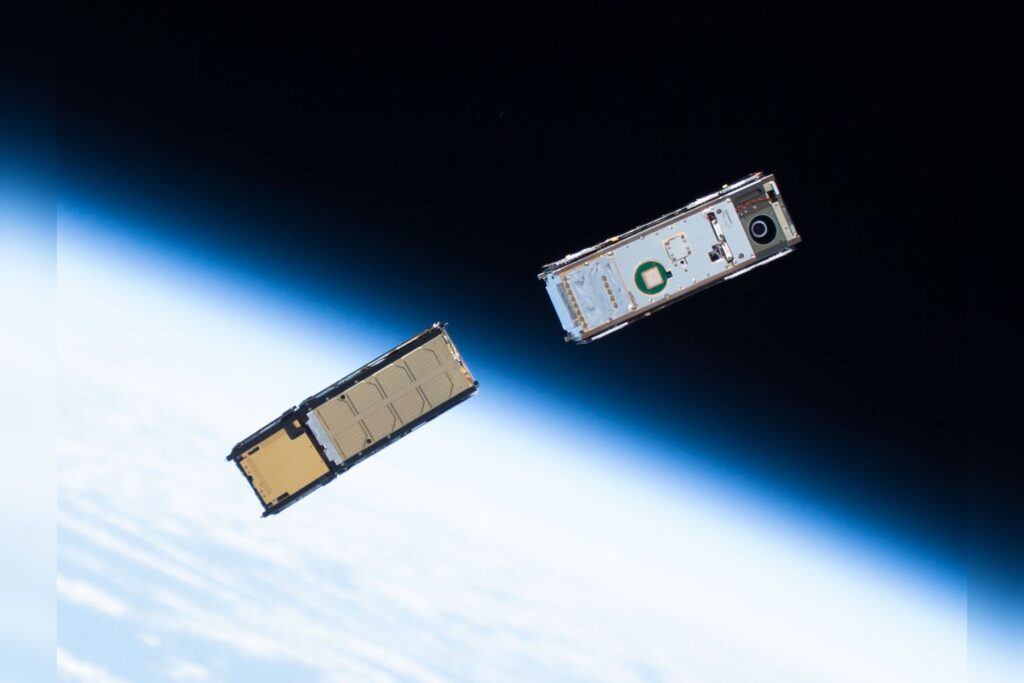
It took Amazon six months to build its first 27 satellites. Today, one of its senior engineers says, the factory can turn out 27 in a week. That change, from craft project to production line, is the main story of the company’s satellite internet effort, which began life as Project Kuiper and is now being marketed as Amazon Leo.
Two prototypes in 2023
The first public milestone came on Friday, October 6, 2023. An Atlas V rocket flown by United Launch Alliance left the pad at Cape Canaveral at 2:06 pm Eastern with two prototype satellites aboard. Amazon said both reached orbit and were talking to its mission center. “There’s no substitute for on-orbit testing,” Rajeev Badyal, then the project’s vice president of technology, said before launch.
The project had been announced in 2019, the same year SpaceX began deploying operational Starlink spacecraft. Jeff Bezos has said the goal is “fast, affordable broadband to unserved and underserved communities around the world,” and Amazon had vowed to invest $10 billion. At the time of that launch, Starlink already had some 5,000 satellites up. Telesat of Canada had not yet put up any of its 300 planned satellites, and China was planning a 13,000-satellite network of its own. For people in places where a dependable connection is still a luxury, a competitor to Starlink matters.
Where things stand now
Ars Technica interviewed three senior Amazon officials in early October 2026. By then the Kirkland, Washington factory, which Amazon began converting from a vacant 170,000-square-foot building in December 2022, had built its 1,000th satellite. Satellites take several weeks to build and test, and testing that once ran for days or weeks now takes hours.
In orbit sat 396 satellites, said Chris Weber, the company’s vice president of business, and they were still being raised into their final positions. Badyal, now leading the program, said that was enough for initial service. “The plan is to launch initial service in 2026,” Weber said. Launches have been spread among ULA, Blue Origin, Arianespace and SpaceX, and Badyal said a Vulcan rocket flight was weeks away.
The company is pitching speed and security. Weber claimed a gigabit downlink and 400 megabits uplink, against roughly 350 and 40-ish for Starlink. Traffic is protected with AES-256 encryption, and business customers can connect straight into AWS data centers without touching the open internet. For households, Amazon plans to pair the service with Prime, Prime Video, eero routers, Fire TV and Ring. Delta Airlines has already chosen Amazon over Starlink for its planes.
The first-generation constellation will total 3,232 satellites. A second generation has been filed with the FCC and is in design.
Sources
- Amazon builds 1,000th satellite, will launch space internet service by end of year (Ars Technica, Eric Berger)
- Amazon launches test satellites to rival Musk's Starlink (DW, with Reuters and AFP)




