
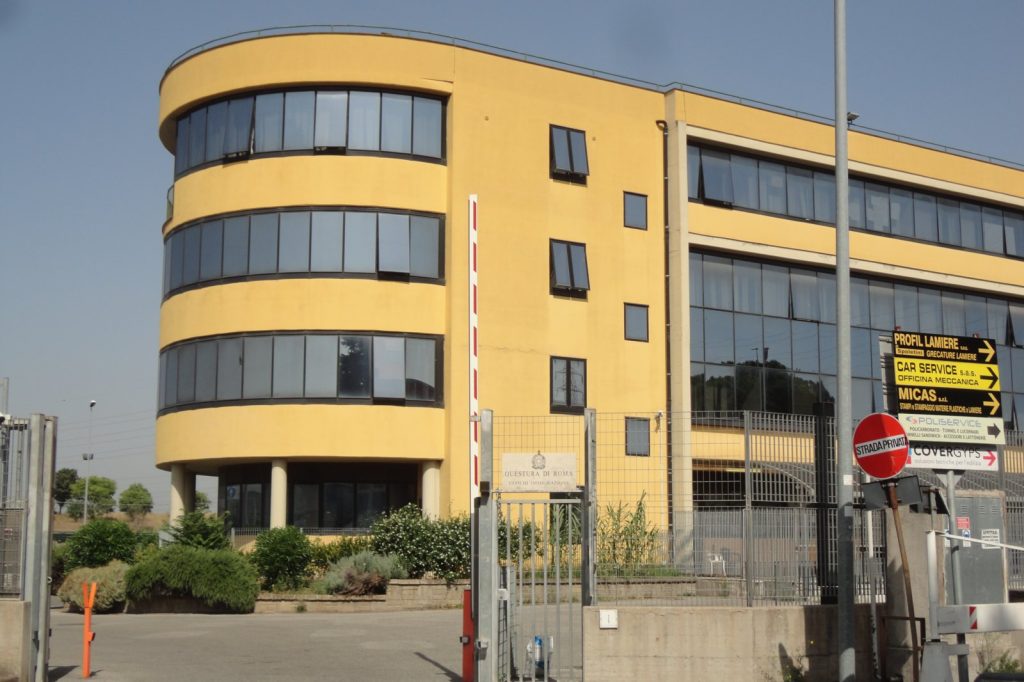
“All that I can give you, I will give you, tell your boss that.” That is what Gavino Piras, a 59-year-old former member of Italy’s secret service, told a Russian military attaché while Italian police filmed and wiretapped the meeting, according to court documents seen by Defense News.
The attaché, Mikhail Astakov, worked at the Russian embassy in Rome. Italian investigators accuse him of being an officer of the GRU, Russia’s military intelligence agency. Piras was arrested on Tuesday along with a second former Italian intelligence official. On Thursday the Italian government announced it was expelling two Russian military attachés, Astakov among them.
Cash, microSD cards and a hole in a wall
The court papers describe a simple tradecraft routine. Astakov gave Piras lists of questions from his superiors at secret meetings. Piras recruited informants in the Italian military, paid with cash from Astakov, and passed back answers on microSD cards left in a hole in a wall. The Russian paid €4,000 for each package, investigators said. Five alleged informants are under investigation.
After Piras was arrested, his lawyer denied he had passed any classified information to Russia.
What Moscow wanted to know
The requests centred on how Europe helps Ukraine fend off Russian missile and drone attacks. Astakov pressed for details on the Samp-T air defense system that Italy and France supplied to Kyiv. Piras, in turn, refers in the transcripts to data about the battery that he had handed over. Astakov also asked about the MBDA CAMM-ER missile, which Ukraine is in talks to assemble, and about Leonardo’s Michelangelo Dome, an open-architecture system meant to let partner countries link existing assets. Leonardo management has said it will be trialled in Ukraine in November.
The list ran wider. A note delivered in September 2025 asked about the “Efficiency of attacks on Iranian nuclear structures, damage to the program, prospects of work restarting,” Italy’s plans to buy Storm Shadow missiles, rearmament plans for Italy, the EU and NATO, “Priorities and objectives of EU defense,” and “Help for Ukraine to build long distance missiles.” Astakov was also curious about a Leonardo sub-sea drone being tested in La Spezia. In April 2025 he asked about Avio, the Italian propulsion firm, months after it partnered with the US Army to supply missile solid rocket motors.
Some of what Piras reportedly said in return is the kind of gossip that spies live on. He told Astakov that British, not Italian, intelligence is helping Ukraine strike Russian oil facilities. He also said Italian experts were studying a Russian T-90 tank and could not work out how its machine gun operates autonomously. “If they manage to steal the secret they will, so be careful,” he is quoted as saying.
Foreign minister Antonio Tajani was blunt. “Moscow continues to use hybrid warfare to attack the West and Italy,” he said. “This is serious and unacceptable interference in Italian institutions and national security.”
A parallel case in the Netherlands
The arrests coincide with a separate report from Dutch intelligence. The AIVD and MIVD said Russian state-affiliated hackers had compromised internet-connected security cameras and home intercoms across NATO states and Ukraine, targeting cameras along the routes used to move military equipment to Kyiv. The aim was to learn the types and volumes of weapons being supplied.
“When an IP camera is identified, an attacker can try to gain access to it via the internet,” the report stated. “This is often relatively easy, as many IP cameras connected to the internet are insufficiently protected.” The hackers relied on factory-default passwords, outdated software and unpatched firmware. Organizations with cameras on those routes have already been warned, the Dutch services said.
Sources
- Italy busts Russian spy ring collecting data on Ukrainian air defense vulnerabilities
- Italy Arrests Former Intelligence Officer in Russian Spy Ring Investigation




