
Rome has signed off on a €13.5bn (£11.7bn) bridge across the Strait of Messina. If it is built to the final design, it will be the longest suspension bridge in the world, and Transport Minister Matteo Salvini says the aim is to finish between 2032 and 2033.
Salvini, who leads the right-wing Lega party and allies with Prime Minister Giorgia Meloni, told a news conference in Rome that this will be “the biggest infrastructure project in the West.” Meloni called it an “investment in Italy’s present and future” and admitted the latest push has not been easy. “We enjoy difficult challenges when they make sense,” she said.
What would be built
The bridge would join Sicily to Calabria, on the tip of Italy’s boot. The central span would run 3.3km (2.05 miles) between two towers 400 metres (1,300 feet) tall. Two railway lines would sit in the middle, with three lanes of road traffic on each side. ABC reported the full structure at nearly 3.7 kilometres, which would beat Türkiye’s Çanakkale Bridge by 1,277 metres.
Designers say it will withstand earthquakes, a serious claim on ground that ranks among the most seismically active in the Mediterranean. Webuild, the industrial group awarded the contract, argues that this bridge type handles seismic forces better than most structures, and says comparable ones already stand in Japan, Türkiye and California. The Messina fault set off a deadly earthquake in 1908.
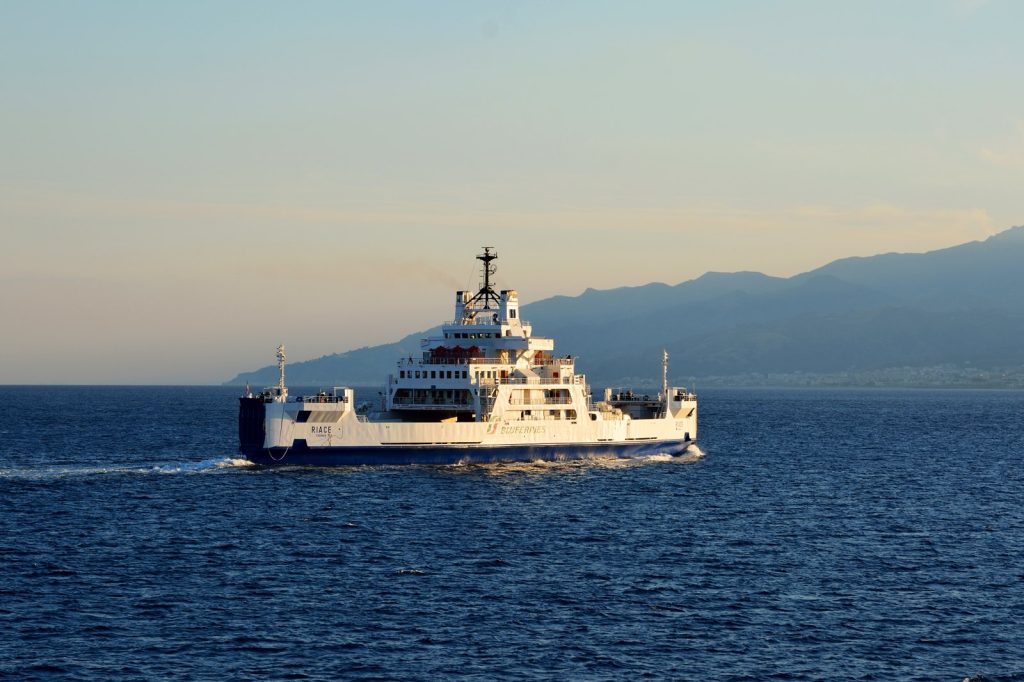
Capacity would reach 6,000 cars an hour and 200 trains a day. A ferry crossing that takes up to 100 minutes would shrink to 10 minutes by car.
The NATO angle
Rome wants the bridge counted as military spending toward the NATO target of 5% of GDP on defence. The government has signalled it would label the project defence-related, which would help cover a 1.5 per cent security component. Italy describes the bridge as a strategic corridor for moving troops and equipment quickly to NATO’s southern flank. Salvini confirmed the dual-use plan but said the call belongs to the defence and economic ministers.
More than 600 professors and researchers signed a letter against it. They wrote that a military label would require extra assessment of whether the structure could survive military use. Opponents add that it could become a target.
Jobs, money and resistance
Salvini claimed the bridge would create 120,000 jobs a year and lift growth in Sicily and Calabria, two of the poorest regions in Europe. Billions more would go into roads and other works alongside it, he said.
Plans for a crossing date back more than 50 years, and Italy first solicited proposals in 1969. Projects have been approved and then cancelled over cost, environmental damage, safety and the fear that mafia groups would siphon off public money. The Meloni government revived this one in 2023.
Opponents were quick to respond. Senator Nicola Irto of the Democratic Party called it “controversial and divisive”, arguing it would draw money away from local transport, schools and health care. Giusy Caminiti, mayor of Villa San Giovanni on the Calabrian shore, said her town would be badly hit and asked for more time for consultation. The Calabrian committee “No to the Bridge” called the announcement a political manoeuvre. Local groups note that construction would use millions of litres of water a day in two regions that often suffer drought. Environmental groups have complained to the European Union about the risk to migratory birds.
On the mafia, Italy’s president insisted that the project stay under the anti-mafia legislation applied to all large infrastructure, after a decree had handed those controls to the Interior Ministry. Salvini promised the same protocols used for Expo 2015 and the Milan-Cortina 2026 Winter Olympics. “We need to pay attention so that the entire supply chain is impermeable to bad actors,” he said.
Still to clear
Approval is not the last step. Italy’s Court of Auditors and environmental agencies, national and European, still have to sign off. Residents whose property may be expropriated must be consulted, and they could challenge the decision in court. Preliminary work could start between late September and early October if the auditors agree, ABC reported, with construction following the next year.
Today, trains cross the strait only by being shunted onto ferries for a 30-minute trip.
Sources
- Italy gives final approval for world's longest suspension bridge to Sicily
- Italy greenlights world's longest suspension bridge to Sicily
Sources
- Italy gives final approval for world's longest suspension bridge to Sicily
- Italy greenlights project to build world's longest suspension bridge…




