
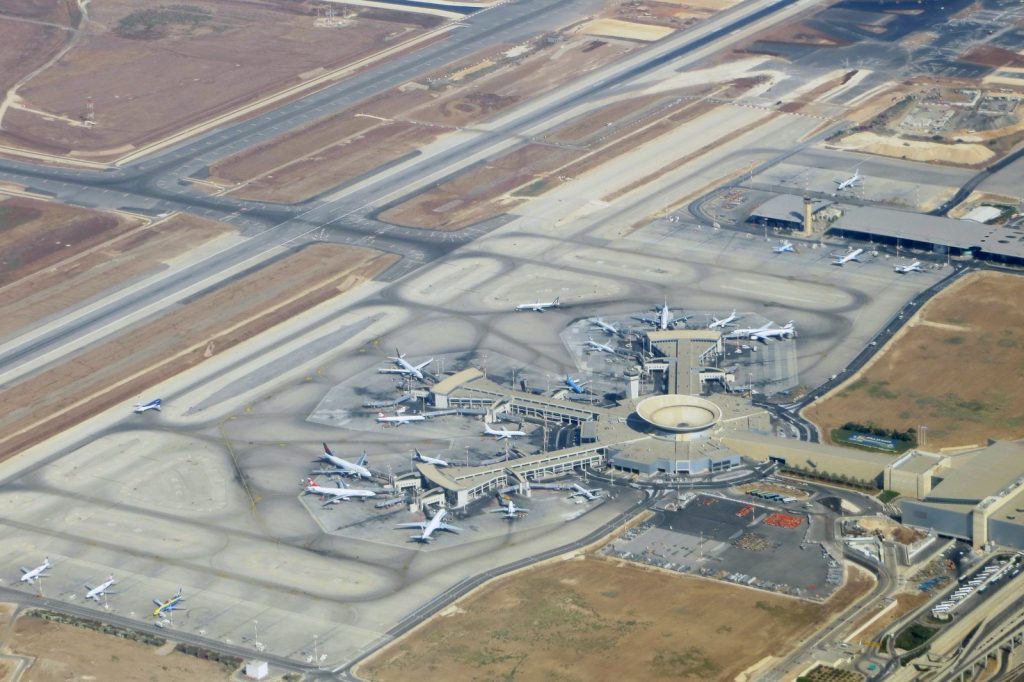
On 29 September 2024, Israel responded to a ballistic missile launched from Yemen that was directed at Ben Gurion Airport, the nation’s primary international gateway. The missile, fired by the Houthi movement—also known as Ansar Allah—prompted Israeli authorities to choose between absorbing the attack or expanding the conflict.
Israeli officials opted for the latter, ordering airstrikes against Houthi‑controlled ports and power plants in Yemen’s Al Hudaydah Governorate. The strikes targeted two seaports that serve as the main entry points for fuel and food into Houthi‑held territory, as well as a power station that supplies electricity to the region. By hitting both logistical hubs, Israel aimed to disrupt the supply chain that sustains the Houthi war effort, especially after the group demonstrated the ability to launch a missile capable of reaching central Israel.
According to Houthi sources, the Israeli raids resulted in four deaths and 29 injuries in Al Hudaydah. Israel has not released its own casualty figures for the operation, but the activation of air‑raid sirens in Tel Aviv indicated that the threat was taken seriously by Israeli civil defence authorities.
Ben Gurion Airport is a civilian facility, not a military installation. International humanitarian law does not consider civilian airports legitimate military targets. The Houthi leadership, largely drawn from the al‑Houthi family, has a history of targeting civilian infrastructure within Yemen and, with this missile, extended that approach to Israel’s doorstep.
The Houthi movement is rooted in Zaydi Shia Islam and was founded by Hussein al‑Houthi, a religious figure who promoted anti‑American and anti‑Israeli rhetoric. Over time, the group’s agenda has aligned with Iranian strategic interests.
Iran is known to supply the Houthis with weapons, training and financial support, and the missile aimed at Ben Gurion Airport is believed to have incorporated Iranian technology. Western governments, including the United States, have warned that such transfers represent a direct channel for Iranian influence throughout the region. For more than a decade, the Houthis have been engaged in a civil war inside Yemen, challenging the internationally recognised government, imposing blockades, and causing widespread humanitarian distress.
The group has been designated a terrorist organization by several states, accused of employing child soldiers, and documented for shelling residential areas. Despite these actions, the Houthis had previously been unable to strike Israeli territory.
The recent missile launch marked the first time the group demonstrated the capability to reach Tel Aviv. Israel’s official stance is that attacks on its civilian infrastructure will not be tolerated. The September 29 airstrikes were presented as a direct response, intended to degrade the Houthis’ ability to launch further missiles. However, analysts note that destroying ports and a power plant does not eradicate the movement’s missile program and could, in some scenarios, accelerate its development.
The Houthis have previously endured extensive campaigns by a Saudi‑led coalition that possessed greater firepower than the limited Israeli sortie. The international community now confronts a series of questions: whether to condemn the Houthi missile launch, the Israeli retaliation, both, or neither.
The answers will shape whether this exchange remains an isolated incident or evolves into a sustained series of confrontations. The Houthi movement has opened a new front; Israel has answered with force. Future developments will depend on diplomatic efforts to contain the escalation and on the capacity of regional actors to prevent further widening of the conflict.




