“Clearly set the conditions” for Russia to move to nuclear weapons: that was how Vladimir Putin described the revised doctrine he floated on Wednesday night after a meeting of his Security Council. The catch is in what he proposed to count as an attack.
Under the draft, aggression against Russia by any non-nuclear state would be treated as a “joint attack on the Russian Federation” if a nuclear state took part or lent support. Ukraine has no nuclear arms. The United States and other nuclear powers arm it. Putin did not name Kyiv, and he did not need to, as Newsweek noted.
A second trigger
He added a trigger tied to the air. Russia would weigh a nuclear response, he said, if it detected the start of a massive launch of missiles, aircraft and drones into its territory, which would pose a “critical threat” to its sovereignty. Conventional missile strikes on Moscow, he said, fall in that category. Russia’s nuclear arms, he called “the most important guarantee of security of our state and its citizens.”
The existing doctrine allows atomic weapons after a first strike or an attack that threatens Russia’s existence, though Newsweek pointed out that the threat is never clearly defined. “Critical” is no sharper.
Timing
The BBC reported that the remarks landed as Ukraine pressed for permission to hit military sites inside Russia with long-range Western missiles. President Volodymyr Zelensky was in the United States that week and was due to meet President Joe Biden in Washington on Thursday, with that request near the top of the agenda. Putin had hinted at doctrine changes in June, when he told European countries backing Ukraine that Russia had “many more” tactical nuclear weapons than sit on the European continent.
On Thursday the Kremlin said the changes were a warning. Spokesman Dmitry Peskov called it “a specific signal” to countries that join an attack on Russia “by various means, not necessarily nuclear.” He said Moscow had yet to decide whether to publish the updated document, which was still being worked on.
Reaction
Zelensky’s chief of staff, Andriy Yermak, said Russia “no longer has anything other than nuclear blackmail to intimidate the world.” Secretary of State Antony Blinken called the comments “totally irresponsible” in an MSNBC interview. NATO’s new chief, Mark Rutte, used the words “reckless and irresponsible.”
Analysts split on how much had really changed. Mark Galeotti of the Royal United Services Institute read it bluntly: the idea that a backed non-nuclear state could trigger a nuclear response is “a pretty transparent way of saying” that a major Ukrainian offensive would give Moscow the right to go nuclear. Peter Rutland of Wesleyan University said the remarks do not amount to a substantial change in Russia’s doctrinal position.
David Silbey of Cornell University saw a narrower aim. Putin, he said, wants Washington to go slow on lifting limits on Ukrainian deep strikes. “Russia is winning, currently, and there’s no need for him to escalate drastically given that,” Silbey said.
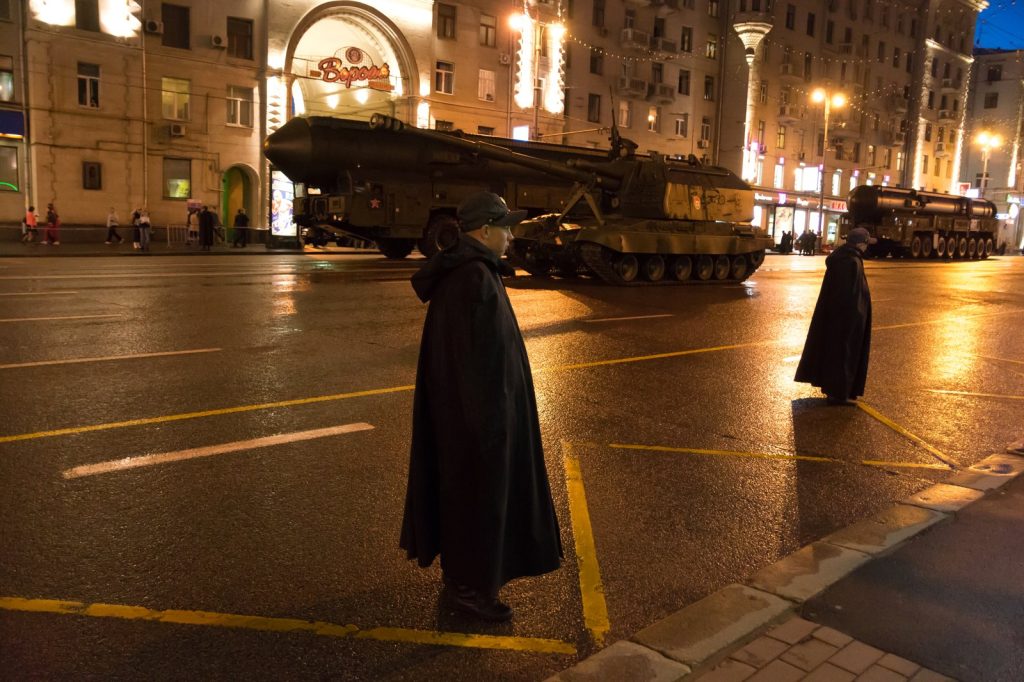
The warning also came after a failed test of Russia’s RS-Sarmat intercontinental ballistic missile, Newsweek noted. Peskov had not said whether the text would ever be made public.
Sources
- Putin proposes new rules for using nuclear weapons
- Are Putin's 'Irresponsible' Nuclear Threats Credible?