Israel has demanded that the Lebanese army establish roadblocks in Hezbollah-controlled areas to prevent the group from opening a new front if hostilities with Iran resume. This request, conveyed through American mediators, underscores a central diplomatic dilemma: whether the Lebanese state possesses the institutional capacity to enforce its own laws against a powerful internal actor whose military activities have been prohibited by the government since March 2026.
The Limits of State Authority
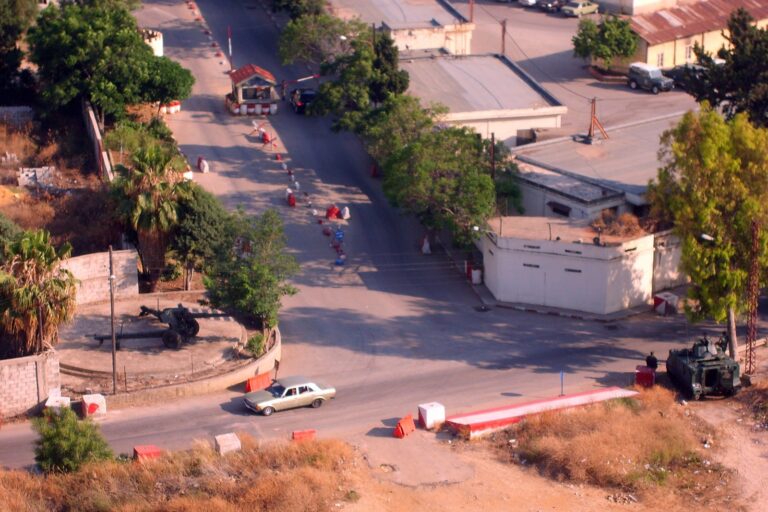
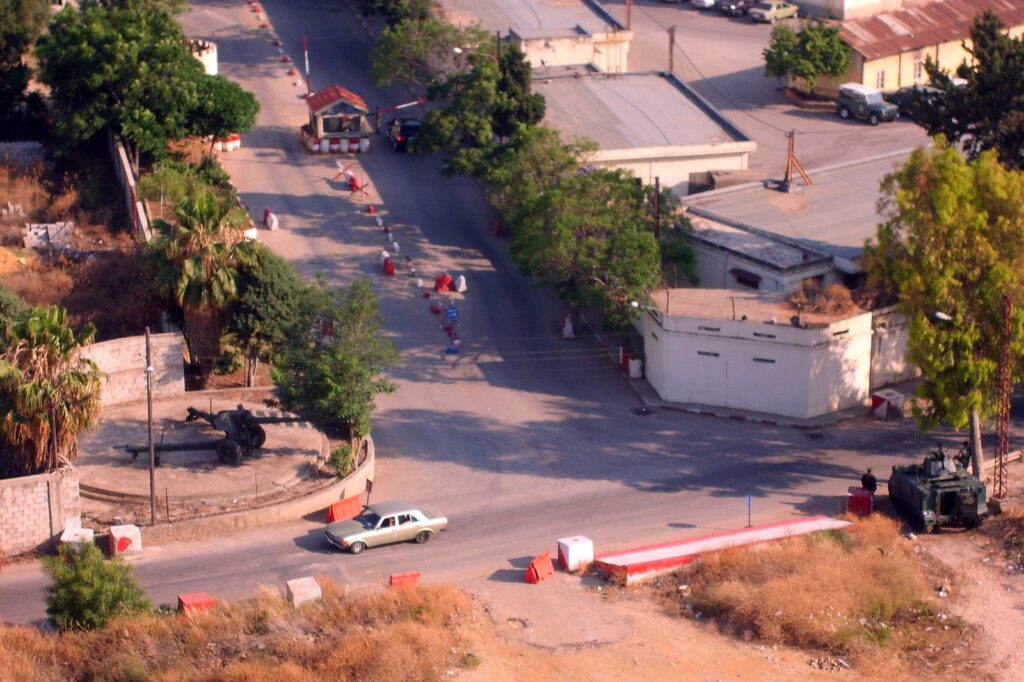
The effectiveness of the Lebanese government in curbing Hezbollah’s unilateral actions is constrained by a significant gap between legal mandates and operational reality. While Beirut has formally banned the group’s military and security activities, the enforcement of this ban relies on the Lebanese army, which faces structural and logistical hurdles. According to reports from the public broadcaster Kan, Israeli officials believe that the army’s deployment in target areas is delayed by personnel shortages, a lack of motivation, and limited operational capabilities. This creates a vacuum in areas where Hezbollah members reside, leaving the state unable to physically interdict the movement of personnel or materiel without direct military confrontation.
The legal framework is clear, but the enforcement mechanism is fragile. The Lebanese military court recently charged 13 individuals linked to Hezbollah with trafficking explosives, including 780kg of TNT and C-4 seized at a checkpoint in Dahr al-Baydar. The charges, which include possessing weapons and undermining state security, demonstrate that the judicial system is willing to prosecute the group. However, the fact that 11 of the 13 accused remain at large, with five identified only by nicknames, highlights the difficulty of executing arrests in areas where state authority is contested. Hezbollah has acknowledged ownership of the explosives, stating they were intended for use against Israel, and has called the charges “unjust,” framing the conflict as a national defense rather than a domestic crime.
Hezbollah’s Strategic Calculus
Understanding the likelihood of Hezbollah entering a renewed conflict requires analyzing its stated red lines and its current operational posture. A senior Lebanese official told The National that the group would join a US-Iran conflict only if Iran’s leadership faces an existential threat. This position was solidified after the killing of Ayatollah Ali Khamenei in a joint US-Israeli strike on February 28, an event the official described as crossing an explicit red line. “We knew earlier this year… that Hezbollah would join the fighting if [Khamenei] were killed,” the official said, noting that this threshold had been communicated to Washington.
Despite the prohibition on military activity, Hezbollah has used the lull in hostilities since June to rearm and restore its command-and-control structures. Lebanese security sources briefed Reuters indicated that the group has received tens of millions of dollars from Iran to boost its military capabilities, in addition to approximately $200 million received previously. This financial infusion has been directed toward procuring explosives and producing drones capable of reaching the security zone. Operatives have maintained a presence in southern Lebanon’s pilot zones, gathering intelligence and recuperating their fighting ability. The group’s media office rejected suggestions that its command structures had broken down, asserting that it remains committed to attacking Israel.
The Military Reality on the Ground
The Israeli strategy to prevent Hezbollah’s entry into a new war relies on a combination of diplomatic pressure and kinetic action. The Israeli Air Force has intensified strikes on Hezbollah infrastructure in southern Lebanon over the past three weeks. These operations primarily target open areas where the Lebanese army has not yet deployed, effectively filling the vacuum left by the state’s limited operational reach. By destroying infrastructure in these gaps, Israel is both weakening Hezbollah’s capabilities and signaling that it will act unilaterally if the Lebanese army fails to deploy.
The coordination between Israel and the United States is central to this approach. Israeli officials believe President Donald Trump could order new strikes against Iran in the coming days, and consultations have been held with Gulf countries, including signatories to the Abraham Accords. Senior officials from the Israel Defense Forces and US Central Command held talks this weekend to coordinate a potential joint US-Israeli operation targeting Iranian nuclear and energy facilities. This military alignment suggests that Israel is preparing for a scenario where diplomacy fails, and the burden of preventing a new front may fall on air power rather than Lebanese ground forces.
Diplomatic Leverage and Domestic Pressure
The diplomatic track offers another lever of control, though it is complicated by competing interests. US President Donald Trump has pledged to secure a full Israeli withdrawal from southern Lebanon if Beirut agrees to join the Abraham Accords, according to a senior Gulf diplomatic source. This offer ties the withdrawal of Israeli forces to Lebanon’s integration into a broader regional security framework, which includes managing Hezbollah. However, Hezbollah’s chief, Naim Qassem, has dismissed the June framework agreement between Lebanon and Israel as “null and void,” indicating that the group does not view the diplomatic process as binding on its military decisions.
Lebanese Prime Minister Nawaf Salam has promised that state authorities will deal with weapons outside the legal framework with “required firmness.” Yet, the political coalition in Beirut includes the Loyalty to the Resistance Bloc, which holds 15 seats in the Lebanese Parliament. This parliamentary presence gives Hezbollah a voice in government, complicating efforts to enforce disarmament through legislative or executive means. The group’s social services network, including schools and hospitals, further entrenches its influence in the community, making it a political actor as well as a military one.
Human Consequences of Uncertainty
The uncertainty surrounding Hezbollah’s role in a potential new war is already affecting the daily lives of Lebanese citizens. Fears of renewed fighting are particularly acute in Beirut’s Dahieh suburb, a heavily populated area with a significant Hezbollah presence. According to the Saudi newspaper Asharq Al-Awsat, some families who fled the area have been reluctant to return, while others are maintaining alternative apartments in case they are forced to evacuate again. In southern Lebanon, residents are preparing for escalation by relocating to northern parts of the country, farther from areas that could be targeted in future strikes.
This human dimension underscores the stakes of the diplomatic and military standoff. The ability of the Lebanese state to prevent Hezbollah from entering a new conflict is not just a question of border security or regional balance; it is a question of whether the government can protect its citizens from being caught in crossfire. The current situation reveals a state that has the legal authority to act but lacks the immediate operational capacity to enforce its will against a well-funded and organized internal opponent. Until the Lebanese army can deploy effectively in the south, or until a diplomatic breakthrough forces Hezbollah to disarm, the risk of unilateral escalation remains high.
The next scheduled milestone in this process is the potential resumption of US-Iran hostilities, which Israeli officials believe could occur in the coming days. The effectiveness of Lebanon’s government will be tested in that moment: whether it can deploy its forces to the checkpoints Israel has demanded, and whether it can withstand the internal and external pressures that may push Hezbollah toward war.
Sources
- Israel asks Lebanon to prevent Hezbollah from entering the war if the conflict with Iran resumes – report – i24NEWS
- Hezbollah
- Lebanon charges 13 over confiscated Hezbollah explosives
- Hezbollah limits US-Iran intervention to existential threats, official says | The Jerusalem Post
- Some Cultures Cling to Life and Others Sanctify Death
- Israel warns Lebanon: Fighting will resume if Hezbollah joins renewed Iran conflict
Photo: FunkMonk (CC BY-SA 3.0)