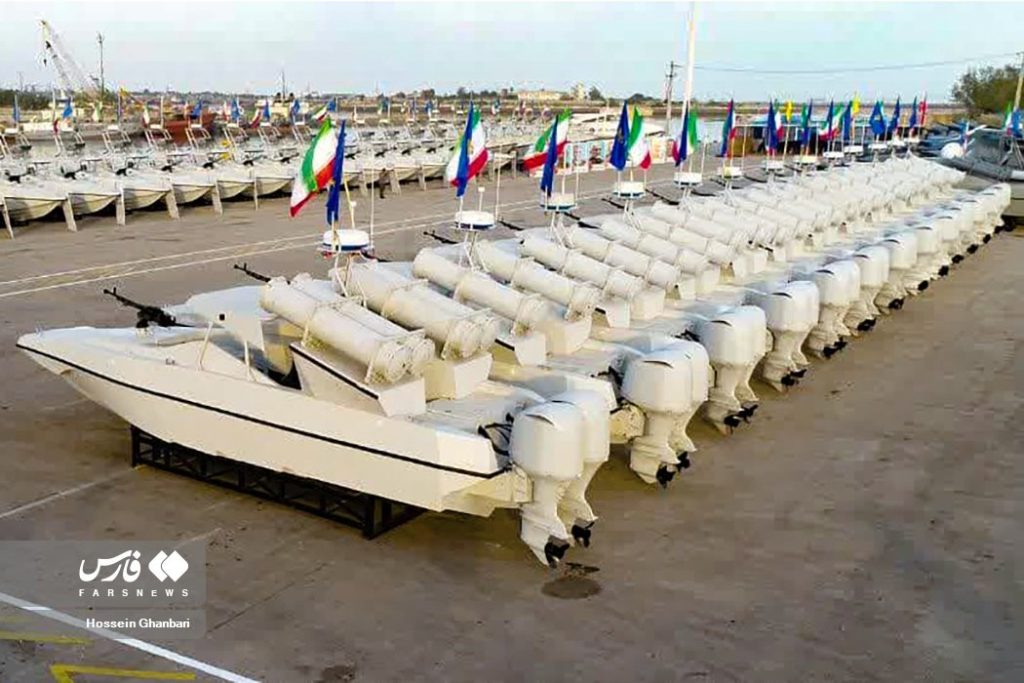
Picture a tanker crawling through the narrows of the Strait of Hormuz, and a dozen small boats peeling off from the islands, closing from different bearings at once. That picture is the doctrine of the Islamic Revolutionary Guard Corps Navy, known as the IRGCN, in one image.
The force was never built to fight like a conventional navy. In a May 2026 piece, gCaptain’s Mike Schuler described it as relying on “hundreds of small, inexpensive fast attack craft designed to swarm larger vessels and disrupt operations in the confined waters of the Persian Gulf.” A Defense Intelligence Agency assessment quoted there sums up the doctrine as “speed, mobility, large numbers, surprise, and survivability” in shallow, confined water.
Small boats, deliberate choice
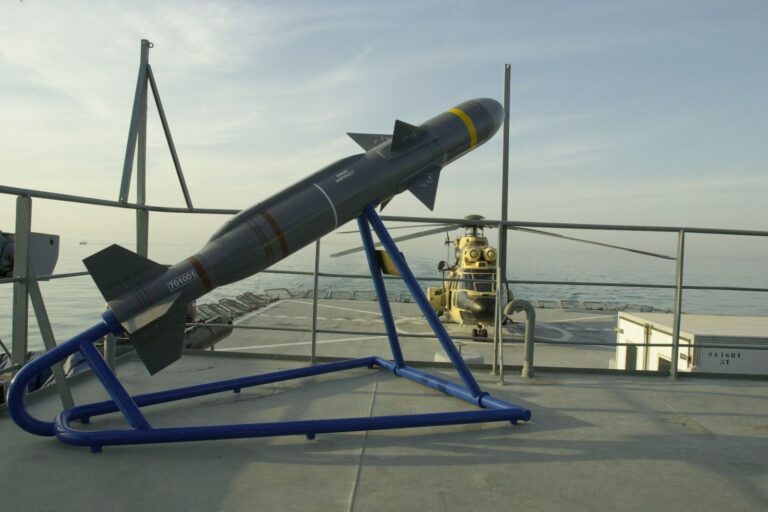
Analyst Imran Shamsunahar, writing for CIMSEC in June 2017, noted that the Guards’ navy chose “smaller and faster boats based on their doctrine of asymmetric warfare” while other navies bought bigger ships. The fleet mixes Fast Attack Crafts and smaller Fast Inshore Attack Crafts, armed with anti-ship missiles, machine guns and rockets. It also holds the C-802 missile and the domestically developed Qadir.
The swarming idea is simple. Iran hopes to counter a stronger surface fleet “through overwhelming numbers attacking from different directions.” Size helps. The boats can launch from any available jetty, and the oil platforms and islands in the strait serve as forward bases. Shamsunahar also pointed to the strait’s “broken littoral character,” which would let Iran hide boats among small islands and wait in ambush. Mines, he added, would let Iran channel shipping into specific lanes where it is more exposed to other attacks.
Disruption, not victory
The point, according to gCaptain, is not to sink destroyers. It is to complicate traffic, pressure shipping, raise insurance costs and erode confidence in freedom of navigation. The Guards train for hit-and-run raids that pair boat swarms with coastal missiles and maritime special operations. Iranian proxies have borrowed the template: Houthi forces in the Red Sea mixed one-way attack drones, anti-ship missiles and drone boats.
Swarms also strain defenses built for single targets. The Congressional Research Service has noted that a shipboard laser can engage only one target at a time and can be saturated, which is exactly the situation a swarm creates.
Baird Maritime reported on 23 April 2026 that Iranian fast boats had been used to seize two container ships near the strait. A senior Iranian security official told the outlet the Guards see the boats as the “backbone” of their naval strategy: “Because of their very high speeds, these boats can successfully carry out hit-and-run attacks without being detected.” Maritime security firm Diaplous said the craft carry “heavy machineguns, rocket launchers and, in some cases, anti-ship missiles.”
The tactic has limits. Jeremy Binnie of Janes said boats attacking a warship would take “very heavy casualties,” and that Iran’s small-boat threat will be “much harder to eliminate” than its larger vessels were. Daniel Mueller of Ambrey said a seizure typically takes about a dozen boats, and that Iran has used small fast boats at least seven times since 2019. The strait normally carries 20 percent of global daily oil and liquefied natural gas supply.
Sources
- Waters of Black Gold: The Strait of Hormuz, Pt. 2 (CIMSEC)
- Iran's Fast Attack Craft: A Real Maritime Threat (gCaptain, Mike Schuler)
- Iranian swarm tactics return to haunt Strait of Hormuz shipping (Baird Maritime)