
TEHRAN, July 12 — The man who ordered the closure of the Strait of Hormuz in April 2025 is a Revolutionary Guard veteran whose career has been defined by confrontation with the United States. Rear Admiral Alireza Tangsiri, commander of the Islamic Revolutionary Guard Corps Navy, has spent decades building a naval force designed to challenge American power in the Persian Gulf.
Tangsiri was born in 1960 in Tangsir, Iran, and joined the IRGC during the Iran-Iraq War, a conflict that lasted from 1980 to 1988 and shaped a generation of Iranian military commanders. He served in various naval roles during that war and later rose through the ranks.
A career built on hardline credentials
Supreme Leader Ayatollah Ali Khamenei and IRGC commander Major General Hossein Salami appointed Tangsiri as IRGC Navy commander on August 17, 2019. Before that, he had served as deputy commander of the IRGC Navy from 2015 to 2019.
Tangsiri has built a reputation for hardline rhetoric against both the United States and Israel. In 2020, he made a bold claim that the IRGC Navy had “full control” over the Strait of Hormuz, the narrow waterway through which about a fifth of the world’s oil passes.
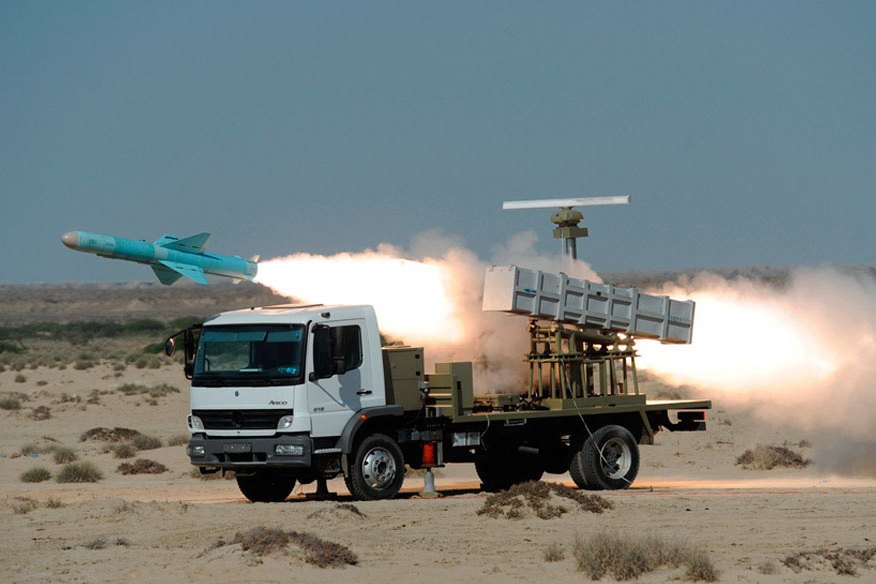
Under his command, the IRGC Navy has deployed fast attack craft, anti-ship missiles, and naval mines — weapons designed to threaten commercial shipping and naval vessels in the Gulf. His tenure has seen a marked increase in IRGC naval exercises.
Exercises and escalation
One of the most significant exercises under Tangsiri’s command was the Great Prophet 14 exercise in 2020, which simulated attacks on a U.S. aircraft carrier. The drill was a direct message to Washington, showcasing Iran’s ability to target American naval assets.
Tangsiri reports directly to both Supreme Leader Khamenei and IRGC commander Salami, giving him a direct line to Iran’s highest authorities. This chain of command means his decisions carry the weight of the regime’s top leadership.
The April 2025 closure order
The April 13, 2025 closure order was issued under Tangsiri’s command. This order shut down the Strait of Hormuz to commercial shipping, triggering a global energy crisis and sending shockwaves through economies across Asia. For communities in the Philippines, Japan, South Korea, and India — all heavily dependent on Gulf oil — the closure meant skyrocketing fuel prices and disrupted supply chains.
For families across the region, the impact was immediate. In Manila, jeepney drivers faced doubled diesel costs. In Tokyo, households saw electricity bills surge. In Mumbai, small businesses that relied on predictable fuel prices suddenly faced uncertainty.
What to watch next
The international community continues to monitor Tangsiri’s movements and statements. With the Strait of Hormuz still a flashpoint, any further escalation from the IRGC Navy commander could have profound consequences for global energy markets and regional stability. For now, Tangsiri remains in command, his hardline posture unchanged, and his forces positioned to enforce Iran’s will in the Gulf.




