
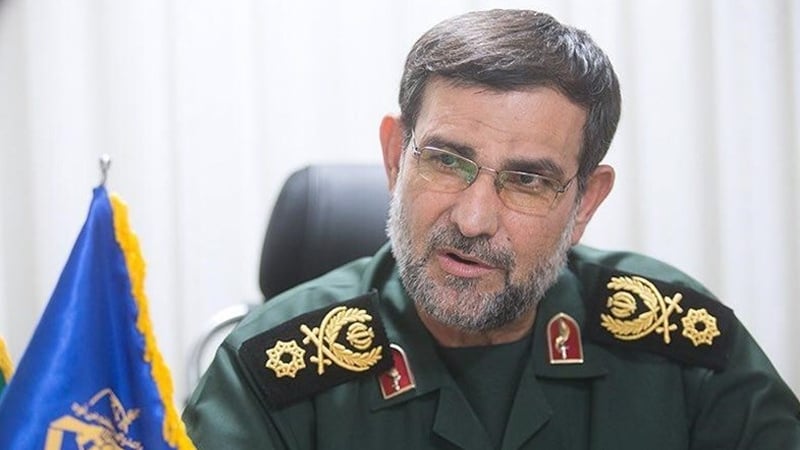
Rear Admiral Alireza Tangsiri, commander of the Islamic Revolution Guards Corps Navy, died on March 30, 2026, days after being injured in an attack, according to Iran’s state-run Press TV. He was the sixth man to lead the force and had held the post since late August 2018.
Press TV and the IRGC describe him as the officer who shaped Iran’s approach to closing the Strait of Hormuz. The IRGC said the navy’s fighters were continuing that approach in his absence, and it called the force’s record one that includes “shattering the operations of superpowers escorting oil tankers with the most basic weapons.”
Career
Tangsiri was born in 1962 in Tangestan County, in Bushehr province, though he spent much of his youth in Khuzestan because of his father’s work. From 2006 to 2010 he commanded the IRGC Navy’s First Naval District in Bandar Abbas. He then served as the navy’s deputy commander from June 2010 to September 2018.
In August 2018, while he was still deputy, the navy held major drills in the Persian Gulf as the United States prepared new sanctions on Iran. General Joseph Votel, then head of U.S. Central Command, acknowledged that the exercise carried a clear message about Iran’s capabilities.
Washington put Tangsiri and seven other IRGC commanders on its sanctions list on June 24, 2019. The State Department cited their alleged roles in Iran’s missile program and in incidents involving commercial vessels in international waters. On July 20, 2023, the European Union sanctioned six Iranian officials, Tangsiri among them, over claims about air defense transfers to Syria and drones sent to Russia. The measures included travel bans and asset freezes.
In his own words
Tangsiri’s public threats were consistent. In a September 2018 interview with Al-Alam television he said: “If the Strait of Hormuz ever becomes unusable for Iran, then other decisions will be taken.” On February 17, 2026, days before the war began, he said the navy was ready to close the strait “whenever our leaders give the order.”
After the war started on February 28, he kept up the warnings. On March 12 he said it was “illogical that the world can freely use the Strait of Hormuz while Iranian oil shipments are blocked.” On March 21 he posted that Iranian islands were prepared against any attempt to seize them. Of Kharg Island, Iran’s key oil terminal, he wrote that an attack there would “create another severe and unprecedented equation in global energy prices and distribution.”
Press TV credits his strategy with a surge in oil and energy prices and with reducing the ability of U.S.-allied countries to export oil. Iran says the war began on February 28 with a U.S. and Israeli attack. It responded with what it called Operation True Promise IV, more than 85 waves of missile and drone strikes, and it closed the strait to what it calls its enemies and their allies.




