
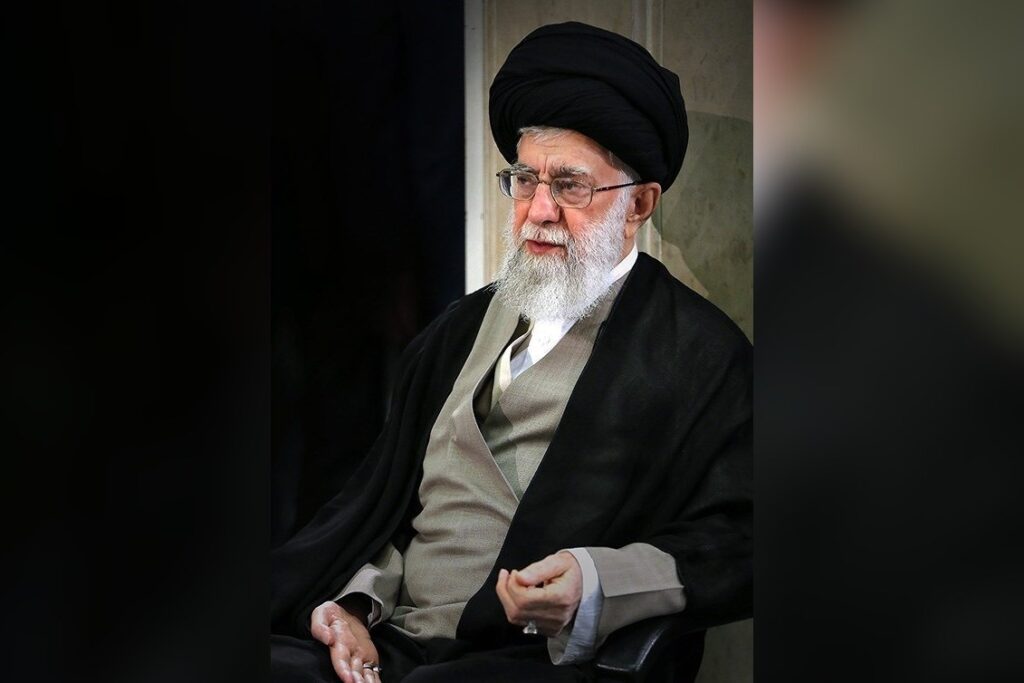
Iran’s new supreme leader has told the country the Strait of Hormuz should stay closed. Mojtaba Khamenei, who took over days earlier from his slain father, broke his silence in a message read out by a news anchor on state television. He said Iran will keep up attacks on its Persian Gulf neighbors, defying calls from Donald Trump and global markets to reopen the route.
Here’s what it means in plain terms: the strait is the narrow doorway oil tankers use to leave the Gulf, and Iran has kept it effectively shut.
Oil jumps
Oil climbed above $100 a barrel again. Brent crude rose 9% to more than $100 per barrel, and U.S. crude moved above $96. The International Energy Agency said the war was “creating the largest supply disruption in the history of the global oil market,” even though dozens of countries agreed to release 400 million barrels from reserves. Three more tankers were attacked overnight.
Stocks fell. The S&P 500 closed down more than 1.5%, the Nasdaq lost 1.8% and the Dow slipped 740 points. The average 30-year fixed mortgage rate rose to 6.30%, the highest since early February. “This absolutely dwarfs what we saw in the Russia-Ukraine crisis,” said Helima Croft, chief commodities strategist at RBC Capital Markets.
Washington moved to calm supply. Treasury Secretary Scott Bessent announced a temporary authorization for countries to buy Russian oil already stranded at sea, a step he called narrow and short-term. The Energy Department said the U.S. would release 172 million barrels from the Strategic Petroleum Reserve.
Threats and a school strike
In his first public message, Khamenei vowed to “avenge the blood” of 170 people, mostly children, killed in a likely U.S. strike on an elementary school in southern Iran. He also urged Gulf Arab states to shut down the U.S. bases they host. Sources told NBC News that outdated intelligence most likely led to the strike.
Trump replied with a social media post saying the U.S. is “totally destroying the terrorist regime of Iran.” He also told supporters “we won” while adding “we’ve got to finish the job.”
The Iranian Red Crescent Society put the death toll in Iran at more than 1,200. Thirteen people have died in Israel and six in the United Arab Emirates, and officials said Israeli strikes killed 570 in Lebanon.
Shipping and politics
Thailand’s foreign ministry delivered its “strongest protest” to Iran’s ambassador after a Thai cargo ship was hit and set ablaze in the strait. A search continues for three crew members, and 20 others were rescued. British defense secretary John Healey said the U.K. has autonomous mine-hunting systems positioned in the region that could help clear the strait.
In Washington, senators split along familiar lines. Lindsey Graham defended the intervention, asking whether critics want “the ayatollah” to hold a nuclear weapon. Democrat Mark Kelly argued that the one to two billion dollars a day the war costs could help people afford health care. Chris Coons said he cannot get straight answers on how long the war will last or what it will cost.




