
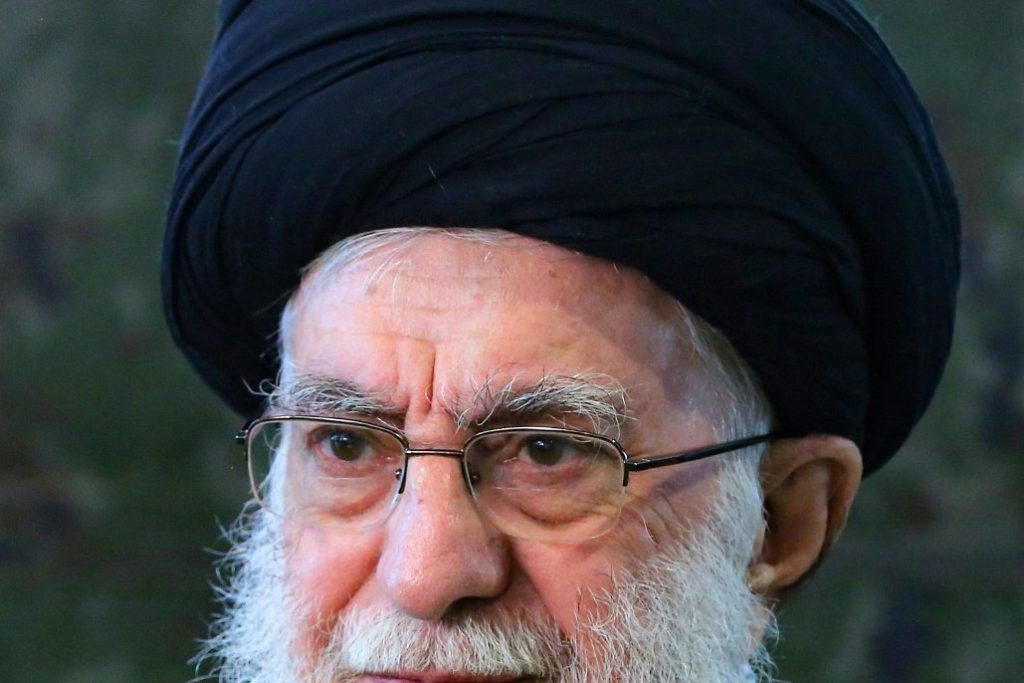
Who commands the guns
In Iran, the person at the top of the armed forces is not the elected president. PBS Frontline describes the Supreme Leader as “commander-in-chief of the armed forces,” the one who controls intelligence and security operations and who “alone can declare war or peace.” Iran, the program notes, is “the only state in which the executive branch does not control the armed forces.”
The Supreme Leader also picks the supreme commander of the Islamic Revolutionary Guard Corps. The IRGC was created in 1979 to protect the revolution, and it runs as a branch separate from the regular army. Scholar Wilfried Buchta calls it “one of the most autonomous power centers in Iran.” Even so, it answers to the Supreme Leader through representatives he appoints.
Courts under the same hand
The judiciary follows the same pattern. The Supreme Leader names the head of the judiciary, who in turn names the head of the Supreme Court and the chief public prosecutor. A Special Clerical Court, which hears cases involving clerics, sits outside the regular judicial framework and is “accountable only to the Supreme Leader,” according to Frontline.
The nuclear question and the fatwa
That concentration of authority is why the nuclear file runs through one office. Ali Khamenei held the office when the pieces below were written, and Iranian diplomats have pointed to his stated opposition to nuclear arms.
The Atlantic Council challenged that account in a piece by Khosro Sayeh Isfahani, published May 9, 2024. Isfahani wrote that Hassan Rouhani, Iran’s chief nuclear negotiator in 2004, told his French, German and British counterparts that Khamenei “has issued a fatwa and declared it forbidden to acquire a bomb.” Rouhani described this in a 2012 interview with the magazine Mehrnameh.
No written fatwa exists, Isfahani argued. What diplomats presented as one was the closing paragraph of a message Khamenei sent in 2010 to a nuclear disarmament conference in Tehran. It called the use of such weapons “haram,” or forbidden. Of the eighty-five quotes on nuclear arms gathered on the leader’s own website, “haram” appears three times, and always about use, not production or stockpiling. Khamenei did speak of a “fatwa” in 2015, saying: “We don’t want a nuclear weapon… This is both our religious fatwa and our rational fatwa.”
Isfahani also noted that fatwas are not inherently permanent. In June 2023, Khamenei warned world powers that they “cannot stop” Iran if it chose to build nuclear weapons.
Voices from inside the system
In April 2024, Ahmad Haghtalab, the IRGC commander in charge of nuclear security, said Iran could revise its nuclear doctrine if Israel threatened its nuclear sites. Four days later, Javad Karimi Ghodousi of parliament’s National Security Commission posted on X: “If [supreme leader] issues permission, we would be a week away from testing the first [nuclear bomb].”
Isfahani described the rising rhetoric as officials testing the waters. Foreign Ministry spokesperson Naser Kanani answered on April 22 that “nuclear weapons have no place in Iran’s defense and military strategy.”
Sources
- The Structure of Power in Iran (PBS Frontline, Terror and Tehran)
- The nuclear fatwa that wasn't: how Iran sold the world a false narrative (Atlantic Council, Khosro Sayeh Isfahani)




