
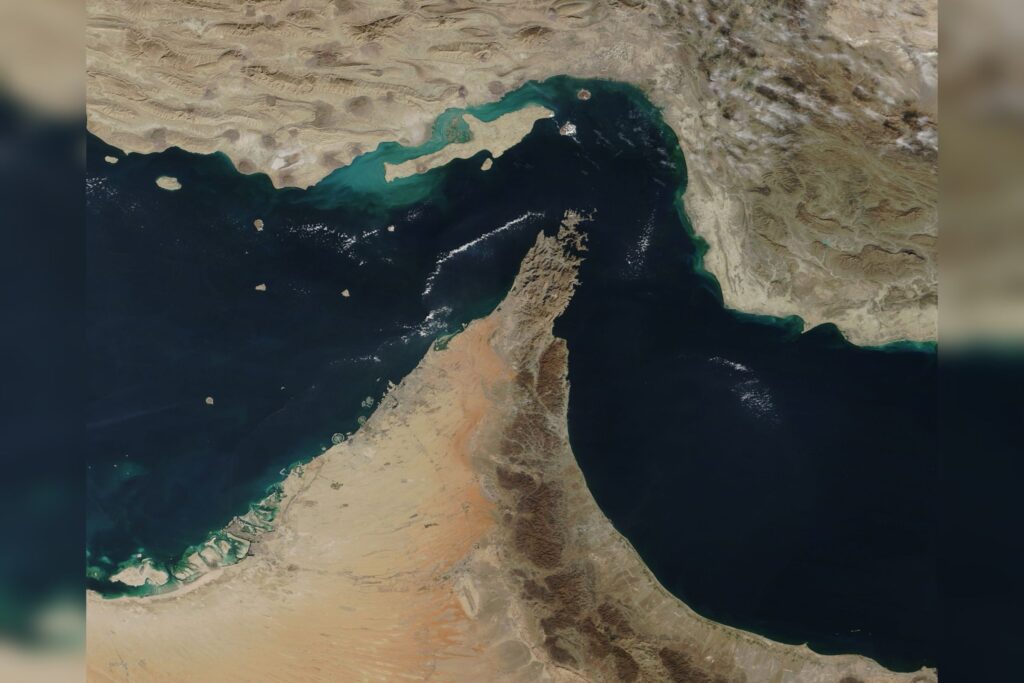
“We’re taking over the Strait,” President Donald Trump wrote in July, as fighting between the United States and Iran spread across the Gulf. The Revolutionary Guard replied that the waterway is Iranian territory. By October neither side had budged, and ships kept getting hit.
A weekend of strikes in July
The flare-up began with an Iranian attack on a container ship in the strait on a Sunday. Tehran has asserted control over the passage since the US and Israel started the war on February 28. Iran says an interim peace deal reached the month before gives it the right to manage traffic and possibly charge fees. The US and others reject that, citing freedom of navigation, and the American military has tried to set up an alternative route outside Iranian control.
US forces said they hit 140 targets early that Sunday, among them missile and drone launch sites, ammunition dumps and communication equipment. “We bombed the hell out of them last night,” Trump told NBC. Central Command announced more strikes on July 12, and on Monday described dozens of sites hit, including air defence systems, radar sites and small boats. Trump said he was “reinstating” a blockade and would charge ships for safe passage. He also claimed that “everything was agreed to” in an 11-hour meeting on Sunday, before Iranian negotiators called back with changes.
Iran struck back at countries that host US forces: Bahrain, Kuwait, Qatar, Jordan and Oman, which shares the strait with Iran and summoned an Iranian diplomat in protest. Sirens sounded three times in Bahrain. Jordan’s military said it shot down four Iranian missiles with no casualties. Iranian state media IRNA reported attacks in Hormozgan, Khuzestan and Markazi provinces and at least two deaths.
The Guard rejected the US account outright. “The Strait of Hormuz is our territory, and we will not allow a rogue and child-killing army from the other side of the world to continue its illegal interference in it,” it said. Iran called the strait closed. The US military and Trump said it was open.
EU foreign policy chief Kaja Kallas called for the strait to be open, as it was before the war. “Freedom of navigation has to be respected,” she said. Traffic on the southern route along Oman’s coast, which the US military supports, fell to “minimal levels” over the weekend, according to MarineTraffic.com. Iran has attacked ships using it repeatedly.
Talks were stalling. Iran and the US were nearly halfway through a 60-day window to negotiate a permanent end to the war. Foreign Ministry spokesman Esmail Baghaei accused Washington of having “slaughtered” the components of the 14-clause memorandum of understanding. Mediators including Pakistan, Qatar and Egypt kept working toward a final agreement.
October: the highest number of ship attacks yet
By mid-October, Al Jazeera reported, dozens of ships had been attacked in or near the strait. The United Kingdom Maritime Trade Operations (UKMTO) logged at least 12 attacks in the week ending October 16 and warned the true figure is higher, since most attacked vessels refuse to report. October has seen more ship attacks than any month since the war began.
Of the 12 confirmed, half continued to their destination or reached port. One sank, two were disabled and three were damaged or had an unconfirmed outcome. A tanker master reported a new type of attack: a rocket-propelled grenade fired from a small boat 78 nautical miles (about 144km) northeast of Jubail.
Kpler figures put oil flows through Hormuz at 11.6 million barrels per day over the seven days to October 13, about 68 percent of the 17.1 million bpd pre-war baseline. Brent touched $110 a barrel on Friday for the first time since May.
Central Command chief Brad Cooper said 400 ships and 100 million barrels of oil moved through the strait in the past week. “Let me be clear: The Strait of Hormuz is controlled by the United States and our regional partners, not Iran,” he said. He called the surge in attacks a sign of “desperation” by the Guard. The US says its naval blockade has cost Iran $25bn in oil export income. Tehran says Washington is exaggerating its numbers.
Mines are another dispute. The Guard said a supertanker carrying more than two million barrels caught fire after hitting a mine on an “unauthorised” route. Central Command said it had cleared the strait of mines and that ships are being hit by projectiles, citing the container ship M/V GFS Pride, which sank under tow.
Acting Defence Minister Majid Ibn Reza said Iranian missiles, not US bombs, will decide the war’s future. Trump has reportedly ordered the military to stay ready for bigger attacks after the November 3 midterm elections.
Sources
- US and Iran both claim control of Strait of Hormuz
- US and Iran both claim control of Strait of Hormuz amid attacks on vessels




